
The Liberty Trail announces app and on-site binoculars in Charleston's Marion Square created through Anglo-American partnership
-
The BlogBiographies
-
Videos

The Liberty Trail announces app and on-site binoculars in Charleston's Marion Square created through Anglo-American partnership

8884 St. Phillips Rd SE
Winnabow, NC 28479
The site of a former colonial port that thrived throughout the mid-18th century, most of the town was reportedly burned down by the British in 1776

West Main Road & Route 24
Patriots Park
Portsmouth, RI 02871
In honor of the first Black slaves and freemen who fought in the Battle of Rhode Island
Historical Marker Database
By late 1777, Washington’s army was collapsing from disease, desertion, and supply shortages. Rhode Island struggled to meet its troop quotas. The state asked permission to recruit free Black, Indigenous, and enslaved men. In February 1778, the Rhode Island Assembly passed the Slave Enlistment Act, promising freedom to enslaved men who enlisted. At the Battle of Rhode Island on August 29, 1778, the regiment fought with exceptional discipline and repelled repeated Hessian assaults.

1780 Muster Place
Abingdon, VA 24210
The Abingdon Muster Grounds is a 9-acre park is the site where, in 1780, 400 Virginians joined other patriot militia from the western frontier in a two-week campaign that ended with a critical victory at the Battle of Kings Mountain. The Abingdon Muster Grounds is a partner site of the Overmountain Victory National Historic Trail.

17 Von Steuben Lane
South Bound Brook, NJ 08880
Abraham Staats House
Historical Marker DatabaseThe Staats House, located in South Bound Brook, New Jersey, is an 18th-century Dutch Colonial home with strong ties to the Revolutionary War. Built by Abraham Staats, a prosperous landowner in the Raritan Valley, the home reflects the architectural style and domestic life of colonial New Jersey. With its broad gambrel roof, central hallway, and deep brick foundation, the Staats House has been carefully preserved to maintain its 18th-century character. Today, it is overseen by the Friends of Abraham Staats House, Inc., and serves as a historic site offering educational programs and public events that explore the region’s colonial and military past.
During the second Middlebrook Encampment of 1778–1779, the Staats House served as the headquarters of General Friedrich Wilhelm von Steuben, Inspector General and Major General of the Continental Army. A former officer under Frederick the Great of Prussia, von Steuben used his military expertise to instill discipline and order in the Continental Army, authoring the Regulations for the Order and Discipline of the Troops of the United States—known as the “Blue Book.” While quartered at the Staats House from March to June 1779, von Steuben organized intensive troop drills and hosted a grand military review in May for French ambassador Conrad Alexander Gérard and Spanish agent Don Juan de Miralles. The review was attended by General George Washington and dozens of officers and guests, followed by a formal dinner on the Staats property. After departing in June 1779, von Steuben continued to play a vital role in the war, contributing to the Southern Campaign and helping demobilize the army after the victory at Yorktown.

5803 NC-62
Burlington, NC 27215
The Battle of Alamance site marks the 1771 clash between royal militia and Regulator rebels, often called the last battle of the colonial period. Visitors can explore monuments and exhibits interpreting this early struggle over authority in the Carolina backcountry.
200 Water Street
Yorktown, VA 23690
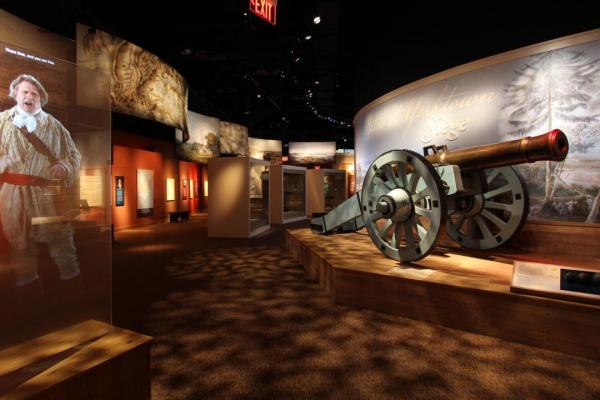
The American Revolution Museum at Yorktown provides the origins of the nation’s founding, stretching from the early colonial period to the passing of the Constitution and beyond. Exciting indoor galleries feature period artifacts, immersive environments and films, including “The Siege of Yorktown,” with a 180-degree surround screen and dramatic special effects.
196 Andrew Jackson Park Rd
Lancaster, SC 29720
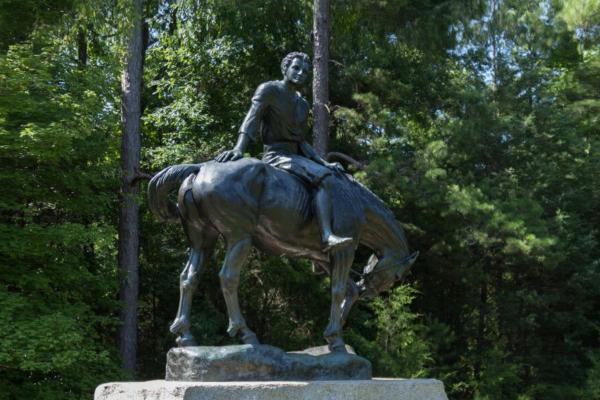
Andrew Jackson State Park combines history, art and community activities into a setting that has made it one of the state’s most popular parks.
19 North Park Place
Morristown, NJ 07960
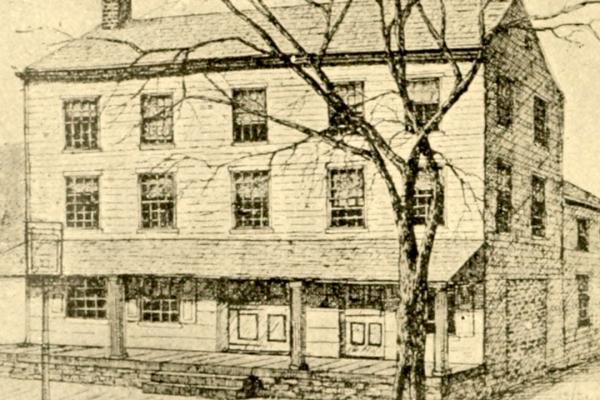
The Arnold Tavern, constructed in the mid-18th century, served as Washington's headquarters from January - May 1777

23 Clarke Street
Newport, RI 02840
The Artillery Company of Newport Museum
Kenneth C. ZirkelThe Artillery Company of Newport Museum preserves the history of one of America’s oldest military units, established in 1741 under King George II. Located in the historic 1835 Greek Revival armory on Thames Street, the museum highlights the company’s extensive service history, spanning the French and Indian War, the American Revolution, the War of 1812, and beyond. It features a range of exhibits including uniforms, weapons, documents, and artifacts that reflect the legacy of generations of Rhode Island militia members.
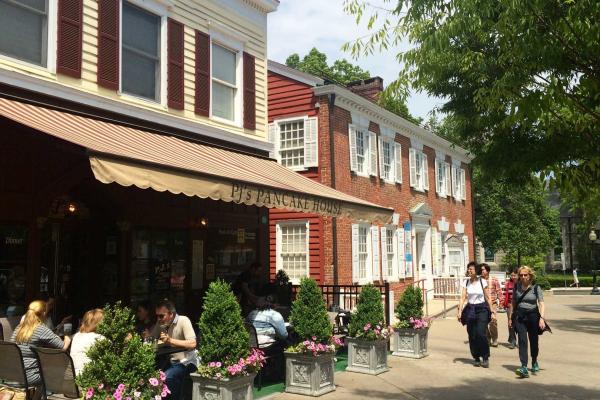
158 Nassau Street
Princeton, NJ 08544
A hidden gem in the borough of Princeton, the Bainbridge House was constructed in the mid-1760s and stands as a hallmark of colonial architecture. Today, it acts as a museum and interpretive center.
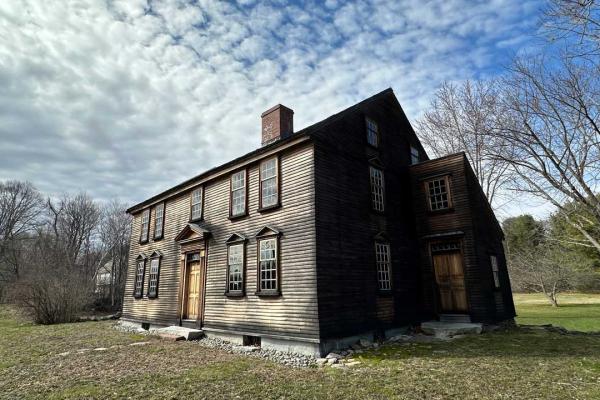
448 Barretts Mill Road
Concord, MA 01742
In the days leading up the Battle of Lexington and Concord, James Barrett stored military supplies, including small cannons, from that were smuggled out of Boston amid rising tensions with the British.

1003 Morris Ave
Union, NJ 07083
Liberty Hall
Historical Marker DatabaseThe Battle of Connecticut Farms took place in June of 1780 and was part of Washington's defense of the second British invasion of New Jersey. Using the Watchung Mountains as a barrier to British movement, the Patriots repeatedly dulled the thrusts of both mercenary Hessian and British regular armies. Near the battle site stands Liberty Hall, the home of the governor of New Jersey at the time and later a member of the constitutional convention.
Liberty Hall now houses a museum run by Kean University - the grounds and building contain exhibits on colonial life and the battle nearby.

Main St and Taylor St
Millburn, NJ 07041
Site of one of the last contested battles of the Revolution's northern theater that protected Washington's encampment at Morristown.
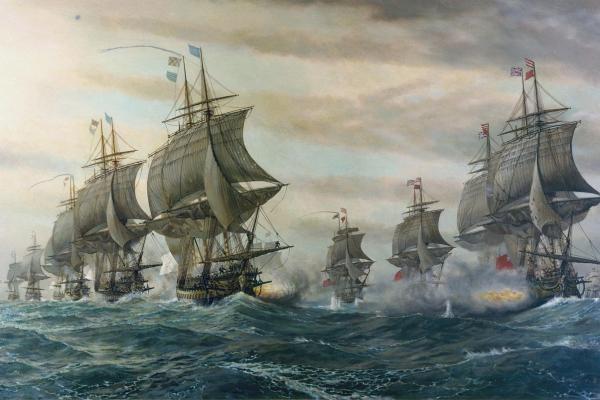
Atlantic Ave
Virgnia Beach, VA 23459
The Battle of the Capes occurred around the mouth of Chesapeake Bay in 1781. The naval battle occurred between the French and the British navies. Even though the battle lasted two hours, it played a significant role in the Siege of Yorktown's success, ultimately leading to the United States' independence.

5231 Route 67
Wallomsac, NY 12090
The Battle of Bennington delivered a sharp blow to British plans as American forces overwhelmed a detachment sent to seize vital supplies. This unexpected victory crippled British logistics and boosted Patriot morale, helping set the stage for the larger triumph at Saratoga.
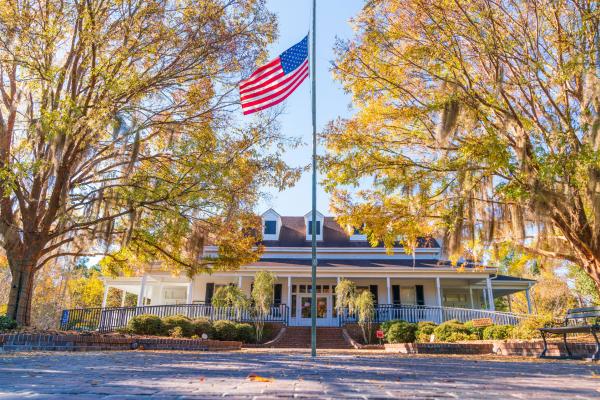
950 Stony Landing Rd.
Moncks Corner, SC 29461
The Berkeley County Museum is located in historic Moncks Corner, South Carolina and contains Revolutionary stories and artifacts from around the county.
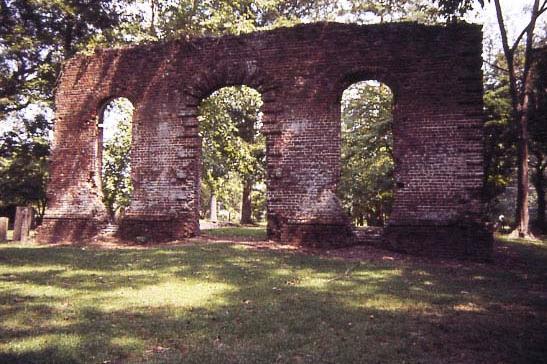
Moncks Corner, SC
During the British occupation of Charleston in 1781, these grounds were part of a British outpost to supply ammunition and provisions to patrolling British troops.
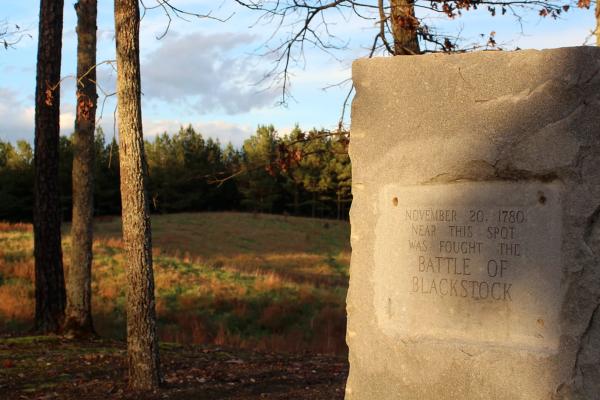
568 Monument Rd
Enoree, SC 29335
British Lieutenant Colonel Banastre Tarleton pushed up the Enoree River hot on the trail of Patriot Brigadier General Thomas Sumter.
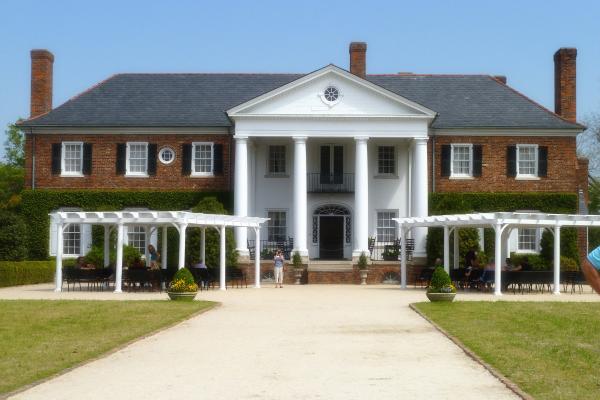
1235 Long Point Rd
Mt Pleasant, SC 29464
Boone Hall was influential in the history of South Carolina. Explore the house and grounds of this Colonial Plantation, as well as a live presentation of the Gullah Culture adapted by African slaves.

1601 Route 9D
Garrison, NY 10524
Boscobel is an esteemed Historic House Museum with unparalleled views of the Hudson containing one of the finest collections of decorative arts.
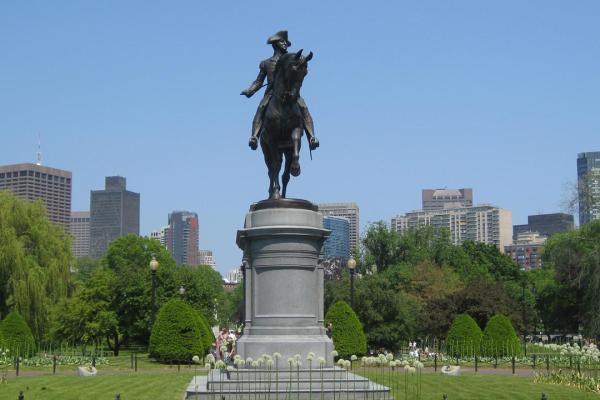
139 Tremont Street
Boston, MA 02111
Once the training ground for British troops in Boston, it was from here that Regulars marched toward Lexington & Concord, sparking the American Revolution.

1073 East Jersey Street
Elizabeth, NJ 07201
Boxwood Hall
Dmadeo
Boxwood Hall is a two-story, wood-frame building in the Georgian style. Built in the 1750’s, Boxwood Hall served as the residence of the Woodruff, Boudinot, Dayton, Spencer, and DeHart families. It is best known as the home of Jonathan Dayton, the youngest signer of the Constitution, and Elias Boudinot IV, President of the Continental Congress that ratified the Peace Treaty with Great Britain. Boxwood Hall also hosted notable guests including Alexander Hamilton and George Washington. From 1845 to 1855, the building operated as a Young Ladies’ Academy. In the 1880’s, Boxwood Hall became the Elizabeth Home for Aged Women. In 1938, Boxwood Hall was threatened with demolition; however, a group of citizens saved it by raising funds to purchase and deed the building to the State of New Jersey. Boxwood Hall underwent restoration in the early 1940’s, stripping away late nineteenth-century alterations. It was subsequently opened as a museum in 1947.
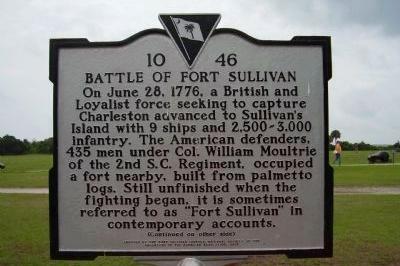
3217 Middle St
Sullivan's Island, SC 29482
Treacherous waters and Patriot fire foil a British attack on Charleston Harbor

200 Easter Parkway
Brooklyn, NY 11238
Art museum in Brooklyn that possesses paintings, prints, and collections related to the Revolutionary War and the Battle of Brooklyn.

200 College Avenue
Buccleuch Park
New Brunswick, NJ 08901
Buccleuch Mansion
Historical Marker DatabaseBuccleuch Mansion played a vivid, tangible role in the Revolutionary War because of its location along key routes used by both British and Continental forces. Built in the 1730s by Anthony White, the house was occupied by British troops during the harsh winter of 1776–1777, leaving behind physical evidence of the conflict: saber and rifle marks still visible on its staircase and floors. After the British withdrew, the mansion became a gathering place for leading Patriot figures—George Washington, Alexander Hamilton, Horatio Gates, Tadeusz Kościuszko, and John Hancock. Anthony Walton White, son of the original owner and born in the mansion in 1750, contributed to the Patriot cause as a cavalry officer in the Continental Army, serving as Washington's aide-de-camp in 1775 and later under the Marquis de Lafayette.
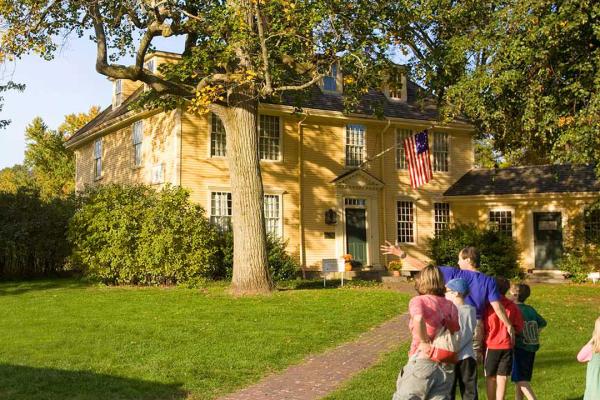
1 Bedford St
Lexington, MA 02420
Waiting on British troops to arrive on the morning of April 19, militia members used this tavern to wait for their arrival before assembling on the field of battle and sparking the American Revolution
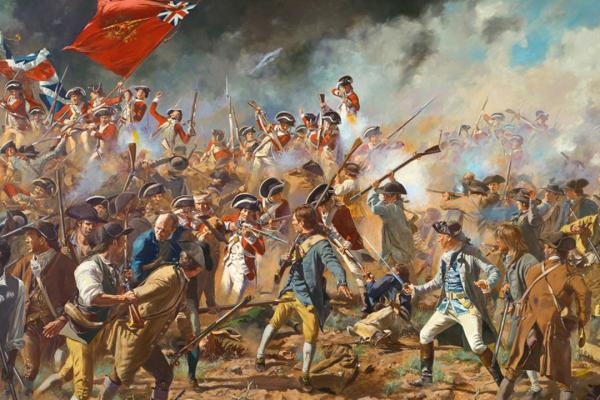
Monument Sq
Charlestown, MA 02129
A proving ground for the Patriot cause, the infamous Battle of Bunker Hill was the first pitched battle between New England soldiers and the British. Although the British claimed the field, some 1,000 British soldiers and Marines were wounded or killed in action.
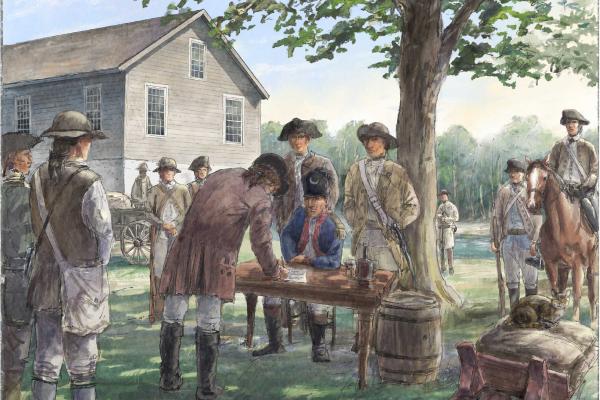
1917 N Old River Road
Pamplico, SC 29583
Located in the Pee Dee region of South Carolina, it was here that Francis Marion signed a treaty with a local Loyalist militia leader, effectively ending hostilities in the area

224 Market Street
Wilmington, NC 28401
Home to a Loyalist sympathizer, the Burgwin-Wright House stands as one of the oldest structures in Wilmington. In 1781, the likes of Cornwallis and his officers inhabited the home for a brief period.

Fort Street
Portsmouth, RI 02871
Site of the Butts Hill Fort
Historical Marker Database
This was the largest Revolutionary War earthen fort in southern New England and served as the American command post during the Battle of Rhode Island in August 1778. Allied French troops under Comte de Rochambeau enlarged the fort in 1780-1781. Butts Hill Fort offers a panoramic view of Narragansett Bay from the highest point on Aquidneck Island and features walking trails that let visitors stroll through the historic earthworks.
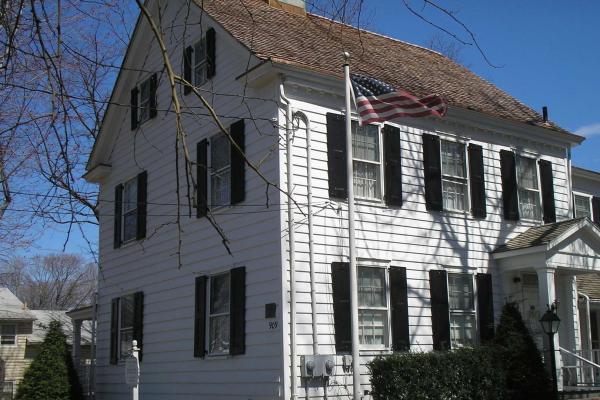
909 Caldwell Parsonage
Union, NJ 07083
The Caldwell Parsonage is a site of tragedy outside of the battlefield of Connecticut Farms & Springfield. The events that transpired that day still have lasting legacies for the township.
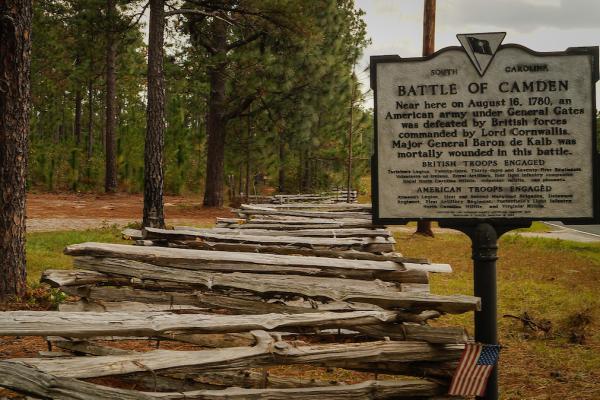
1698 Flat Rock Rd
Camden, SC 29020
The Battle of Camden was a devastating defeat suffered by the Americans in the British military offensive in the South.

2 Broad Street
Elizabeth, NJ 07201
Elizabeth Courthouse and Revolutionary War Canon
Historical Marker DatabaseCast in Strasbourg in 1758, King Louis XV of France sent this gun to Canada to defend Quebec. When the city surrendered the following year, the British took the gun. The French recaptured it in April 1760, and the British seized it again that May. In the fall of 1775, the gun helped repel the Continental force led by General Richard Montgomery, who was mortally wounded while attempting to take Quebec. In June 1779, Sir Henry Clinton captured Stony Point; a month later, General Anthony Wayne retook the post and found this gun among the spoils. General Washington presented it to the Elizabethtown troops who had served as a reserve, and they brought it here soon afterward.

126 Morris Ave
Springfield, NJ 07081
The Cannonball House
Historical Marker DatabaseThe Battle of Springfield took place in late June of 1780 as part of a second attempt by British forces to invade New Jersey and destroy the army of George Washington. Using the Watchung Mountains as a strategic position from which to stall British movement, Washington engaged with the enemy at Springfield and was able to stop their attempt on his supply garrison at Morristown. The Cannonball House was struck from the western side by, presumably, Patriot artillery. Today the town of Springfield has many Revolutionary War markers and exhibits maintained by local and state organizations
alike.

126 Morris Ave
Springfield, NJ 07081
This Revolutionary War landmark withstood fierce fighting during the Battle of Springfield. A British cannonball struck the home — and the scar remains visible today. Inside, the house has been restored and now serves as a museum filled with artifacts, documents, and stories that bring the 1780 battle to life.
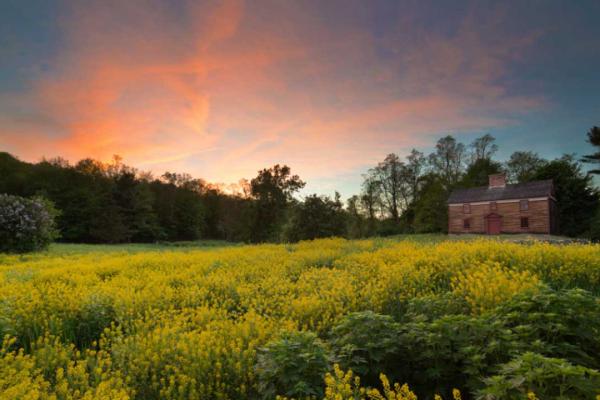
126 North Great Road
Lincoln, MA 01773
This building was the home of the captain of the Lincoln Minutemen, William Smith, who led his men at the Lexington Green on April 19, 1775.

200 Old Halfway Road
Barnegat, NJ 08005
On December 27, 1782, Patriot forces under Captain Richard Shreve and Captain Edward Thomas were surprised at a tavern by Loyalist raider Captain John Bacon, igniting a sharp skirmish. Though the militia gained the advantage, aid from local Loyalists allowed the wounded Bacon to escape, leaving casualties on both sides and marking what is believed to be the last land engagement of the American Revolution.

140 Cedar Springs Place
Spartanburg, SC 29302
When Jane Black Thomas overheard Loyalists plotting a surprise attack on her son's militia camp, she rode nearly 60 miles through dangerous territory to warn him. Her daring ride gave Colonel John Thomas Jr. and his Spartan Regiment time to prepare an ambush that repelled the attackers — fueling Patriot momentum toward the war-changing Battle of King's Mountain just three months later.

128 Pierrepont Street
Brooklyn, NY 11201
Formerly known as the Brooklyn Historical Society, the Center for Brooklyn History became part of Brooklyn Public Library in 2020 and is now free and accessible to all for research, education, culture and more.
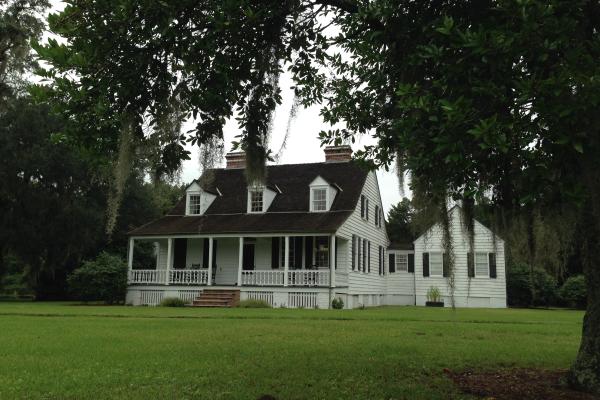
1254 Long Point Road
Mount Pleasant, SC 29464
This park preserves the story of Charles Pinckney and his contributions to the U.S. Constitution, and of 18th century plantation life for free and enslaved people of Snee Farm inhabitants.
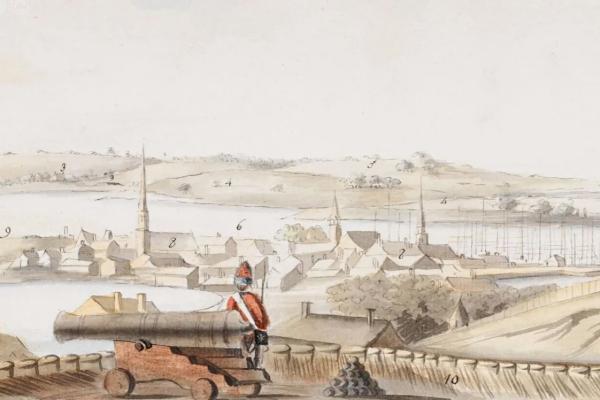
1089 Broadway
Chelsea, MA 02150
The second engagement of the Boston Campaign, the Battle of Chelsea Creek marked a stunning defeat for the British as their resources began to dwindle in Boston.
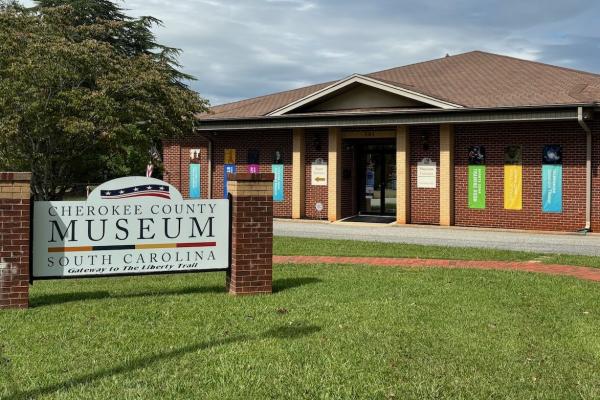
301 College Drive
Gaffney, SC 29340
With a rotating collection of artifacts and interactive exhibits, the Cherokee County Museum has something for all ages and interests.

49 Main Street
Cherry Valley, NY 13320
New York State Revolutionary War Heritage Trail Site
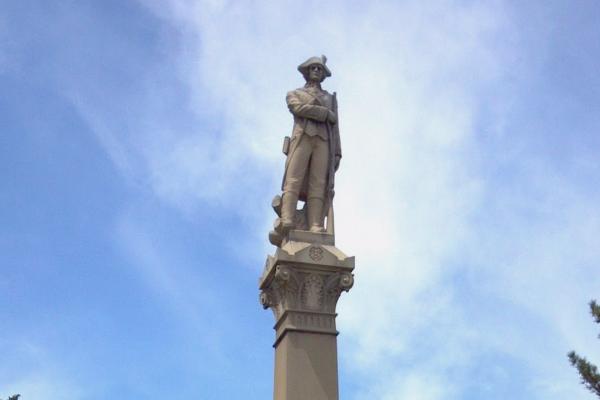
701 Old New York Road
Port Republic, NJ 08241
Chestnut Neck, occupied by Patriots until October of 1778, was a privateer outpost utilized as a staging point for planning and executing the capture of several British naval vessels.

117 E King St, Edenton, NC 27932
Edenton, NC 27932
Built in 1767, the Chowan County Courthouse is one of the oldest operating courthouses in the country and still serves the North Carolina Supreme Court to this day.

1 Clermont Avenue
Germantown, NY 12526
Historic home of the Robert Livingston family.

10 Morris Avenue
Springfield, NJ 07081
Marker located on the Rahway River Bridge in honor of Col. Israel Angell.
Historical Marker DatabaseAt this location, the American army first encountered the British and Hessian army advancing from Connecticut Farms on June 23, 1780. Angell’s 2nd Rhode Island Regiment fought one of the most celebrated holding actions of the Revolutionary War, delaying a vastly superior British–Hessian force at the Rahway River bridges long enough for General Nathanael Greene to stabilize the American line. The 2nd Rhode Island held the bridge for more than 40 minutes, delivering disciplined volleys and inflicting heavy casualties. It was a key factor preventing the British from reaching the Hobart Gap and threatening Morristown.
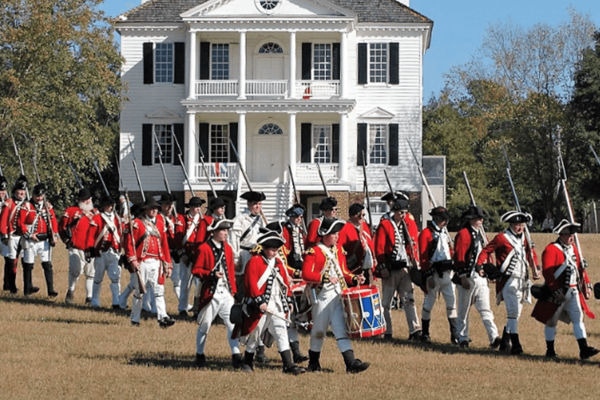
212 Broad Street
Camden, SC 29020
A former British headquarters, explore the reconstructed Kershaw/Cornwallis House, British redoubts, and programs about colonial life.
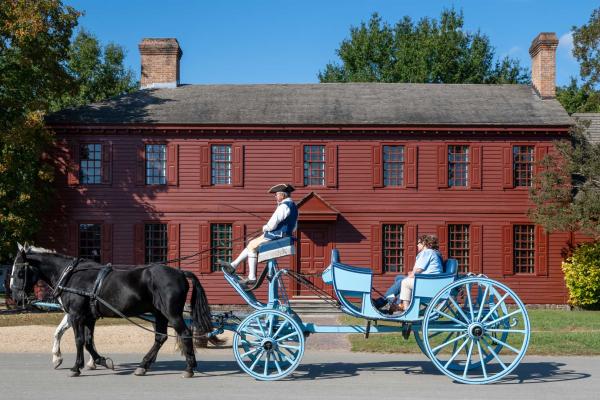
101 Visitor Center Drive
Williamsburg, VA 23185
Known worldwide as the nation's largest living history museum, Colonial Williamsburg operates the restored eighteenth-century capital of colonial Virginia.

120 Battery Lane
Jamestown, RI 02835
Site of Conanicut Battery Marker
Historical Marker DatabaseThe fort was built in 1776; local militia constructed an earthen battery, which the British later occupied during their invasion until they abandoned it in 1779. Originally a crescent-shaped earthwork, it was designed for six to eight heavy cannons and soldiers. The French then used it from 1780 to 1781.
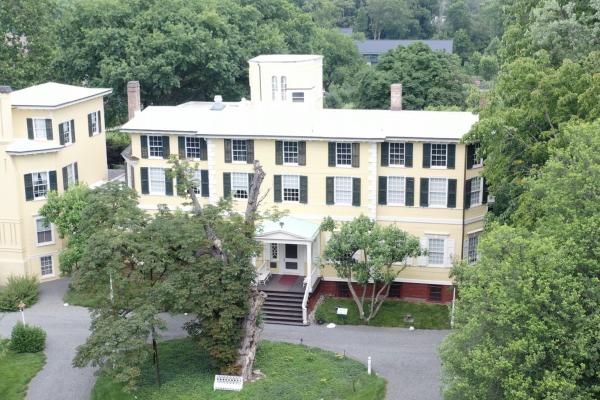
445 W Chestnut St
Union, NJ 07083
The Battles of Connecticut Farms and Springfield were small but at the same time significant. It proved that New Jersey militia would stubbornly oppose any attempt by the British to move inland. The battles also showed that militia and Continental regular troops could work well together.

South Dock
West Point, NY 10996
Constitution Island was strategically vital during the Revolutionary War. It anchored the earliest American fortifications in the Hudson Highlands and helped secure Patriot control of the Hudson River.

6904 West Frontage Road
Coosawhatchie, SC 29912
In May 1779, British troops under Augustine Prevost advanced toward Charleston, prompting William Moultrie to withdraw as John Laurens rashly engaged at the Coosawhatchie River and was driven back with heavy losses.
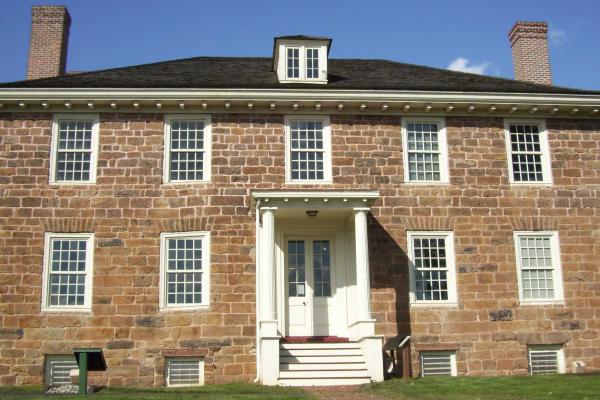
1225 River Road
Piscataway, NJ 08854
The Cornelius Low House, constructed in 1741, stands today as one of the finest examples of Georgian architecture in New Jersey.

150 West Main St.
Freehold, NJ 07728
This unassuming home, owned by the Covenhoven family, was requisitioned by British General Henry Clinton in the days prior to the monumental Battle of Monmouth.

13525 NC-73
Huntersville, NC 28078
In an attempt to stall Cornwallis force, a contingent of Patriots initiated a delaying action which led to the death of General William Davidson
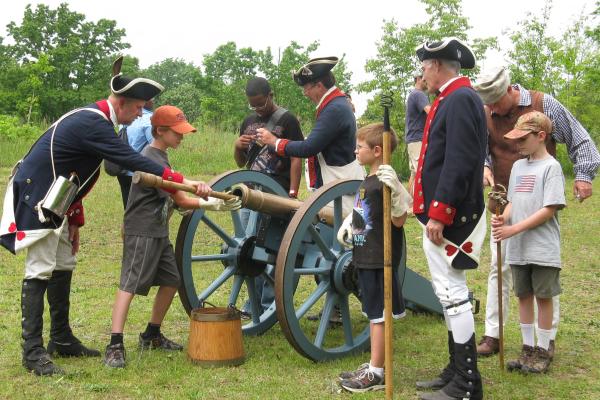
4001 Chesnee Hwy
Gaffney, SC 29341
The Cowpens Battlefield commemorates Daniel Morgan’s victory over Banastre Tarleton on January 17, 1781.
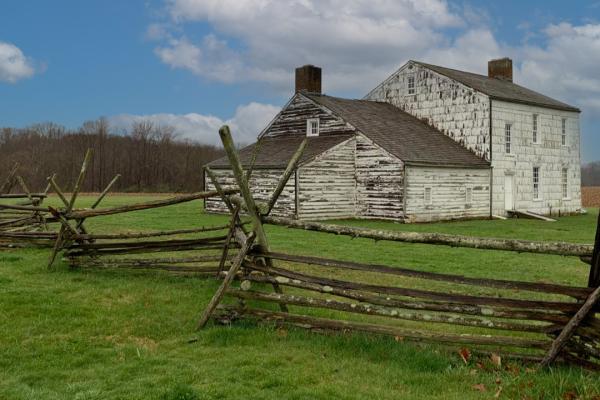
Freehold, NJ 07728
An ordinary farmhouse within Monmouth, it became a hotspot during the Battle of Monmouth as Charles Lee mounted a defense against advancing British troops.

9 1/2 Riverside Avenue
Rensselaer, NY 12144
Historic home of Henry K. Van Rensselaer, Lieutenant Colonel, 6th Regiment of the Albany County militia at the Battle of Fort Anne.
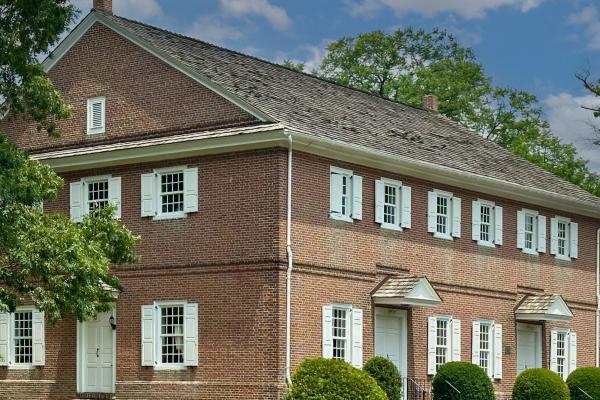
15 Front St.
Crosswicks, NJ 08515
New Jersey militia and Continentals assaulted a British column in-and-around these grounds in mid-June of 1778, just days before a continued series of skirmishes reached their zenith at the Battle of Monmouth.

21 Grandview Drive
Crown Point, NY 12928
In 1775, at the outbreak of the Revolutionary War, the American colonists captured this fort from the British and secured sorely needed cannons and heavy ordnance.

25 Water Street
Newburyport, MA 01950
Once an influential shipbuilding center, Newburyport now houses the Custom House Maritime Museum, which interprets the region's naval history.

20 Livingston Avenue
Tappan, NY 10983
Temporary headquarters for George Washington on several occasions while he was Commander-in-Chief during the American Revolution.
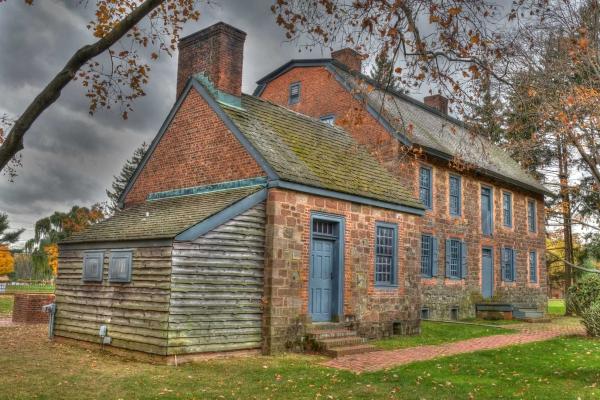
199 Totowa Road
Wayne, NJ 07470
The Dey Mansion, built around 1770, served as General George Washington’s headquarters in 1780 during a pivotal time in the American Revolution. As one of his surviving field headquarters, it offers a lasting connection to the strategic decisions, military challenges, and historic events that shaped the fight for independence.
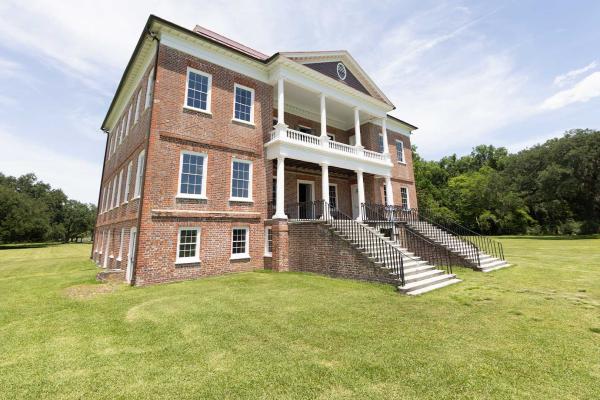
3380 Ashley River Rd.
Charleston, SC 29414
Visit Historic Drayton Hall — Tour the nation’s oldest preserved plantation house in America still open to the public. Explore Drayton Hall's 18th-century architecture, landscapes & the people who lived here.
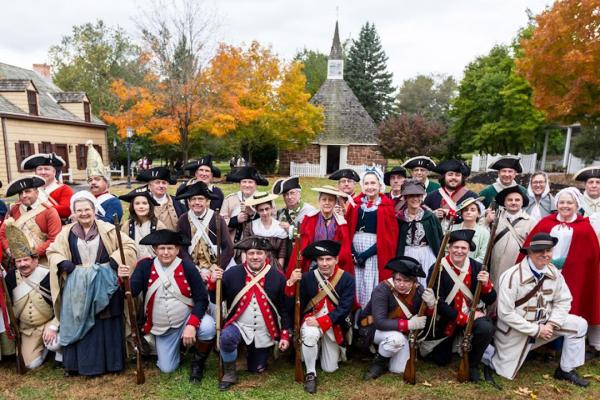
1050 River Road
Piscataway, NJ 08854
The East Jersey Old Town Village is a collection of historic structures dating the 18th century. Today, living historians walk the grounds, bringing the Revolution and the Colonial Era to life.

11 Front St. & Elizabeth Ave
Elizabeth, NJ 07206
Elizabeth Town Point, New Jersey served as a critical colonial port, ferry landing, and commercial hub connecting New Jersey to New York before and during the American Revolution. On January 25, 1780, British and Loyalist troops crossed here to launch a devastating raid that burned parts of Elizabeth.

8 Equality Park West
Newport, RI 02840
Historic marker commemorating the burning of the boats of H.M.S. Liberty.
Historical Marker DatabaseLiberty Park in Newport, Rhode Island honors the destruction of the British customs vessel HMS Liberty on July 19, 1769. Newport citizens seized the Liberty after disputes over the illegal confiscation of goods. This event was one of the earliest acts of defiance against the Crown in the American colonies, occurring even before the Boston Tea Party.
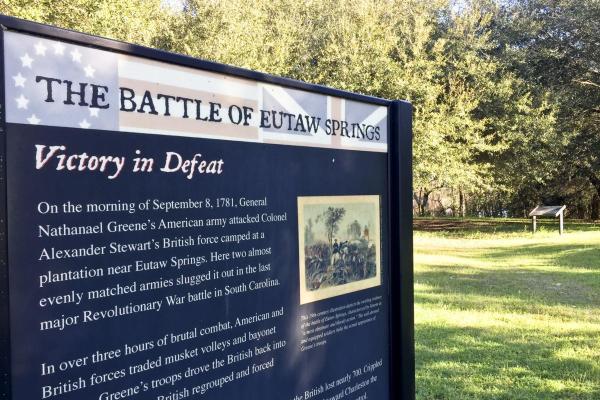
12933 Old Number Six Hwy
Eutawville, SC 29048
This last major battle of the war in the South succeeded in driving the British out of rural South Carolina.
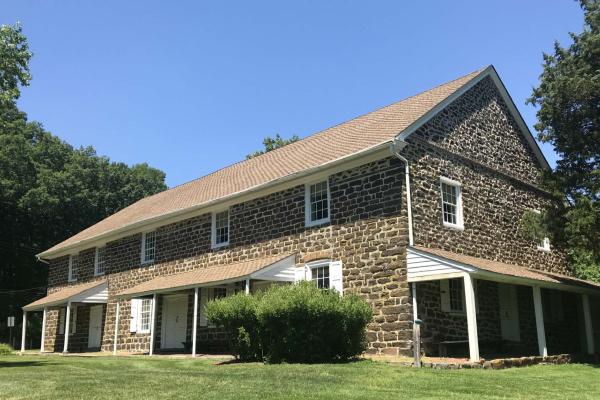
436 Mount Laurel Rd.
Mount Laurel Township, NJ 08054
A precursor movement to the Battle of Monmouth, this Quaker meeting house was surrounded by the encampment of British troops under Alexander Leslie in mid-June of 1778.
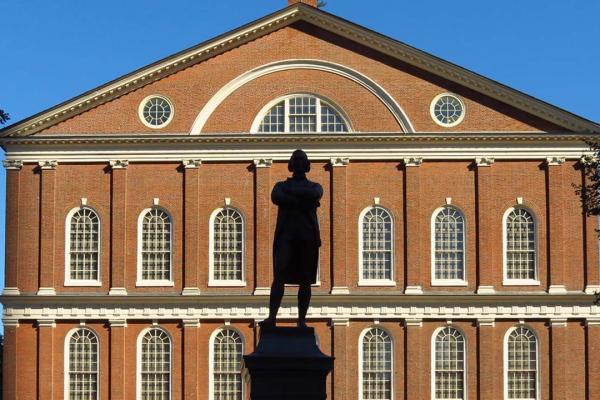
1 Faneuil Hall Sq
Boston, MA 02109
A monumental structure built in 1742, Faneuil Hall served as one of the most important sites of civic engagement in colonial Boston. Since, it has hosted the likes of revolutionary leaders and dissidents.

26 Wall Street
New York, NY 10005
Site where Washington took the first oath of office.

Washington Place near Broad Street
Harriet Tubman Square
Newark, NJ 07102
Site of the First Academy of Newark - Burned by the British on January 25, 1780
Historical Marker DatabaseThe Academy was founded in 1774. In the winter of 1779–80, American troops used the academy’s rooms as barracks. On January 25, 1780, a British raiding force reached Newark across the frozen Hudson River waterways and burned the school, on the same night that raiders struck Caldwell’s Elizabethtown. Newark Academy belonged to the Presbyterian educational world of Alexander MacWhorter, a Princeton graduate and trustee. A marker in the former Washington Park, now Harriet Tubman Square, recalls the lost building.
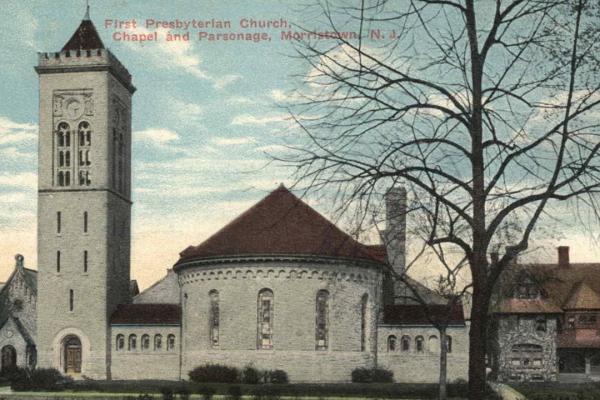
57 E Park Place
Morristown, NJ 07960
Located along the Morristown Green, the former site of the original First Presbyterian Church once acted as the infirmary for smallpox inoculated Continentals

42 Broad Street
Elizabeth, NJ 07201
First Presbyterian Church, Burial Grounds and Elizabethtown Academy
Historical Marker DatabaseThe First Presbyterian Church, established on the site of the original meetinghouse around 1664, was one of the targets of British attacks on Elizabeth in January 1780. Pastor James Caldwell, known as the “Fighting Parson,” and many congregation members supported the Patriot cause. Tragically, Caldwell's wife, Hannah Ogden Caldwell, was killed by a British/Hessian soldier during the Battle of Connecticut Farms in 1780 — an event that shocked New Jersey and helped galvanize Patriot resistance, and Caldwell was killed a year and a half later. Both are buried in the cemetery alongside many other Revolutionary War veterans.
By the 1750s, the demand for and interest in secondary education led church leaders to establish a modest school called the "Academy," located about 200 yards from the church. Notable figures, including Aaron Burr, Alexander Hamilton, and Supreme Court Justice Brokholt Livingston, were among the Academy's first pupils. On January 25, 1780, the Academy was raided and burned. The building that stands on the site today, built in 1917, recently reopened as a museum, cultural center, and community hub.

30 Washington Place
Morristown, NJ 07960
The mansion once housed George Washington, who utilized it as his headquarters in the freezing winter of 1779.

90 Fort Adams Drive
Newport, RI 02840
Fort Adams
Historical Marker Database
Fort Adams, named after President John Adams, is a National Historic Landmark built between 1824 and 1857 and is the United States' most complex coastal fortification, with extensive land and sea defenses. Active through WWII, at the start of the Civil War it housed the underclassmen of the U.S. Naval Academy, -- then recently evacuated from Annapolis, Maryland.

Fort Ann, NY 12827
At the Battle of Fort Ann, American forces mounted a fierce resistance against advancing British troops during the Saratoga campaign. Though forced to withdraw, the determined defense slowed the British advance and contributed to the growing strain on their northern army.

343 Highland Road
02878
View from Fort Barton Historic Site
MarcbelaAdded to the National Register of Historic Places in 1973, the Fort Barton site still has earthwork remains of the original fort, built in 1777 and used as a defensive post overlooking the ferry crossing between Tiverton and Aquidneck Island during the American Revolution. American forces used this ferry as a launching point during the Battle of Rhode Island in August 1778. The fort was named after Lt. Col. William Barton, who captured British General Richard Prescott during a midnight raid at Prescott Farm.

22 Albany Ave
Ogdensburg, NY 13669
An historic fort established in 1749 that played a meaningful supporting role in both the Revolutionary War and the War of 1812.

1792 Fort Defiance Dr
Lenoir, NC 28645
Built in 1792 by Revolutionary War officer William Lenoir, Fort Defiance preserves the homestead that rose near the site of an earlier frontier fort and reflects the legacy of one family for nearly two centuries.
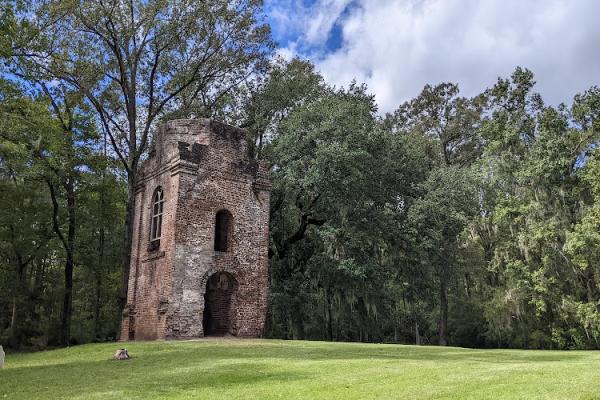
300 State Park Rd
Summerville, SC 29485
An oyster-shell, “tabby,” fortress, originally constructed here during the French and Indian War, was restored, and occupied by both the British and Patriots.
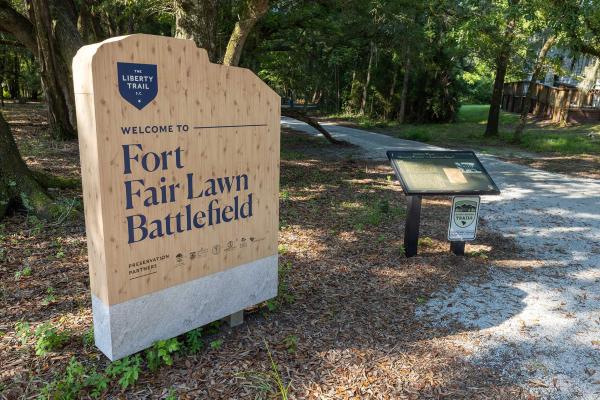
950 Stoney Landing Rd
Moncks Corner, SC 29461
Fort Fair Lawn was a British outpost in 1780–1781 and was the target of a daring Patriot raid on November 17, 1781, and abandoned by the British a week later.

1 Reds Street
Schuylerville, NY 12871
The site of the British surrender to the Americans on October 17, 1777.

Fort Johnson Rd
Charleston, SC 29412
One of the many forts that dotted the landscape around Charleston, Patriots seized this fortification and raised the Moultrie flag, which bears resemblance to the modern standard of South Carolina.

7214 NY-5
St. Johnsville, NY 13452
Built in 1750, Fort Klock is one of the Mohawk Valley's best-preserved fortified homes, serving as a refuge for local families during both the French and Indian War and the American Revolution.
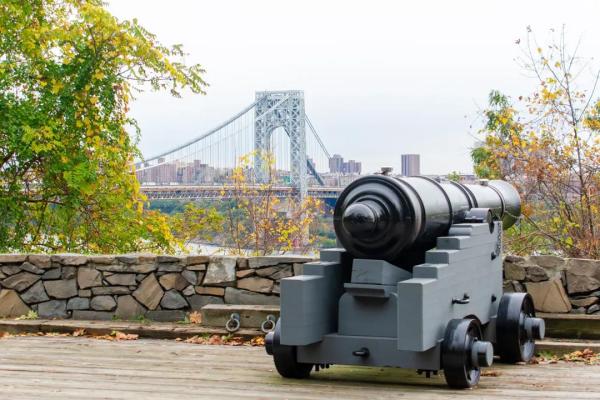
Hudson Terrace
Fort Lee, NJ 07024
Located along the banks of the Hudson, outnumbered Patriot forces quickly evacuated this site on November 20, 1776, as the British army advanced on their position.

690 Route 9W
Fort Montgomery, NY 10922
Historic fort attacked on October 6, 1777, as part of the British army’s three-pronged invasion of New York.
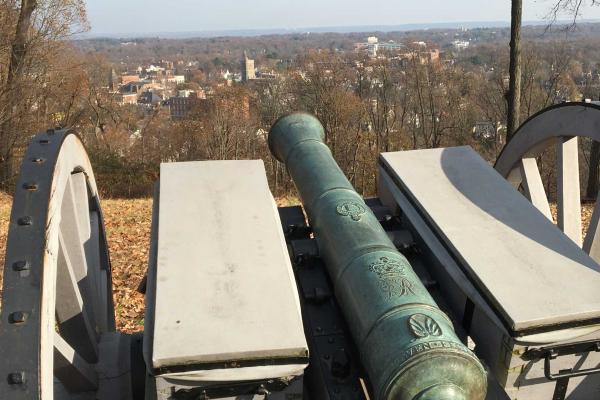
Fort Nonsense Access Road
Morristown, NJ 07960
Fort Nonsense if one of four sites that compose Morristown National Historical Park. Atop a hill, it functioned as a defensive observation post for those encamped at Morristown.

1 E Fourth Street
Oswego, NY 13126
Fort Ontario was a staging ground for the British’s 1777 invasion of New York. It served as a base of operations for British, Native, and Loyalist raiding parties targeting upstate New York. In 1782, the British committed a full-time garrison to the fort.

389 Canal Street
Fort Plain, NY 13339
Perched high above the Mohawk Valley, Fort Plain stood as one of New York's most important frontier strongholds during the American Revolution, protecting settlers from raids and serving as the headquarters of famed patriot commander Marinus Willett.

200 N James St
Rome, NY 13440
Originally constructed during the French & Indian War, this bastion served as a focal point Burgoyne's campaign to squash Patriot resistance in New York
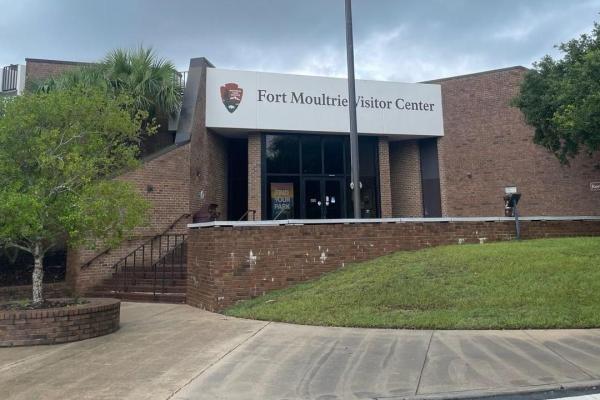
Fort Sumter National Monument
Sullivan's Island, SC 29482
The Battle of Sullivan’s Island, fought near the site of today’s Fort Moultrie in June 1776, was the first significant Patriot victory of the Revolutionary War.
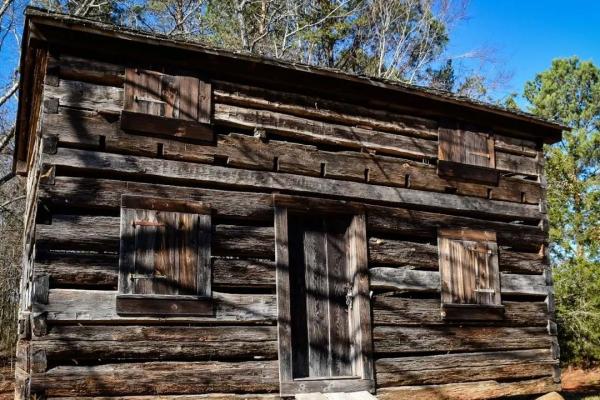
184 State Road S-11-584
Gaffney, SC 29340
A station constructed during high tensions with the Cherokee, this fortification was utilized by Loyalists until July of 1780.

102 Fort Ti Rd
Ticonderoga, NY 12883
A formidable fortress on the banks of the Hudson and Lake Champlain, this stone bastion was the source of Henry Knox's artillery in the opening years of the Revolution. Today, it's a hallmark of living history with interpreters being found at every corner.

210 New York Ave.
Staten Island, NY 10305
American fort captured by the British in 1776.

Bennett Park
New York, NY 10033
Fought on November 16, 1776, the Battle of Fort Washington marked the collapse of the last American stronghold on Manhattan during the New York Campaign. Surrounded and overwhelmed, the outnumbered garrison was forced into a surrender that dealt a heavy blow to the Continental Army’s position in the region.
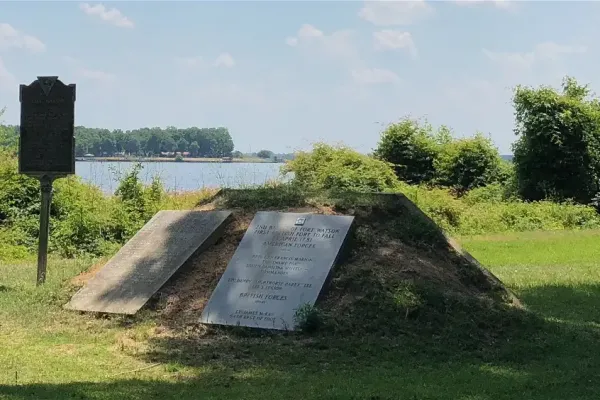
1142 Fort Watson Rd
Summerton, SC 29148
After an eight-day siege, this strategic outpost fell to the Americans, who used an ingenious structure called Maham’s Tower to fire down into the fort and trap the enemy.

2 Montague Street
Brooklyn, NY 11201
Four Chimneys, home of Hezekiah Beers Pierrepont, was a notable Brooklyn Heights house that served as George Washington's headquarters during the Battle of Long Island in August 1776.

2967 Steed Creek Rd.
Huger, SC 29450
The Francis Marion is a forest literally steeped in history. Marion, dubbed the “Swamp Fox” by the British troops whose supply lines he disrupted with surprise attacks from the swamps.
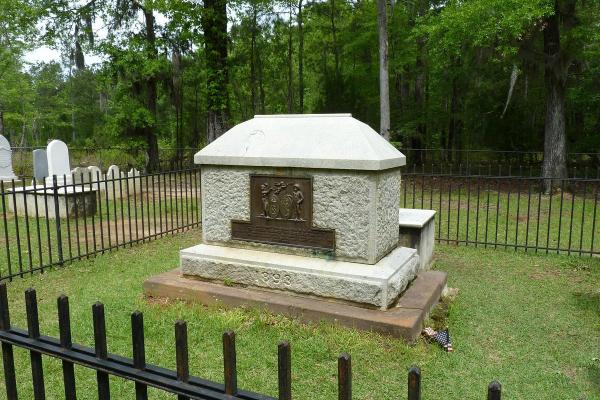
1 General Francis Marion Avenue
Pineville, SC 29468
Francis Marion was a skilled military leader during the American Revolutionary War, known for his guerilla tactics and strategic maneuvers in the Southern Campaign. His contributions to the war effort and his enduring legacy as a symbol of American resilience and military ingenuity remain today.

54 Pearl Street
New York, NY 10004
The Fraunces Tavern Museum is Manhattan’s oldest building and the site of meetings of the Sons of Liberty.

11 Middle Road
Portsmouth, RI 02871
The Portsmouth Friends Cemetery is located on the church grounds just behind the meetinghouse building.
Rhode Island Historical CemeteriesThe Friends Meeting House cemetery in Portsmouth, Rhode Island, is part of the historic Portsmouth Friends Meetinghouse, Parsonage, and Cemetery complex. This Quaker site dates to the colony's early years. The Quaker community in Portsmouth began to form shortly after the town’s founding in 1638, when religious dissidents from Massachusetts Bay settled there. The current meetinghouse was built around 1699–1700, serving as both a place of worship and a school for local Friends. The cemetery developed alongside the meetinghouse and became the burial ground for Portsmouth’s Quaker community over the centuries. This site has witnessed significant historical events, including British occupation during the American Revolutionary War.

500 3rd Avenue
Glendora, NJ 08029
Gabriel Daveis Tavern
Historical Marker Database
Built in 1756, the Gabreil Daveis Tavern is an outstanding example of vernacular Georgian style. The tavern house was built to accommodate travelers headed east and west over the “Great Irish Roade” and watermen moving lumber and other products by way of the Timber Creek. The tavern was the primary center of communications for nearby residents in the early days of Gloucester Township, serving as the site for elections and town meetings from 1757-1770. The building ceased being a tavern in 1769 when Sarah Daveis, the widow of Gabreil, declined to renew the license. From this point forward the building became home to some of the Township’s most important Revolutionary War figures, Gabreil Daveis, Benjamin Pittfield, and George Payne. Today, the building serves as a museum.

7000 County Road 41
Victor, NY 14564
Historic Seneca town featuring a fully reconstructed longhouse and state-of-the-art interpretive museum.

82 Peck Lane
Warwick, RI 02888
The Gaspee Monument is a historical marker and commemorative site marking the location where British prisoners from the schooner HMS Gaspee were taken ashore after its burning in 1772.
Historical Marker DatabaseThe monument commemorates the Gaspee Affair, which took place on June 9, 1772. During this event, the Gaspee, a Royal Navy revenue schooner enforcing British customs laws in Narragansett Bay, ran aground while pursuing the packet boat Hannah. Colonists boarded the vessel, attacked it, and ultimately burned it to the waterline. This act of resistance was one of the first violent uprisings against the British Crown in North America, occurring 18 months before the Boston Tea Party. After the burning, the crew of the Gaspee was taken ashore at the monument site.

400 Thames Street
Bristol, RI 02809
Lafayette played a crucial role in maintaining coordination between the Continental Army under General John Sullivan and newly arrived French forces under Admiral d’Estaing. In the summer of 1778, the Continental Army planned a joint operation to expel the British from Newport. This was the first major Franco‑American combined operation of the war, and tensions were high. Just before the battle, a violent storm damaged d’Estaing’s fleet. The Admiral decided to sail to Boston for repairs—leaving Sullivan’s forces without naval support.
The Battle of Rhode Island took place on August 29, 1778. Sullivan’s army fought a disciplined retreat from Aquidneck Island after the French withdrawal made the original plan impossible. Through Lafayette's diplomacy he prevented a rupture between the French and American forces and secured d’Estaing’s willingness to sail south and continue supporting the war. Lafayette hurried back and rejoined the army at Tiverton during the retreat, helping reorganize the troops and supporting Sullivan’s decisions, which he praised as “well made” and honorable.
Learn about Revolutionary War Combat Strategy. Watch the Revolutionary War Animated Map. For a summary, read An Overview of the American Revolution.

832 NY-9D
Garrison, NY 10524
On September 25, 1780, Generals George Washington and the Marquis de Lafayette traveled toward the Beverly Robinson House, across the Hudson River from West Point, New York. The Robinson House, formerly owned by a British Loyalist, served as the headquarters for Benedict Arnold, the American commander at West Point. Although Major John André had been captured days earlier, exposing Arnold’s treason, Washington and Lafayette remained unaware of the plot. After returning from inspecting West Point’s fortifications, they were informed of the evidence against Arnold.
Washington ordered Arnold’s immediate arrest, but the effort, led by Colonel Alexander Hamilton, failed to capture him. Washington and Lafayette established their headquarters at the Robinson House, where Washington began refortifying West Point. He discovered that Arnold had intentionally weakened the garrison by sending troops elsewhere under various pretexts. Orders from this period were formally issued from “Headquarters at Robinson’s House.”
Learn about Revolutionary War Combat Strategy. Watch the Revolutionary War Animated Map. For a summary, read An Overview of the American Revolution.

370 West Pittsylvania Street
Halifax, NC 27839
General Lafayette Marker, Halifax, NC
The Lafayette TrailIn April 1777, Lafayette sailed on the Victoire, a ship he built with his own funds, to North America to serve as a military leader in the American Revolution, despite a royal decree prohibiting French officers from serving. Shortly after his arrival, the Continental Congress commissioned him as a major general serving under George Washington. In June of 1777, the 19-year-old Lafayette landed on American soil near Georgetown, South Carolina. He then made his way north towards Philadelphia.
On July 18th, 1777, Major J. B. Ashe sent a letter to North Carolina Governor Richard Caswell reporting on the state of affairs at Halifax, where a military camp had been established. He included in his letter that “one of the Royal Bloods of France, (the Marquis de Lafayette) recommended by Mr. Franklin, passed this a few days since, on his way to the Grand Army.” It is estimated that Lafayette passed through Halifax a few days preceding the 18th.
Learn about Revolutionary War Combat Strategy. Watch the Revolutionary War Animated Map. For a summary, read An Overview of the American Revolution.

3 North William Street
Fulton County Courthouse
Johnstown, NY 12095
The Johnstown conference was held during a critical moment in the American Revolution. The Continental Congress and New York officials were attempting to secure the allegiance—or at least the neutrality—of the Haudenosaunee (Iroquois Confederacy). The Six Nations were divided: Oneida and Tuscarora leaned toward the American cause. Mohawk, Seneca, Cayuga, and Onondaga leaned toward or allied with the British. Lafayette, then a young major general serving under George Washington, was sent to the Mohawk Valley to help stabilize the frontier and strengthen alliances.
Lafayette attended the March 1778 Johnstown conference of the Six Nations as a representative of the Continental Army. His presence symbolized America's commitment to diplomacy with Native nations. The Oneida, in particular, viewed Lafayette favorably because of his reputation for fairness and his advocacy for Native allies. The Mohawk Valley was a volatile frontier. Securing Oneida support helped protect American settlements from raids. His meeting with the tribal officials at then-Fort Johnstown had mixed results, with two of the six nations joining his side.
Learn about Revolutionary War Combat Strategy. Watch the Revolutionary War Animated Map. For a summary, read An Overview of the American Revolution.

1 Plains Avenue
Portsmouth, NH 03801
Lafayette Trail Marker, Portsmouth, NH
The Liberty TrailFollowing the Revolutionary War, Lafayette accepted an invitation from George Washington and returned to America. The Marquis de Lafayette departed France in mid-June 1784 and arrived in New York City on August 4. The five‑month goodwill visit reconnected him with George Washington, celebrated his role in American independence, and strengthened political and commercial ties between the United States and France. He returned in 1824-1825.
General Lafayette visited Portsmouth, arriving late Saturday evening, October 30, 1784. Because his arrival was unexpected, local citizens announced his presence by ringing town bells and cheering. Lafayette remained in Portsmouth until the morning of Monday, November 1, 1784. Because of the short notice and the brevity of the visit, residents expressed regret that they could not provide formal entertainment. However, the town honored him with multiple 13-cannon salutes, continued bell ringing, and a display of colors.

201 North James Street
Rome, NY 13440
General Lafayette’s participation in the negotiations that led to the Treaty of Fort Stanwix is central to confirming his public identity as a friend of Native Americans. Lafayette arrived at Fort Stanwix on September 29, 1784. Although now a private citizen, Lafayette was held in high regard by representatives of the Six Nations. Rev. Samuel Kirkland recommended that Lafayette attend as he felt his influence was “…of essential consequence to the treaty.” The Treaty of Fort Stanwix was intended to establish peace between the United States and the Iroquois while securing land for American settlers. The treaty was signed on October 22, 1784, at Fort Stanwix, located in present-day Rome, New York.
Learn about Revolutionary War Combat Strategy. Watch the Revolutionary War Animated Map. For a summary, read An Overview of the American Revolution.

30 Ferry Street
Schuylerville, NY 12871
Following the Revolutionary War, Lafayette accepted an invitation from George Washington and returned to America. The Marquis de Lafayette departed France in mid-June 1784 and arrived in New York City on August 4. The five‑month goodwill visit reconnected him with George Washington, celebrated his role in American independence, and strengthened political and commercial ties between the United States and France. He would return again in 1824-1825.
His visit to Schuylerville on October 9, 1784, placed him in a region central to his Revolutionary War legacy, where the 1777 American victory had helped secure French support.
Learn about Revolutionary War Combat Strategy. Watch the Revolutionary War Animated Map. For a summary, read An Overview of the American Revolution.

4616 Sleepy Hole Road
Sleepy Hole Park
Suffolk, VA 23435
General Lafayette Marker, Suffolk, VA
The Lafayette TrailIn March 1781, much of the Continental Army hunted for the traitor Benedict Arnold. In mid-March, Lafayette was sent south from the Elk River in Maryland with a troop detachment to help with the search. On March 15th, he reported to General Washington that Benedict Arnold and his troops were known to be encamped in the Portsmouth, Virginia, area and were held there only by the threat of the imminent arrival of the French fleet.
Lafayette arrived at the Sleepy Hole camp sometime between the 17th and 19th of March and helped search the area for Benedict Arnold while waiting for the French fleet to arrive. On March 23rd, Lafayette returned to Williamsburg and wrote another report on the entire trip for General Washington. Following his reconnaissance mission in the Suffolk and Portsmouth area, he continued to aid the fight against Benedict Arnold in Virginia.
Learn about Revolutionary War Combat Strategy. Watch the Revolutionary War Animated Map. For a summary, read An Overview of the American Revolution.

343 Highland Road
Tiverton Town Hall
Tiverton, RI 02878
General Lafayette Marker, Tiverton, RI
The Lafayette TrailDuring the Battle of Rhode Island, which took place on August 29th, 1778, General Lafayette had been sent north to Boston, Massachusetts, to meet with Admiral D’Estaing and briefly meet with General John Hancock. Lafayette’s presence was required as a diplomat to coordinate the French alliance with Count d'Estaing. Despite Lafayette’s disappointment at having “missed the action” of the battle, he returned in time for the retreat, joining his troops in Tiverton, where they camped and regrouped after the battle.
Learn about Revolutionary War Combat Strategy. Watch the Revolutionary War Animated Map. For a summary, read An Overview of the American Revolution.

323 Water Street
Yorktown, VA 23690
Following the Revolutionary War, Lafayette accepted an invitation from George Washington and returned to America. The Marquis de Lafayette departed France in mid-June 1784 and arrived in New York City on August 4. The five‑month goodwill visit reconnected him with George Washington, celebrated his role in American independence, and strengthened political and commercial ties between the United States and France. He would return again in 1824-1825.
In 1784, General Lafayette traveled down the coast on La Nymphe, a frigate, as he celebrated the end of the Revolutionary War and the birth of the new nation. On November 15th, he disembarked at Yorktown, Virginia, having come from Boston, Massachusetts. The Yorktown and Williamsburg citizens greeted Lafayette and held a reception for him. Lafayette then went on to Richmond, Virginia where he was greeted by George Washington and visited the State Assembly.
Learn about Revolutionary War Combat Strategy. Watch the Revolutionary War Animated Map. For a summary, read An Overview of the American Revolution.
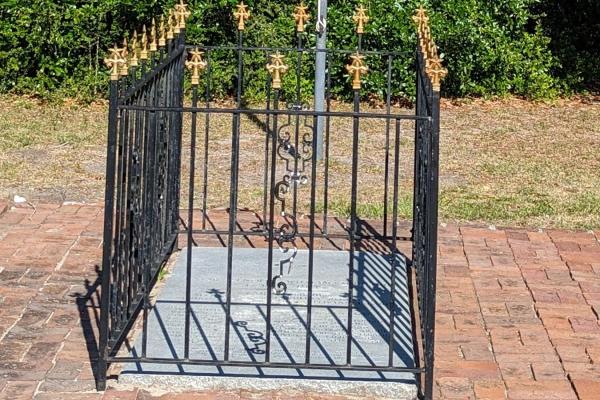
1214 Middle St.
Sullivan's Island, SC 29482
William Moultrie died in 1805 and was buried in the family cemetery. In 1977, his remains were moved to Sullivan's Island within Fort Moultrie.

815 Gilbert Stuart Rd.
Saunderstown, RI 02874
Gilbert Stuart Birthplace
Gilbert Stuart Birthplace, Marie Boscia (photographer)The former home and birthplace of famed portraitist Gilbert Stuart, who immortalized Presidents Washington, Jefferson, Madison, Monroe, John Adams, and John Quincy Adams; heroes of the Revolution and War of 1812; and prominent statesmen and society men and women of the day. His most famous work is his "unfinished" portrait of George Washington, which now appears on the one-dollar bill. This iconic portrait is dubbed "The Athenaeum," and it is displayed in the National Portrait Gallery in Washington, D.C. The museum is authentically restored and furnished to resemble a true 1750s home, which includes a working gristmill, gardens, woodland trails, art exhibitions, and more.
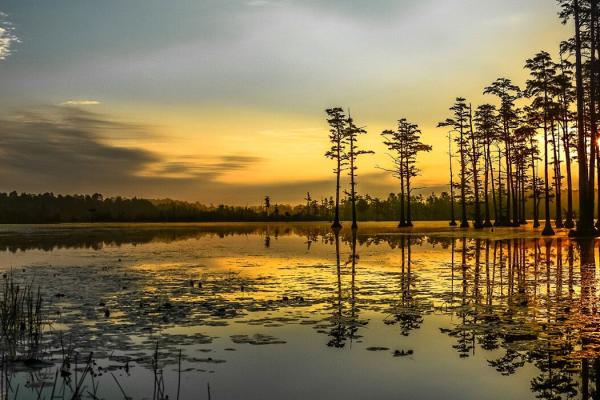
650 State Rd S-28-331
Camden, SC 29020
Not far from Camden Battlefield, Goodale State Park is lined with cypress trees, a spring-fed lake that offers boating, fishing, and hiking opportunities.

15 Hopkins Street
Providence, RI 02903
The Stephen Hopkins House
Visit Rhode IslandBuilt in 1707, this house belonged to Stephen Hopkins, a signer of the Declaration of Independence, Chief Justice of the Rhode Island Supreme Court, the first Chancellor of Brown University, and Governor of Rhode Island. George Washington visited in 1776 while on his way to Boston, though Hopkins was away at the time.
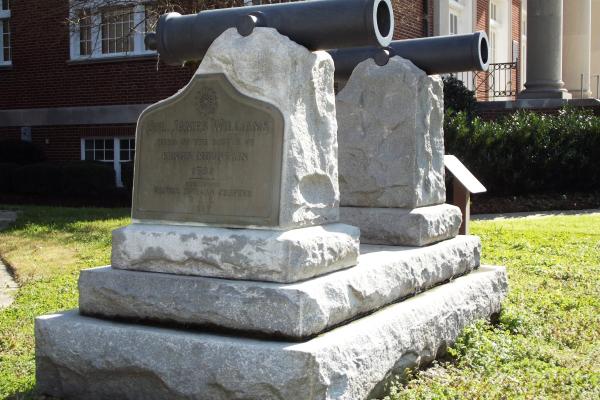
210 North Limestone Street
Gaffney, SC 29340
James Henderson Williams, a South Carolina militia colonel and Patriot leader, was killed at the Battle of Kings Mountain in 1780 and is commemorated here, where his remains were later reinterred and a memorial erected in his honor.
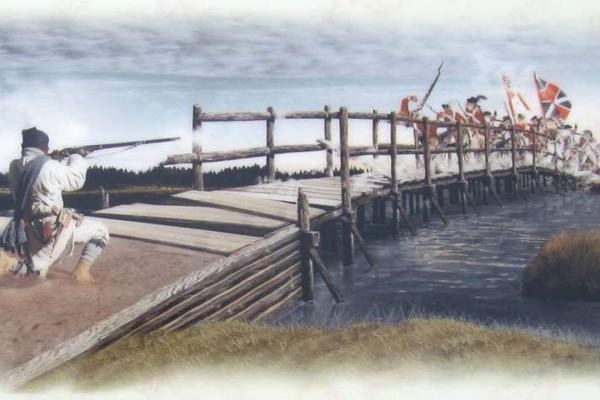
Great Bridge Battlefield & Waterways History Foundation
1775 Historic Way
Chesapeake, VA 23320
The primary approach to Norfolk, Virginia, was over Great Bridge, which spanned the Elizabeth River. On the morning of December 9, 1775, British soldiers attacked Patriot forces near the bridge in an attempt to seize the bridge and run off the rebels.

2356 US-17
South Mills, NC 27976
Located just south of the Chesapeake Bay, this "uninhabitable" Great Dismal Swamp was home to thousands of Native Americans and Maroons--self-emancipated slaves--throughout the 18th and 19th centuries.
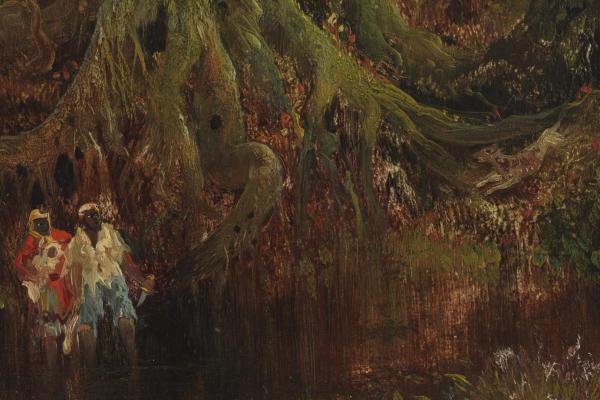
3100 Desert Road
Suffolk, VA 23434
Located just south of the Chesapeake Bay, this "uninhabitable" Great Dismal Swamp was home to thousands of Native Americans and Maroons--self-emancipated slaves--throughout the 18th and 19th centuries.
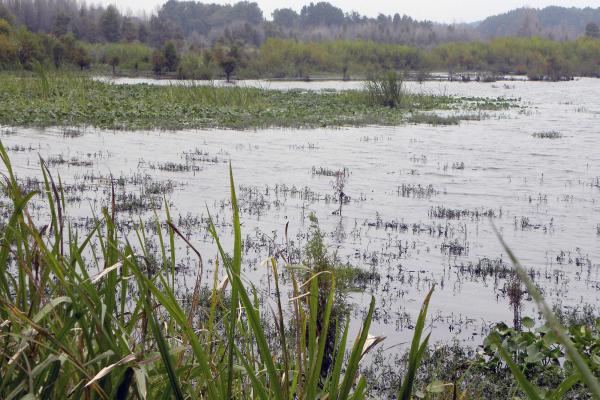
Pine Island Entrance Rd.
Summerton, SC 29148
Located within the Santee Wildlife Refuge, this was the last major battle of the war in South Carolina.

193 Vernon Ave
Middletown, RI 02842
Site of Green End Fort
Historical Marker Database
Green End Fort in Middletown, Rhode Island, is one of the most intact surviving Revolutionary War earthworks on Aquidneck Island, significant for its role in both the 1778 British defenses during the Siege of Newport and its later transformation into a French redoubt under Rochambeau in 1780. It is one of the few places where you can still physically see the contours of a Revolutionary War fortification.

193 Vernon Ave
Middletown, RI 02842
Site of Green End Fort
Historical Marker Database
Green End Fort in Middletown, Rhode Island, is one of the most intact surviving Revolutionary War earthworks on Aquidneck Island, significant for its role in both the 1778 British defenses during the Siege of Newport and its later transformation into a French redoubt under Rochambeau in 1780. It is one of the few places where you can still physically see the contours of a Revolutionary War fortification.
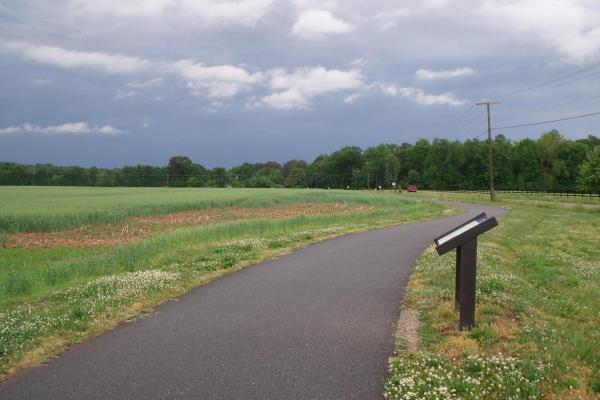
2592 Greensprings Road
Williamsburg, VA 23185
One of the last Virginia land battles of the Revolution prior to Yorktown, Green Spring saw Anthony Wayne and the Marquis de Lafayette successfully lead their troops to victory against an ambush laid by Charles Cornwallis.

2332 New Garden Road
Greensboro, NC 27410
One of the final battles of the Southern Campaign, the Battle of Guilford Courthouse cemented the British path to final defeat at the Battle of Yorktown.
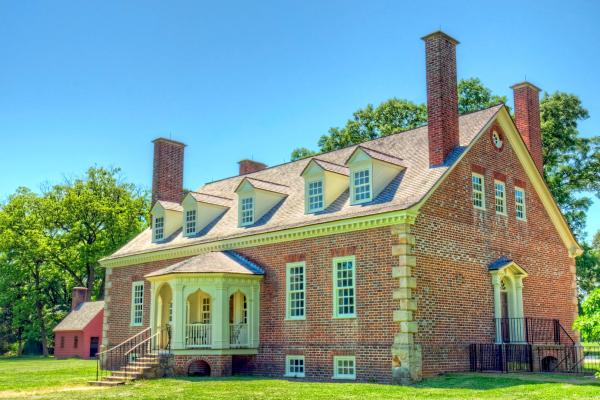
10709 Gunston Road
Lorton, VA 22079
The home to Founding Father George Mason, this mansion is slightly atypical of Georgian architecture due to its unique interior design that blends styles from across Europe and Asia.
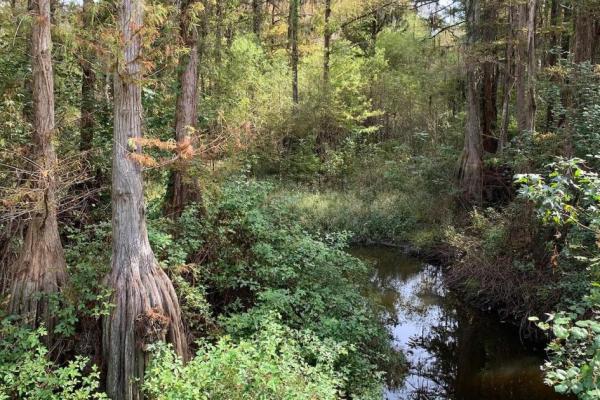
Old River Rd
Pinewood, SC 29125
McLeroth and his 64th Regiment were escorting 200 recruits from Charleston to Camden when Marion, with about 700 men, surprised them at Halfway Swamp.

414 West 141st Street
New York, NY 10005
Relocated Mansion of Founding Father, Alexander Hamilton.

1950 Rutledge Rd.
McClellanville, SC 29458
This 18th-century plantation home, on the grounds of the Hampton Plantation State Historic Site, served as a place of refuge for Francis Marion who hid here from when British troops.
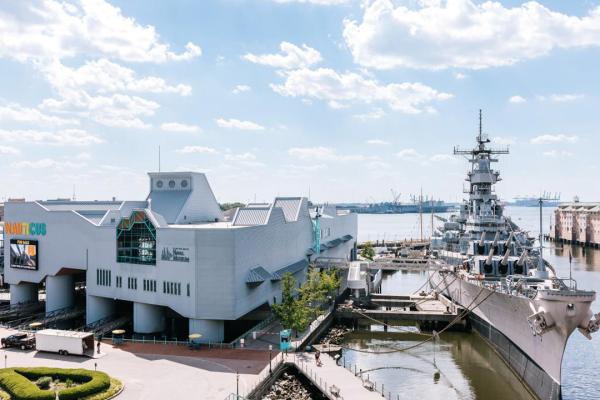
1 Waterside Drive Suite 248
Norfolk, VA 23510
The Hampton Roads Naval Museum is one of ten U.S. Navy-run museums in the country. It highlights Virginia's naval history from the American Revolution to the present.

3 Front Street
Hancocks Bridge, NJ 08038
Hancock House
Historical Marker DatabaseBuilt in 1734 by Quakers William and Sarah Hancock, the Hancock House is an important tangible link to Salem County's history and our country’s struggle for independence. After William’s death in 1762, the house passed to his son, William Jr., who succeeded him in the Assembly and became His Majesty’s Judge of the County Court of Salem. On March 20, 1778, the British attacked Hancock’s Bridge. Major John Graves Simcoe and 300 of his Queen’s Rangers surprised the militia at Hancock’s Bridge and attacked a nearby militia quartered in the Hancock House. Among the casualties was Judge William Hancock, who died several days later.
The exterior of the Hancock House is an outstanding example of the patterned brick houses that once dotted the landscape of Salem County, NJ. Modeled after the seventeenth-century building traditions of the Quakers’ English homeland, masons used variations in color and placement to create designs, dates, and initials. The initials of William and Sarah Hancock and the date that the house was built (1734) can be seen in the brickwork of the Hancock House.
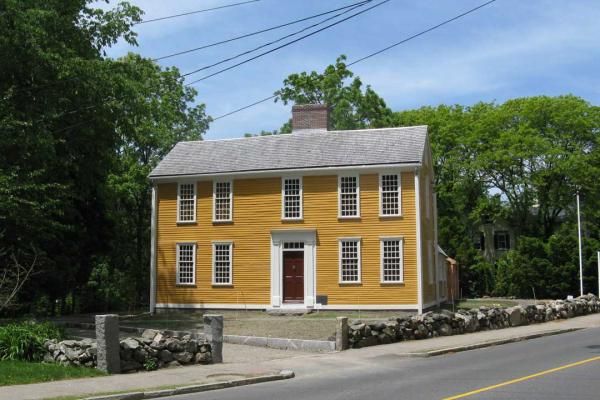
36 Hancock Street
Lexington, MA 02420
In the early twilight hours of April 19, 1775, Paul Revere rode by this house to warn its occupants, Samuel Adams and John Hancock, of the impending British raids. Already known for their revolutionary sentiments, Adams and Hancock fled to avoid capture.
Heath Springs, SC 29058
This battleground was the site of three British camps, attacked by Patriot troops on August 6, 1780. It was a fight primarily between countrymen.
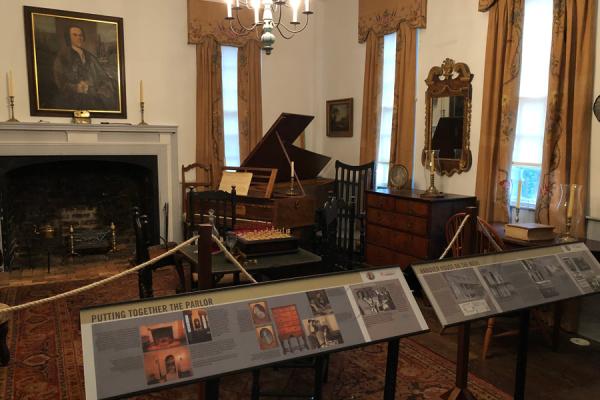
113 Hanover Cir
Clemson, SC 29634
Built in 1716 for Paul de St. Julien in Berkeley County. The house was later dismantled and moved to Clemson University and functions as a house museum.

2990 Broadway
New York, NY 10027
At the Battle of Harlem Heights, American forces rallied after earlier defeats and struck back against advancing British troops on northern Manhattan. The clash restored much-needed confidence to the Continental Army and proved the Patriots could stand against Britain’s professional soldiers.
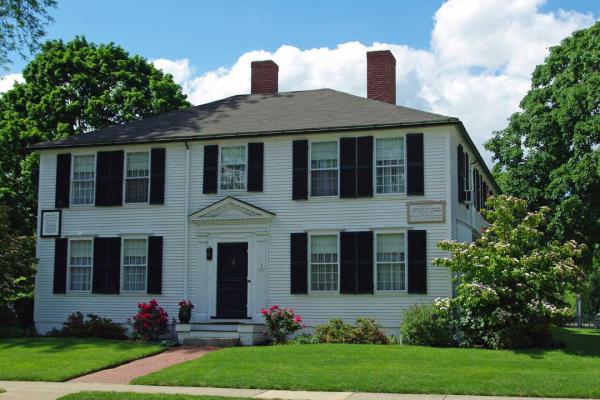
1 Harrington Road
Lexington, MA 02421
The Harrington House belonged to that of Jonathan Harrington whom, according to local history, crawled back to his house to pass in his wife's arms after being mortally wounded during the Battle of Lexington and Concord
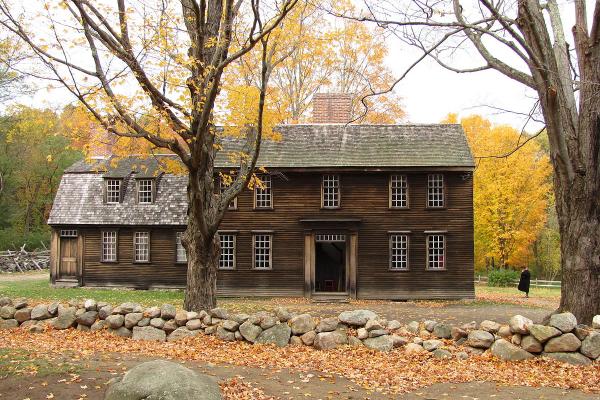
112 north Great Road
Lincoln, MA 01773
Located near where Paul Revere was captured during his famous ride, one of Revere's compatriots was able to escape and alert Hartwell family, who continued to raise the alarm about the advancing British troops.

289 Forge Hill Road
Vails Gate, NY 12584
Historic headquarters of Major General Henry Knox during the winter of 1780-1781.

21 Grandview Drive
Crown Point, NY 12928
The Henry Knox Trail, also known as the Knox Cannon Trail, is a network of roads and paths that traces the route of Colonel Henry Knox's "noble train of artillery" from Crown Point, New York, to the Continental Army camp outside Boston, Massachusetts, in the American Revolutionary War.
George Washington commanded Henry Knox in 1775 to transport 59 cannons (weighing over 60 tons) from captured forts on Lake Champlain, 30 from Fort Ticonderoga, and 29 from Crown Point to the army camp outside Boston to aid the war effort against British forces. They included forty-three heavy brass and iron cannons, six coehorns, eight mortars, and two howitzers.
This marker is in Crown Point, New York, in Essex County. It can be reached from Grandview Drive, on the left when traveling west. Marker is located in front of the museum at Crown Point State Historic Site.
Learn about Revolutionary War Combat Strategy. Watch the Revolutionary War Animated Map.

35 Aiken Avenue
Rensselaer, NY 12144
The Henry Knox Trail, also known as the Knox Cannon Trail, is a network of roads and paths that traces the route of Colonel Henry Knox's "noble train of artillery" from Crown Point, New York, to the Continental Army camp outside Boston, Massachusetts, in the American Revolutionary War.
George Washington commanded Henry Knox in 1775 to transport 59 cannons (weighing over 60 tons) from captured forts on Lake Champlain, 30 from Fort Ticonderoga, and 29 from Crown Point to the army camp outside Boston to aid the war effort against British forces. They included forty-three heavy brass and iron cannons, six coehorns, eight mortars, and two howitzers.
When traveling south on Aiken Avenue, the marker is on the left at the intersection of Aiken Ave. and Columbia Turnpike (U.S. 9 & 20). The Gen. Henry Knox Trail Marker is in the median garden between opposing lanes of Aiken Avenue in Rensselaer, NY. It marks the spot where Knox began their journey on land towards Massachusetts.
Learn about Revolutionary War Combat Strategy. Watch the Revolutionary War Animated Map.

155 Millburn Avenue
Millburn, NJ 07041
The Hessian House, Millburn NJ
Historical Marker DatabaseThe Hessian House earned its name from the legend surrounding its role in the Battle of Springfield. The name comes from the belief that two deserting Hessians sought refuge and work with the house's owners at the time. The Hessian House in Millburn, New Jersey, is one of the town’s oldest surviving structures—built around 1730. This house survived the burning of the town by the retreating British. Millburn (then part of Springfield Township) lay directly in the path of the British and Hessian advance on June 23, 1780, during the Battle of Springfield, the war's last major northern battle. The historic house is now home to the Partnership for a Drug-Free New Jersey, which purchased it in 2007.
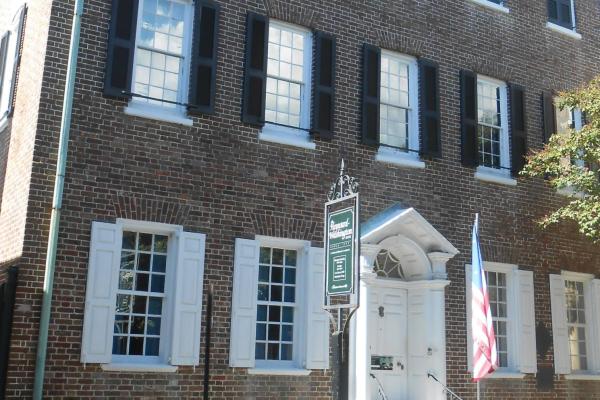
87 Church St.
Charleston, SC 29403
This historic house museum was the home of Thomas Heyward, Jr., one of four South Carolina signers of the Declaration of Independence.

100 Harding Street
Bath, NC 27808
North Carolina's first official town and port of entry, Bath served as an early hub of trade and development during the Colonial period.

2147 Bethabara Road
Winston-Salem, NC 27106
Once a thriving commercial hub, Bethabara was home to a Moravian settlement in Winston-Salem that witnessed the French and Indian War, the Regulator War, and the American Revolution.
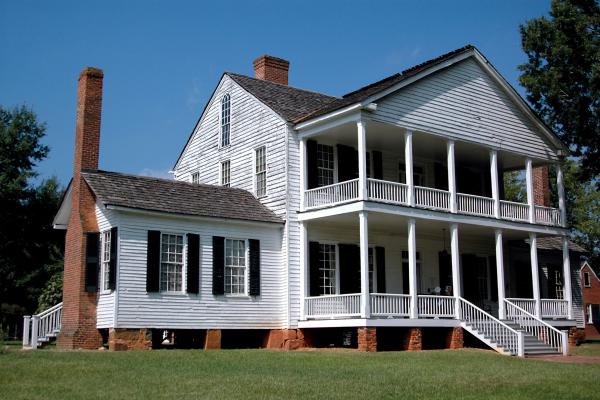
1444 Brattonsville Rd.
McConnells, SC 29726
Discover the history of the Scots-Irish and African-Americans through preserved buildings and living history experiences of the Brattonsville community.

25 St David St
Halifax, NC 27839
Explore colonial Halifax at a preserved Revolutionary-era town where historic homes, public spaces, and hands-on exhibits reveal how North Carolinians lived, worked, and governed in the 1700s. From influential leaders’ residences to springs, markets, and river landings, the site brings everyday life in a pivotal American community into sharp focus.
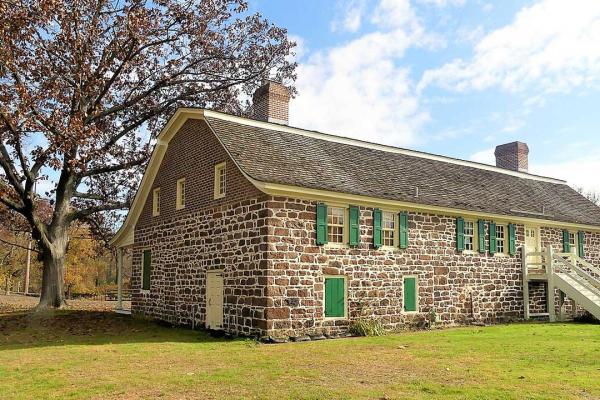
1201 Main Street
River Edge, NJ 07661
Known for having the "Bridge that Saved the Nation," these grounds were once traversed by George Washington and the battered Continental Army as it retreated from New York
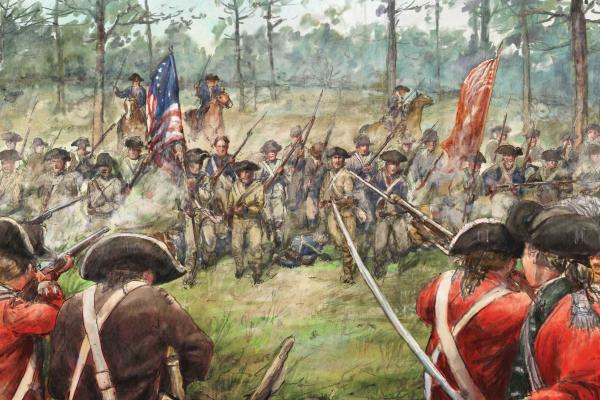
620 Greene Street
Camden, SC 29020
Patriot Leader Nathanael Greene Is repulsed but not defeated in his campaign to chase the British from the South Carolina backcountry
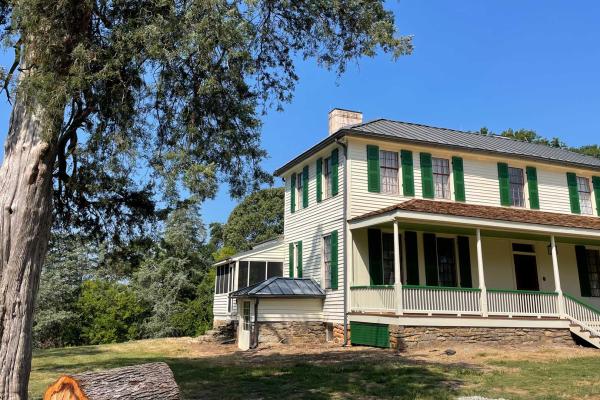
101 Hopewell Road
Clemson, SC 29631
Located near the famous Treaty of Hopewell site, the Hopewell Plantation house was the Pickens' family home and later served as the South Carolina Governor's Mansion.
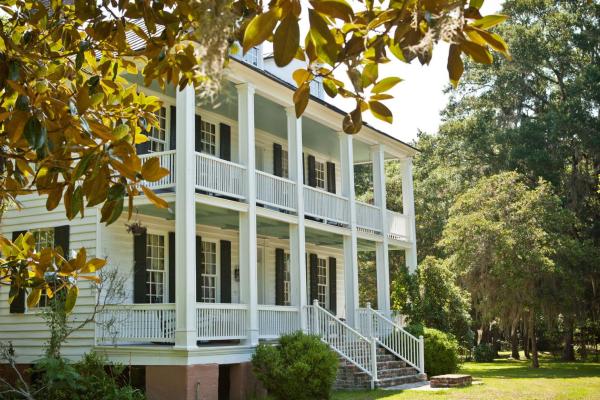
494 Hopsewee Rd.
Georgetown, SC 29440
Built circa 1740, Hopsewee Plantation was one of the South’s major rice plantations and the birthplace of Thomas Lynch, Jr., one of the signers of the Declaration of Independence.

288 Alston House Road
Sanford, NC 27330
Also known as the Alston House, the House in the Horseshoe served as a Patriot outpost where a four hour skirmish took place on July 29, 1781.
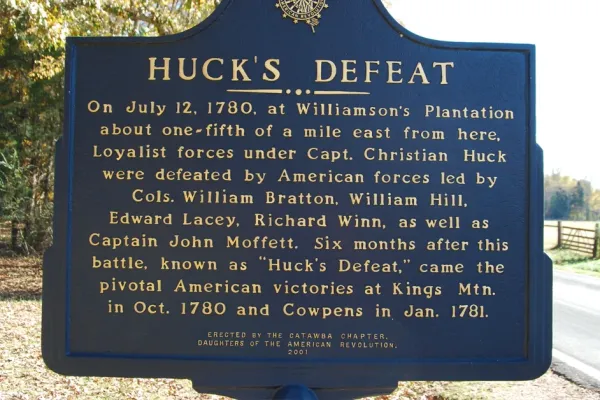
1444 Brattonsville Rd
McConnells, SC 29726
Huck’s Defeat occurred on July 12, 1780. The battleground is on the site of Historic Brattonsville, a former colonial plantation.
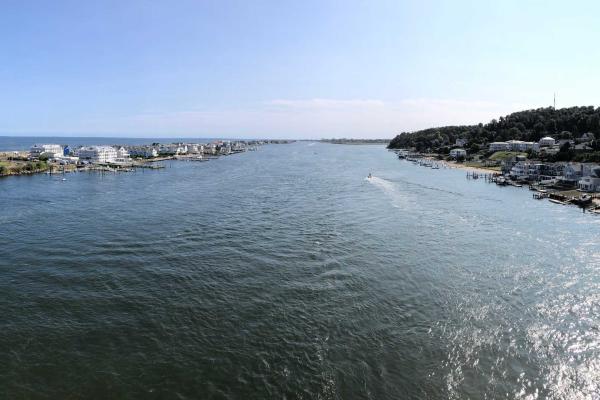
3 Rumson Rd
Rumson, NJ 07760
In September 1780, Loyalist Colonel Tye captured Patriot captain Joshua Huddy after a fierce struggle. A Patriot ambush capsized their boat, allowing Huddy to escape while Tye suffered a wound that would prove fatal.

54 Washington Street
Newport, RI 02840
Hunter House Historical Museum in Newport, RI
Historical Marker DatabaseThe Hunter House in Newport became a key Revolutionary War site when the French fleet under Admiral de Ternay used it as headquarters in 1780. Loyalist owner Colonel Joseph Wanton Jr. was accused of helping the British raise troops. Wanton was imprisoned by Patriot authorities and later forced to flee Newport. The French occupation of Newport was crucial to the eventual Yorktown campaign. The U.S. Department of the Interior declared it a Registered National Historic Landmark in 1968.
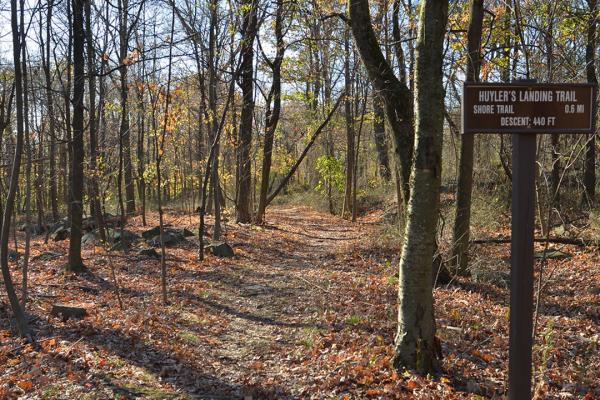
Palisades Interstate Parkway
Alpine, NJ 07620
Along the banks of the Hudson, one can walk in the steps of Cornwallis' army, which landed at this spot to chase the Continental Army through New Jersey.
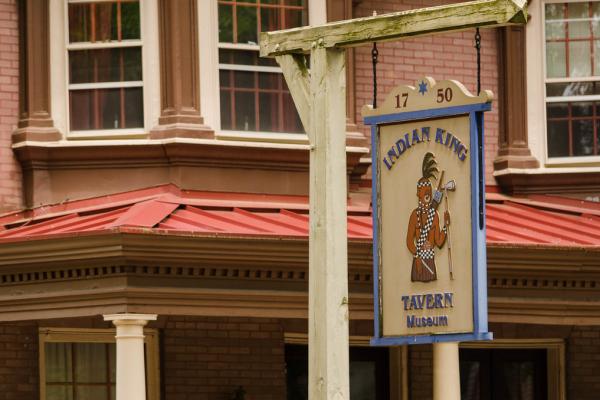
223 Kings Highway
Haddonfield, NJ 08033
Step into the Indian King Tavern, where revolutionaries once gathered, laws were forged, and history was made. This legendary Haddonfield landmark saw New Jersey declare its independence, adopt its Great Seal, and host both Patriots and British forces in a high stakes struggle for America’s future.
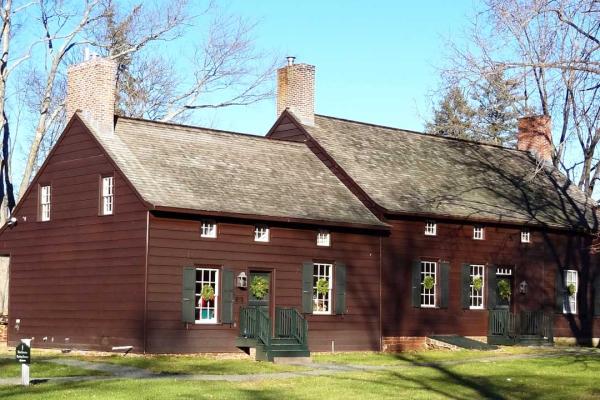
3055 River Road
Bedminister, NJ 07921
The only surviving building associated with the Pluckemin Artillery Cantonment, America's first military academy, it served as the headquarters of Henry Knox during the Middlebrook encampment of 1778-1779.
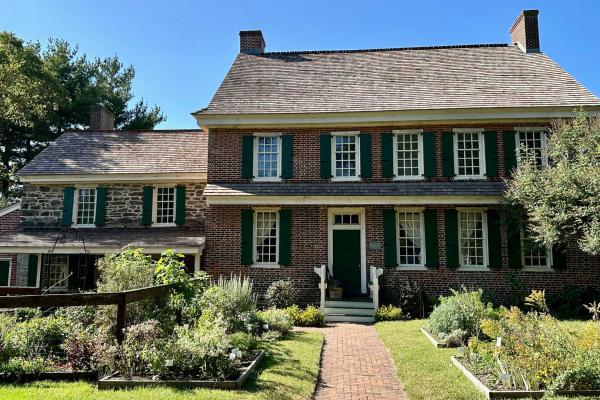
100 Hessian Avenue
National Park, NJ 08063
A home to a Quaker family, it served as a hospital following the Battle of Red Bank.

57 Peirce Street
East Greenwich, RI 02818
General James Mitchell Varnum Home
James Mitchell Varnum House MuseumGeneral James Mitchell Varnum was a Brigadier General in the Continental Army, a lawyer, and a key Rhode Island political figure. His Revolutionary War résumé includes commanding troops during the Siege of Boston and the Battle of Long Island, serving as a senior officer at Valley Forge, and helping form the 1st Rhode Island Regiment, notable for enlisting African Americans. The home served as a center for legal and military strategy discussions during the war, with a remarkable roster of guests including George Washington, Marquis de Lafayette, and the Comte de Rochambeau. The home dates to about 1788.
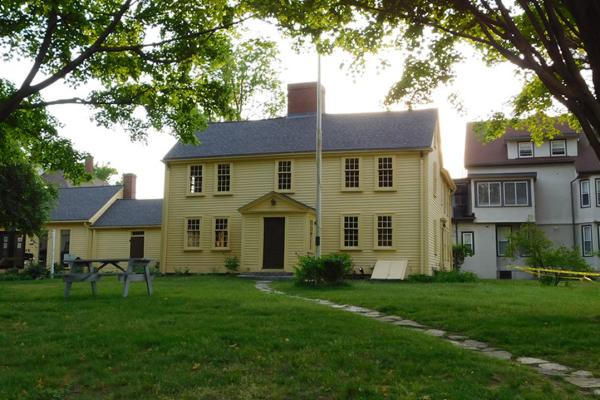
7 Jason Street
Arlington, MA 02476
One of the bloodiest sites during the Battle of Lexington and Concord, this house saw extensive combat and still bears the scars left behind by the engagement.
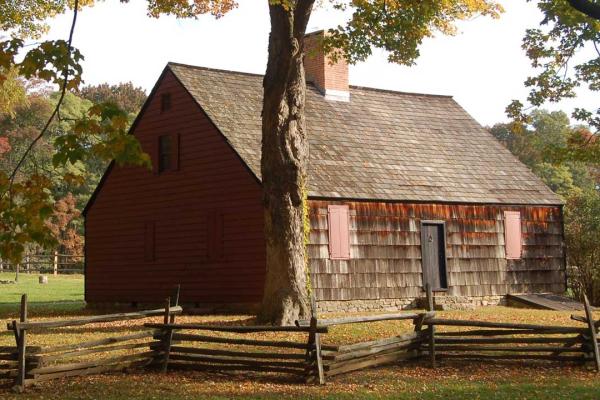
586 Tempe Wicke Road
Morristown, NJ 07960
Jockey Hollow, the site of General Washington’s winter encampment in 1779-1780, played a key role in forging the Continental Army's strength and unity. The nearby Wick House, once home to Major General Arthur St. Clair, now stands as a historic landmark, offering a glimpse into the hardships and strategies of that fateful winter.

52 Power Street
Providence, RI 02906
John Brown House Museum
Visit Rhode IslandThis was the first mansion in Providence built by John Brown, who founded Brown University, was a statesman, and made his fortune in the slave trade and other businesses (not to be confused with the slave revolt leader John Brown). John Brown was an important figure in the Revolutionary War, specifically being involved in the Gaspee Affair in 1772, founding and leading the Rhode Island Sons of Liberty, and supplying the Continental Navy with its first ship, the USS Providence. George Washington stayed here while visiting Rhode Island, and the collection includes a carriage known as "Washington's Chariot."

400 Jay Street
Katonah, NY 10536
The home and farm of John Jay, one of America's Founding Fathers.

141 Franklin Street
Quincy, MA 02169
This home, now known as the "John Quincy Adams Birthplace," was John and Abigail Adams' residence during the Revolutionary War. While John served as a delegate to the Second Continental Congress in Philadelphia, Abigail managed this home and served as an advisor to her husband in his public role.

198 Taylor's Mill Road
Lebanon, NJ 08833
Remains of Col. John Taylor's Grist Mill, built circa 1760.
Historical Marker Database
Colonel John Taylor, an Englishman by birth, served in the Revolution with the 4th Hunterdon Militia and eventually rose to the rank of General. This mill played an important role in the Revolution as a grain supplier for Washington’s Army. The mill was once a 3-story fieldstone-and-frame gristmill supplied by water from Rockaway Creek. It operated until 1930. An earthquake damaged the 264-year-old mill in 2024.
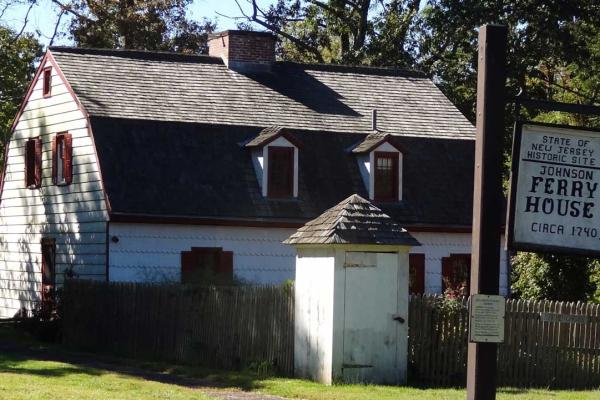
355 Washington Crossing-Pennington Road
Titusville, NJ 08560
Built in the 1740s, this building acted as a ferry house for those wishing to cross the Delaware, including the likes of George Washington and his men on Christmas night of 1776.

139 Hall Avenue
Johnstown, NY 12095
The Johnson Hall State Historic Site was the home of Sir William Johnson, the British Superintendent of Indian Affairs in the Province of New York and a Major General who fought in King George’s War and the French and Indian War.

139 Hall Avenue
Johnstown, NY 12095
Patriot forces under Marinus Willett struck a decisive blow against Loyalist troops led by John Butler in one of the war’s final northern engagements. Though the enemy slipped away under cover of darkness, the clash shattered Loyalist strength in the Mohawk Valley and effectively ended organized resistance on that frontier.

90 Beaver Avenue
Annandale, NJ 08801
Jones Tavern, established in 1760. Recruiting station for the Hunterdon County militia.
Historical Marker DatabaseOwned by Thomas Jones in 1760, the tavern became a center of revolutionary activity and a militia recruiting station, with Jones rising to the rank of Captain. Captain Jones helped Daniel Bray of Amwell gather and hide the Durham boats that General George Washington later used to cross the Delaware River from Pennsylvania to Trenton in 1776. On June 24, 1776, loyalists armed with clubs raided the tavern house and beat Jones, threatened his family and stole money from the tavern bar. After signing, copies of the Declaration of Independence were sent to be read to the populace, and it was read from the balcony of Jones Tavern.

156 Scituate Avenue
Cranston, RI 02921
Joy Farmhouse
Visit Rhode IslandThe Joy Homestead sits directly on the Washington–Rochambeau Revolutionary Route (W3R). On June 18, 1781, General Rochambeau and roughly 5,000 French troops marched past the Joy family’s home on their way to join George Washington for the Yorktown campaign. Contemporary French maps mark this exact stretch of road as part of the army’s first day’s march from Providence.

1774 Armory Street
East Greenwich, RI 02818
Home of the Kentish Guards, a historic Rhode Island Independent Military Organization, founded in 1774.
Historical Marker Database
The Kentish Guards were formed on September 24, 1774, to protect East Greenwich, Rhode Island, from a Tory mob. They were chartered by the Colonial Assembly on October 29, 1774, as the first Independent Militia Company for Kent County. Using the Kent County Courthouse as their armory, they participated in establishing the Rhode Island Navy in 1775. The Guards built Fort Daniel at Greenwich Cove, equipped it with nine cannons, and garrisoned it throughout the Revolutionary War to defend Warwick Bay from naval attacks. There is a marker about 400' away denoting their drill field. Noted members of the Guards include James Mitchell Varnum and Nathanael Greene.
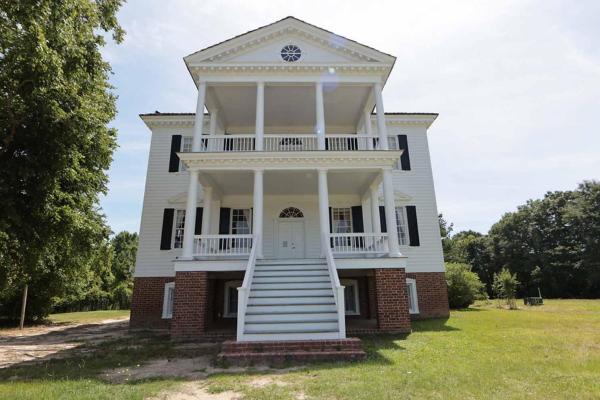
212 Broad Street
Camden, SC 29020
After the Siege of Charleston in 1780, the British established a headquarters at the Kershaw/Cornwallis House. Today the house and grounds are open to tours.
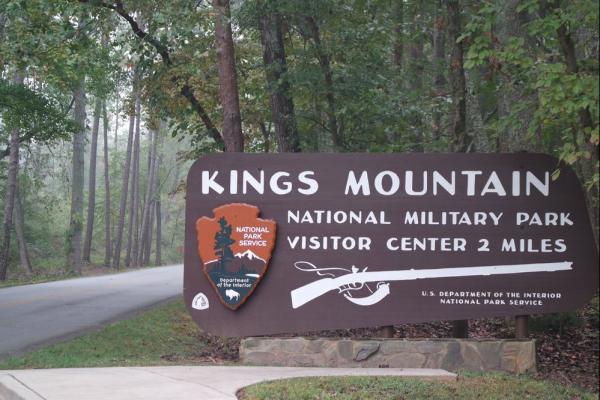
2625 Park Road
Blacksburg, SC 29702
On August 16, 1780, the unexpected Patriot success at Kings Mountain infused those favoring rebellion with new confidence.
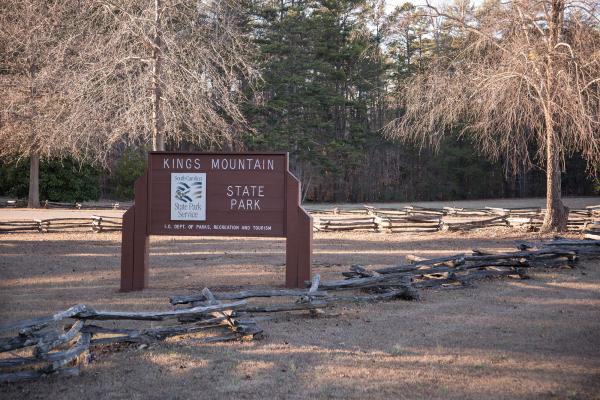
1277 Park Rd.
Blacksburg, SC 29702
The Piedmont’s Kings Mountain State Park has miles of forested trails perfect for supreme Kings Mountain hiking, two fishing lakes, and sits adjacent to Kings Mountain National Military Park, one of many national park Revolutionary War sites.

296 Fair St
Kingston, NY 12401
On October 16, 1777, British forces under John Vaughan attacked and burned much of Kingston, New York, then the state’s first capital. Though the raid caused widespread destruction and forced the New York government to flee, it ultimately did little to alter the course of the Revolutionary War.

41 Central Street
Bicentennial Park
Andover, ME 01810
President James Monroe invited the Marquis de Lafayette to visit the United States, his adopted country. Lafayette’s tour of all 24 states in 1824 and 1825 drew large crowds and sparked a renewal of patriotism. During the American Revolution, Lafayette’s intense advocacy of the American cause convinced King Louis XVI of France to send troops and ships, which proved crucial to the American victory at Yorktown.
As Lafayette left Boston, Massachusetts on June 21, 1825, he passed through Andover, Maine. He was met at the Andover line by a company of cavalry, who escorted him to the vicinity of the Theological Institution. Several infantry companies and many citizens met him there, and he was addressed by Mr. John Kneeland. The troops then all escorted Lafayette to Taylor’s Hotel, where he met the faculty of the Theological Institution and the Andover Academy. He was introduced to many other citizens, ladies, children, and militia officers. He then visited the institution itself, where he met the students. Lastly, he was escorted to Andover Village, where the infantry departed. The cavalry continued to escort him to the New Hampshire state line.
Learn about Revolutionary War Combat Strategy. Watch the Revolutionary War Animated Map. For a summary, read An Overview of the American Revolution.

6199 Railroad Street
Cayuga Harris Park
Cayuga, NY 13034
Lafayette Tour Marker, Cayuga, NY
The Lafayette TrailPresident James Monroe invited the Marquis de Lafayette to visit the United States, his adopted country. Lafayette’s tour of all 24 states in 1824 and 1825 drew large crowds and sparked a renewal of patriotism. During the American Revolution, Lafayette’s intense advocacy of the American cause convinced King Louis XVI of France to send troops and ships, which proved crucial to the American victory at Yorktown.
On June 8, 1825, General Lafayette was moving east from Geneva and Waterloo, towards Auburn and Syracuse. He crossed the Cayuga Long Bridge, arriving in the Village of Cayuga around 4 p.m., where he was met by the Committee of Arrangements. Many local citizens then had the opportunity to meet him. After about an hour, the General proceeded on towards Auburn via Genesee Street, in a barouche pulled by six chestnut horses. He was escorted by a procession, including the Deputy Marshal, a Dragoon unit, mounted military officers, the city Marshal General Brinkerhoff, and the Committee of Arrangements members.
Learn about Revolutionary War Combat Strategy. Watch the Revolutionary War Animated Map. For a summary, read An Overview of the American Revolution.

1 Clermont Avenue
Clermont State Historic Site
Clermont, NY 12526
Lafayette Tour Marker, Germantown, NY
The Lafayette TrailPresident James Monroe invited the Marquis de Lafayette to visit the United States, his adopted country. Lafayette’s tour of all 24 states in 1824 and 1825 drew large crowds and renewed patriotism. During the American Revolution, Lafayette’s intense advocacy of the American cause convinced King Louis XVI of France to send troops and ships, which proved crucial to the American victory at Yorktown.
Lafayette left Hudson, New York, after a public reception and arrived in Germantown around midday on September 16, 1824. Upon arrival, a group of riflemen escorted Lafayette and his party up the hill to Clermont. At the summit, a regiment of well-disciplined soldiers in uniform greeted them, arranged in formation. Meanwhile, spectators lined the grounds, eager to see the general. A sloop on the river fired a cannon salute, quickly returned by a shot from a nearby cannon hidden among the trees. Lafayette then reviewed the troops, who saluted by firing their guns in succession in his honor. Afterward, the local Masons addressed him.
Learn about Revolutionary War Combat Strategy. Watch the Revolutionary War Animated Map. For a summary, read An Overview of the American Revolution.

9 E. Main Street
Middletown, PA 17057
Lafayette Tour Marker, Middletown, PA
William G. Pomeroy FoundationPresident James Monroe invited the Marquis de Lafayette to visit the United States, his adopted country. Lafayette’s tour of all 24 states in 1824 and 1825 drew large crowds and sparked a renewal of patriotism. During the American Revolution, Lafayette’s intense advocacy of the American cause had convinced French King Louis XVI to send troops and ships, which proved crucial to the American victory at Yorktown.
On January 30, 1825, General Lafayette was traveling from York to Harrisburg, Pennsylvania. He was accompanied by his son, George Washington Lafayette, as well as his secretary and a committee to escort him from York. Lafayette was met in Middletown by the Harrisburg reception committee and stopped for dinner with them there at about 2:30 pm. The group continued on, and at about 5 pm they arrived in Harrisburg.
Learn about Revolutionary War Combat Strategy. Watch the Revolutionary War Animated Map. For a summary, read An Overview of the American Revolution.

Goat Island
Niagara Falls State Park
Niagara Falls, NY 14303
President James Monroe invited the Marquis de Lafayette to visit the United States, his adopted country. Lafayette’s tour of all 24 states in 1824 and 1825 drew large crowds and sparked a renewal of patriotism. During the American Revolution, Lafayette’s intense advocacy of the American cause convinced King Louis XVI of France to send troops and ships, which proved crucial to the American victory at Yorktown.
On June 5, 1825, Lafayette visited Niagara Falls, New York. He was escorted to Goat Island by Judge Augustus Porter, where he spent over two hours marveling at the natural wonder and was deeply moved by its power and grandeur. His secretary, Auguste Levasseur, recorded that they remained “nearly half an hour on the edge of the gulf, contemplating the rapid fall of the water in silence and as if dumbfounded by the sound of its terrible water…whose noise makes itself heard during the calm of the night, they say, for 20 miles."
Learn about Revolutionary War Combat Strategy. Watch the Revolutionary War Animated Map. For a summary, read An Overview of the American Revolution.

4840 W. Seneca Turnpike
Syracuse, NY 13215
The Lafayette Tour Marker - Onondaga, NY
The Lafayette TrailPresident James Monroe invited the Marquis de Lafayette to visit the United States, his adopted country. Lafayette’s tour of all 24 states in 1824 and 1825 drew large crowds and renewed patriotism. During the American Revolution, Lafayette’s intense advocacy of the American cause convinced King Louis XVI of France to send troops and ships, which proved crucial to the American victory at Yorktown.
In June 1825, General Lafayette moved east across Central New York and passed through Marcellus and Onondaga Hill on his way to Syracuse. On June 9th, the Committee of Arrangements from Syracuse met him in Marcellus, along with a company of cavalry commanded by Lieutenant Toogood. He arrived at approximately 4:30 am while traveling eastward from Skaneateles. Following an address by General Wood, Lafayette resumed his journey eastward to Syracuse. They escorted him along Seneca Turnpike to the Onondaga Hill area, where they stopped at the county courthouse, where General Thaddeus M. Wood, a War of 1812 veteran, welcomed him.
Learn about Revolutionary War Combat Strategy. Watch the Revolutionary War Animated Map. For a summary, read An Overview of the American Revolution.

M 747 and RWC
Rensselaer, NY 12144
President James Monroe invited the Marquis de Lafayette to visit the United States, his adopted country. Lafayette’s tour of all 24 states in 1824 and 1825 drew large crowds and sparked a renewal of patriotism. During the American Revolution, Lafayette’s intense advocacy of the American cause convinced King Louis XVI of France to send troops and ships, which proved crucial to the American victory at Yorktown.
Going up the Hudson River from New York City, Lafayette was forced to disembark a few miles south of Albany because of the Overslaugh, a sand bar making steamer navigation difficult in shallower waters. From there, Lafayette proceeded north in a carriage and arrived in Greenbush (today's Rensselaer is part of it), accompanied by Maj. Gen. Solomon Van Rensselaer. An arch was erected in Greenbush in honor of Lafayette, bearing the inscriptions "Freedom's Volunteer, LA FAYETTE - One Republic not ungrateful" and "Yorktown, 19th October, 1781 - "The Boy did escape."
Learn about Revolutionary War Combat Strategy. Watch the Revolutionary War Animated Map. For a summary, read An Overview of the American Revolution.

51 East Main Street
Rochester, NY 14614
President James Monroe invited the Marquis de Lafayette to visit the United States, his adopted country. Lafayette’s tour of all 24 states in 1824 and 1825 drew large crowds and sparked a renewal of patriotism. During the American Revolution, Lafayette’s intense advocacy of the American cause convinced King Louis XVI of France to send troops and ships, which proved crucial to the American victory at Yorktown.
On June 7, 1825, his arrival in Rochester was announced with cannon and gunfire, as well as drums. At 6 p.m., he arrived and was met by a flotilla of twelve boats, each carrying flags, with a band playing on one. The General visited each boat, greeting them with individual salutations. The boats then fell into a line, with the General in the middle, and then proceeded through Rochester. Citizens gathered on bridges to watch him pass by, and they had built a stage on the aqueduct. The General was received by a delegation, and a speech was given by the Hon. W. B. Rochester, at the time an Eighth Circuit Court Judge and son of Nathaniel Rochester, the founder of the city. The General continued on to Canandaigua later that evening.
Learn about Revolutionary War Combat Strategy. Watch the Revolutionary War Animated Map. For a summary, read An Overview of the American Revolution.

33 MJ +79
Clermont State Park
Saugerties, NY 12477
President James Monroe invited the Marquis de Lafayette to visit the United States, his adopted country. Lafayette’s tour of all 24 states in 1824 and 1825 drew large crowds and sparked a renewal of patriotism. During the American Revolution, Lafayette’s intense advocacy of the American cause convinced King Louis XVI of France to send troops and ships, which proved crucial to the American victory at Yorktown.
Lafayette arrived in Saugerties on September 16, 1824, at 4:00 p.m., Lafayette’s steamboat docked at Clermont, where Robert L. Livingston awaited him. He and his party were escorted up the hill to the Livingston residence (Arryl House) by a troop of riflemen. Lafayette had arrived at Clermont by steamboat, reunited unexpectedly with a former comrade from Valley Forge, was greeted by riflemen and a regiment of uniformed soldiers, reviewed the troops amid cannon salutes, and was honored by local Masons before being hosted at the Livingston estate for an evening reception. Lafayette spent the evening and overnight at the Livingston estate before continuing his Hudson Valley tour.
Learn about Revolutionary War Combat Strategy. Watch the Revolutionary War Animated Map. For a summary, read An Overview of the American Revolution.

54 Port Richmond Avenue
Reformed Protestant Dutch Church
Staten Island, NY 10302
President James Monroe invited the Marquis de Lafayette to visit the United States, his adopted country. Lafayette’s tour of all 24 states in 1824 and 1825 drew large crowds and sparked a renewal of patriotism. During the American Revolution, Lafayette’s intense advocacy of the American cause convinced King Louis XVI of France to send troops and ships, which proved crucial to the American victory at Yorktown.
Lafayette’s arrival in the United States began on Staten Island, and his brief stop there on August 15, 1824 (the morning after his ship anchored) set the tone for the enormous celebrations that followed. He was greeted immediately by a 13‑gun salute from Fort Diamond (later renamed Fort Lafayette), and a flotilla of naval and merchant vessels welcoming him as “The Nation’s Guest.”
Learn about Revolutionary War Combat Strategy. Watch the Revolutionary War Animated Map. For a summary, read An Overview of the American Revolution.

125 East Main Street
Empire State Trail
Tonawanda, NY 14150
President James Monroe invited the Marquis de Lafayette to visit the United States, his adopted country. Lafayette’s tour of all 24 states in 1824 and 1825 drew large crowds and sparked a renewal of patriotism. During the American Revolution, Lafayette’s intense advocacy of the American cause convinced King Louis XVI of France to send troops and ships, which proved crucial to the American victory at Yorktown.
On June 5, 1825, Lafayette boarded a canal boat called the Seneca Chief. The boat was towed through the harbor in front of the Village of Buffalo and up the Niagara River to the western terminus of the Erie Canal. Many boats filled with citizens followed in a procession. They proceeded to Tonawanda, where Lafayette disembarked and was received by the Committee of Niagara County. They escorted Lafayette in a carriage up to Niagara Falls, where he viewed the falls, then returned to Tonawanda, and spent the night at Lewiston before reboarding the Seneca Chief the next day to continue traveling east.
Learn about Revolutionary War Combat Strategy. Watch the Revolutionary War Animated Map. For a summary, read An Overview of the American Revolution.
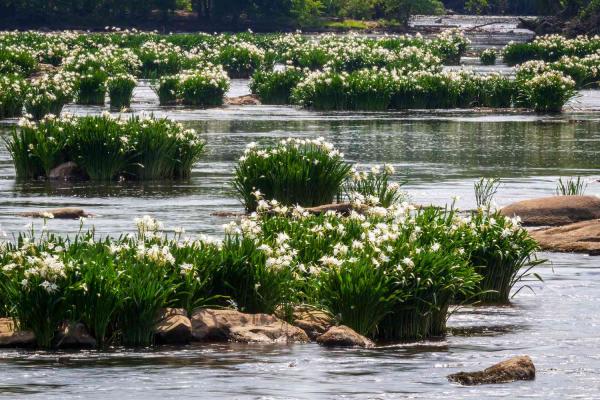
2051 Park Dr
Catawba, SC 29704
This park features the Lands Ford crossing, used during the Revolutionary War by both British and American troops under Cornwallis and Sumter before and after pivotal battles.

375 Millburn Avenue
Millburn Town Hall
Millburn, NJ 07041
The high-water mark of the invading British army during the Battle of Springfield.
Historical Marker Database
This marker denotes the high-water mark of the invading British army during the Battle of Springfield on June 23, 1780. After a punishing retreat, the British never entered New Jersey again in force. After the battle, the British shifted their focus to the southern states.
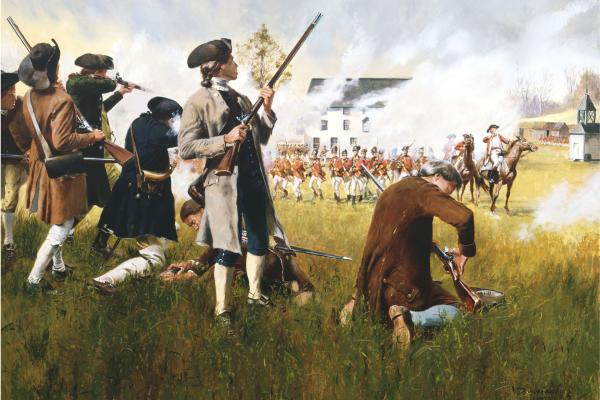
174 Liberty St
Concord, MA 01742
At dawn on April 19, 1775, an unknown shot shattered the silence in Lexington. British Redcoats and colonial militia clashed, leaving blood on the field. In Concord, the patriots struck back, and as the British retreated, gunfire hounded them to Boston, thus sparking the American Revolution
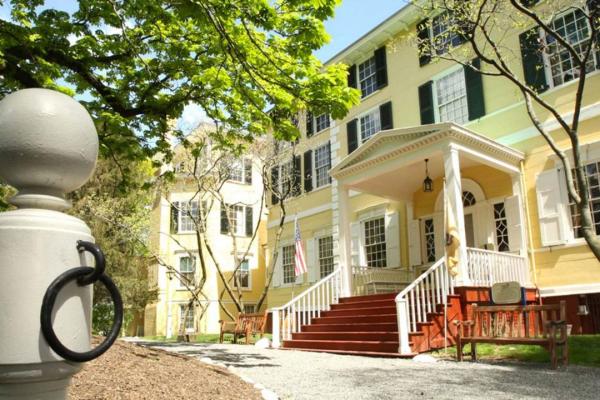
1003 Morris Ave
Union, NJ 07083
Liberty Hall was home to trailblazing governors, congressmen, senators, assembly persons, philanthropists, and entrepreneurs. Inhabited by William Livingston, New Jersey’s first elected governor and a signer of the United States Constitution, the 14-room Georgian-style home evolved over time into a 50-room Victorian mansion.

Gaffney, SC 29340
Three unknown British soldiers wounded at the nearby Battle of Cowpens died here at Limestone Springs and were buried on the land by order of Patriot Captain Vardry McBee Sr. and his wife, Hannah Echols.
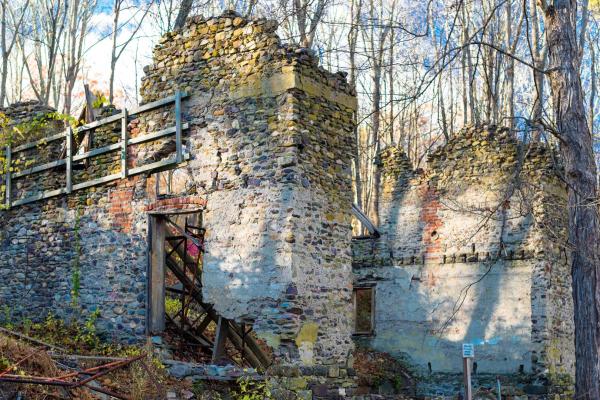
1334 Greenwood Lake Turnpike
Hewitt, NJ 07456
Owned and operated by German immigrants, this site once housed one of the largest ironworks in the colonies that supplied the Continental Army. Started in 1766, it was in operation for over a century.
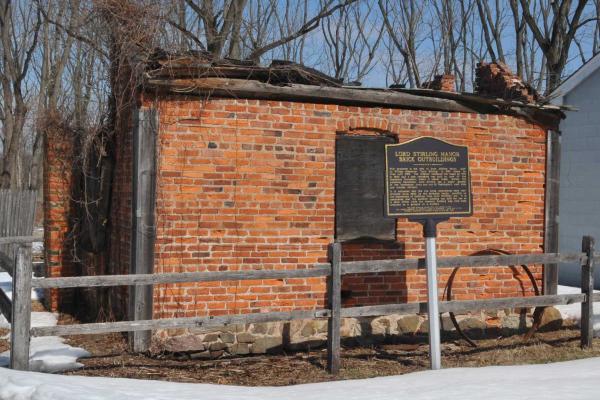
96 Lord Stirling Road
Basking Ridge, NJ 07920
Once a sprawling manor complex in the New Jersey countryside belonging to Major General William Alexander, all that remains are two extant structures and the cellar of the original home.
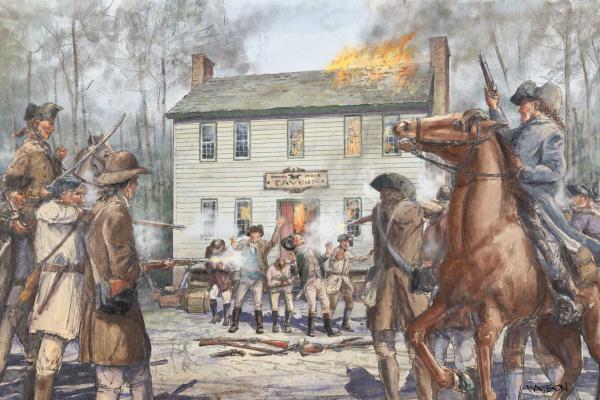
Highway 378
Gresham, SC 29546
Loyalists ambush a contingent of Patriot militia at a tavern in December of 1780, leading to a massacre

3550 Ashley River Road
Charleston, SC 29414
The plantation & gardens bears witness to 350 years of American history. Learn about the Europeans who colonized South Carolina, and the enslaved people who worked in the rice fields and gardens.
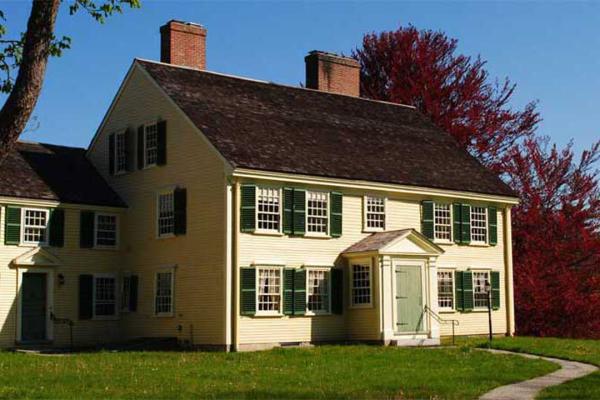
231 Liberty Street
Concord, MA 01742
Major John Buttrick, whose name is now the sake of this homestead, was a fourth generation American whose great-grandfather, William Buttrick, helped establish Concord in 1635. During and after the war, John Buttrick held positions in the military and upheld civic posts during the early days of the American Republic.
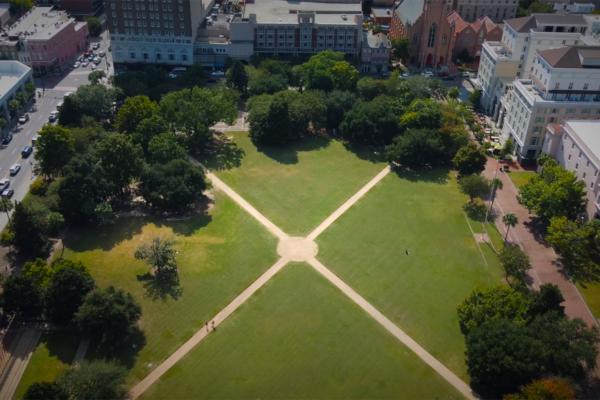
329 Meeting Street
Charleston, SC 29403
Marion Square, named in honor of Francis Marion, is greenspace in downtown Charleston, South Carolina and features remnants of The Hornwork, a large fortification built in 1758 that played a major role in the fight for independence.
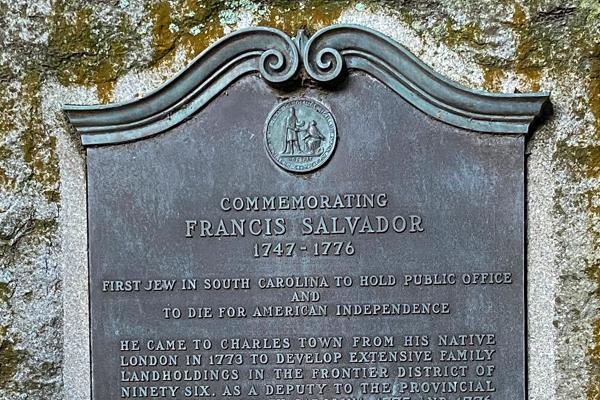
189 Coming St
Charleston, SC 29403
Francis Salvador, the first Jewish person to die in the Revolutionary War, was a London-born pioneer who moved to South Carolina in 1773. A vocal supporter of independence, he became the first Jewish person to hold political office in the state. Known as the "Southern Paul Revere," Salvador warned of attacks during the war but tragically died in an ambush in 1776 at just 29 years old, leaving behind a legacy of courage and commitment to freedom.
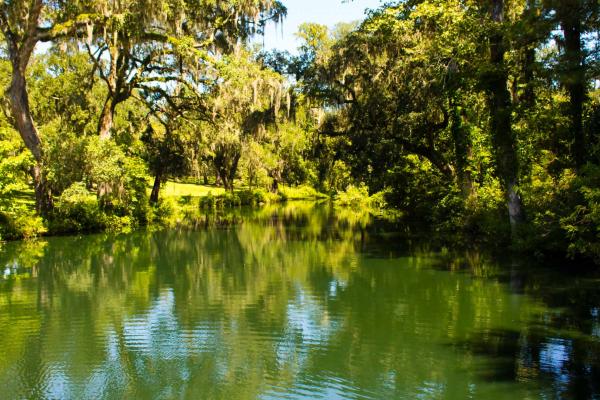
1098 Mepkin Abbey Rd
Moncks Corner, SC 29461
Former Plantation of Henry Laurens: Merchant, Slave Trader, South Carolina Statesman, and Father of Revolutionary War Soldier John Laurens.
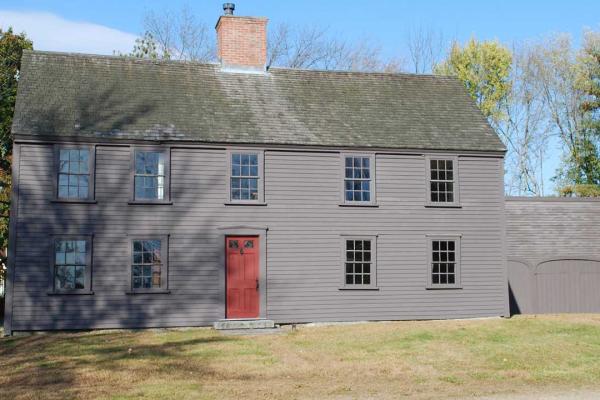
751 Lexington Road
Concord, MA 01742
The site of the first known Colonist offensive attack during the Revolution, Meriam's Corner marks where the British column, retreating to Boston, was ambushed by local militias.

2 Spring Street
Wappingers Falls, NY 12590
Built around 1741 by Adolphus and Nicholas Brower, who settled here and built this homestead along Wappingers Creek. Nicholas and his sons were active Patriots, supplying wheat, corn, and more to Washington's Army and building a shipyard along the creek from which supplies were sent to the Army at West Point.

120 Mexico Point Drive
Mexico, NY 13114
Patriot spy named Silas Towne hid on this island and observed British General Barry St. Ledger’s troop movements during the 1777 three-pronged invasion of New York.

120 Hillside Avenue
Newport, RI 02840
World War I Memorial at Miantonomi Hill
Visit Rhode Island
Indigenous people used the area around the park for hundreds of years, and the park (and the hill it is on) is named after Narragansett Sachem, or Chief Miantonomi. At different times, colonial, British, and French forces held the hill due to its commanding views. Historical accounts place Miantonomi Hill within the operational landscape of the Battle of Rhode Island, notable for the participation of the 1st Rhode Island Regiment, which included African Americans, Indigenous soldiers, and white colonists. The Park Commission built a stone tower in 1929 as a World War I memorial. Portions of the Revolutionary War earthworks still survive around the hill.
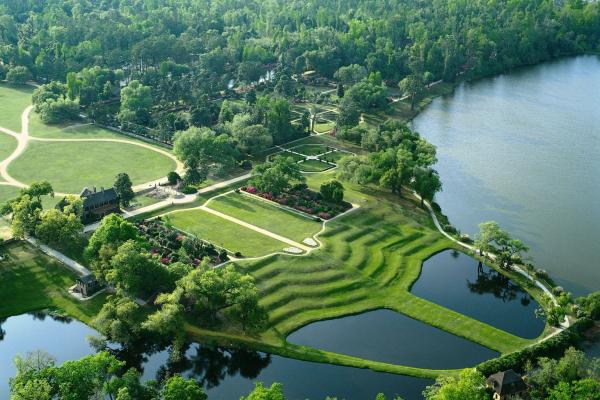
4300 Ashley River Rd
Charlestown, SC 29414
Middleton Place is America’s Oldest Landscaped Gardens and home to a signer of the Declaration of Independence.
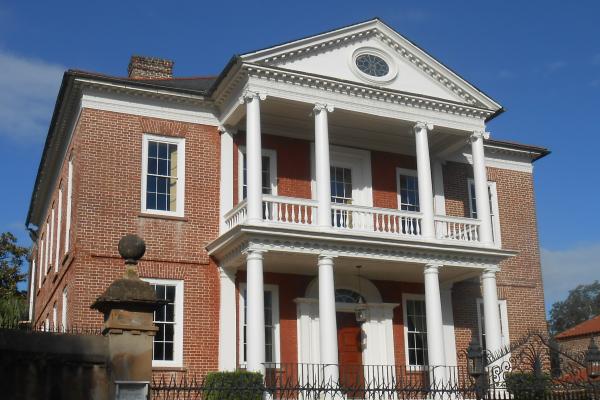
27 King St.
Charleston, SC 29401
In 1780, after the British occupied Charleston during the American Revolutionary War, the Brewton house was used as the British headquarters for Henry Clinton.

51 Park Place
Newark, NJ 07102
Looking southeast at the southwestern section of Gutzon Borglum's Wars of America statue in Military Park.
Jim HendersonLaid out in 1666 by Puritan settlers led by Robert Treat as the “Middle Commons,” the park served as a militia training ground and was used for musters and drills throughout the 17th and 18th centuries. Served as a troop training site during the French and Indian War. Continental Army officers camped here; Washington’s forces passed through Newark during the 1776 retreat. The park was used again to recruit soldiers during the Civil War and World War I.
A large bronze and granite sculpture created by Gutzon Borglum, the same artist behind Mount Rushmore, features 42 figures and 2 horses, representing Americans from various conflicts up to World War I. Borglum described the park's layout as a "great spearhead," with a Tudor sword symbolizing the nation’s call to arms.

Elizabeth Ave. & High St.
Elizabeth, NJ 07201
Elizabeth Minuteman Monument
Historical Marker DatabaseAt this spot, at daybreak on June 7, 1780, the fighting began as British forces moved toward Springfield. Here fell General Stirling, leading the advancing column. On June 8, after the British retreated from Springfield, General Hand attacked here and drove back the 22nd Regt. to the British main position at the point. Skirmishing on this ground continued until the British retreat to Staten Island on June 23rd.
This statue commemorates the people behind the campaign, including Elias Dayton’s soldiers and the Hunterdon men associated with Abraham Bonnell. Black servicemen such as Hunterdon militiaman Jacob Francis belong within this history of New Jersey’s defense.
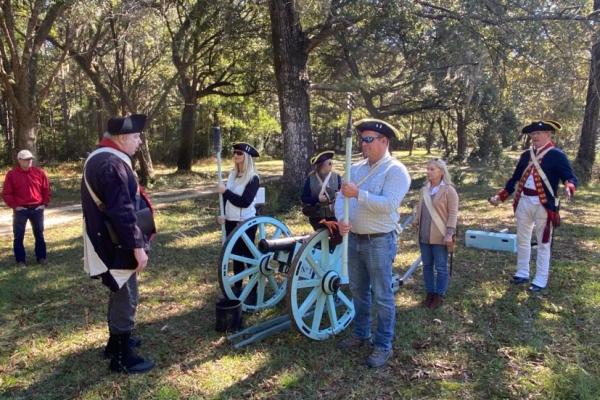
Moncks Corner, SC 29461
Eighteenth-century Moncks Corner was a crossroads settlement of stores and taverns at the intersection of the Cherokee Path (the Indian traders’ path) and the road from Charleston to Santee. A powder magazine was established in 1760 and the village was occupied as a store depot by the British during the Revolutionary War.

Combs Hill, Monmouth Battlefield State Park
Manalapan, NJ 07726
The Battle of Monmouth took place on June 28, 1778, between the Continental Army and British forces, and is now preserved as Monmouth Battlefield State Park.
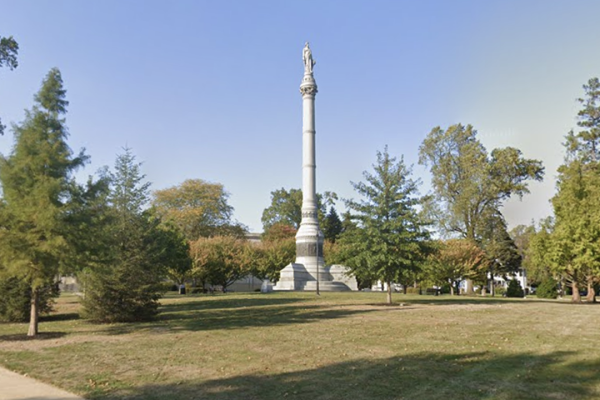
Freehold, NJ 07728
A 94-foot monument now marks the spot that where the Battle of Monmouth commenced on June 28, 1778. A series of bronze plaques line the monument that depict famous scenes from the engagement.
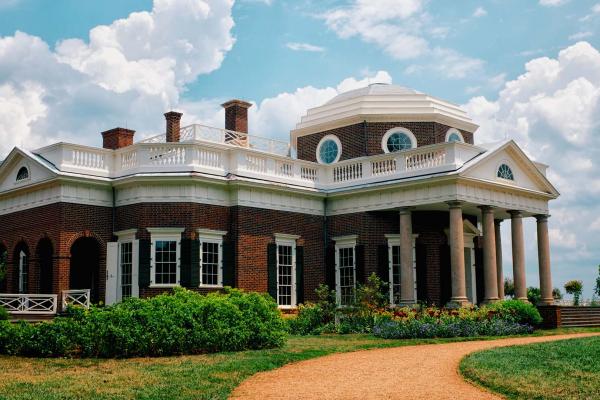
1050 Monticello Loop
Charlottesville, VA 22902
Monticello, “Little Mountain,” was the home from 1770 until his death in 1826, of Thomas Jefferson, author of the Declaration of Independence and third president of the United States. Jefferson was one of America’s first and finest architects and he created, rebuilt, and revised the house throughout his long life.

40 Patriots Hall Drive
Currie, NC 28435
Now the site of one of the last Scottish broadsword charges in history, nearly 1,000 North Carolina Patriots faced off against well-trained Highlanders in the first significant victory for the Patriots in the Revolution

65 Jumel Terrace
New York, NY 10032
Constructed by a Loyalist prior to the Revolution, this home saw the likes of officers from both sides of the American Revolution.

586 Tempe Wick Road
Morristown, NJ 07960
Morristown National Historical Park marks the site of the Continental Army’s 1779-80 encampment under George Washington. It symbolizes America’s fight for independence and Washington’s leadership in uniting the army, remaining a lasting symbol of resilience and patriotism.
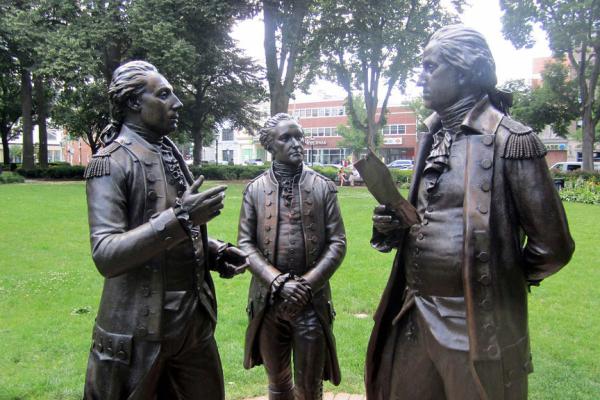
10 N Park Place
Morristown, NJ 07960
Now a quiet park in the center of urban Morristown, this green once served as the training and parade grounds of the Continental Army during its 1777 winter encampment.
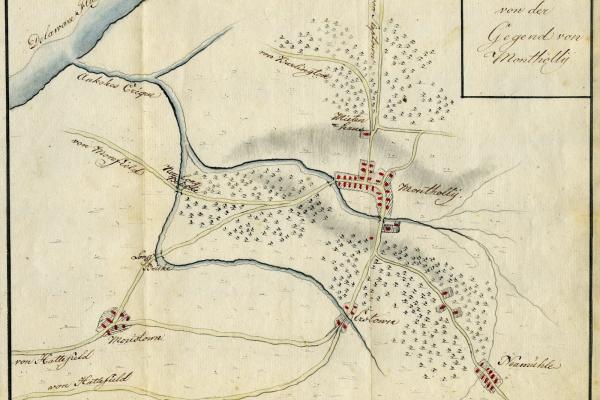
Mount Holly, NJ 08060
The Battle of Mount Holly, also known as Iron Works Hill, fought on December 23, 1776, was a minor skirmish in which Hessian Colonel Carl von Donop occupied the town, diverting his forces from Trenton and indirectly contributing to Washington’s victory there three days later.
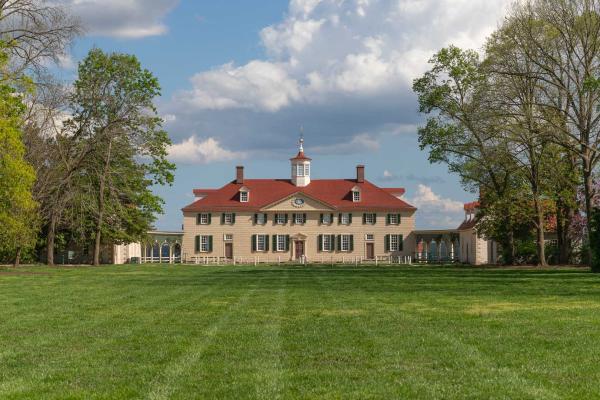
3200 Mount Vernon Memorial Highway
Mount Vernon, VA 22121
Mount Vernon acted as the former plantation estate of the legendary Revolutionary War general, George Washington. The current estate includes the original mansion, gardens, tombs, a working farm, a functioning distillery and gristmill, plus a museum and education center.
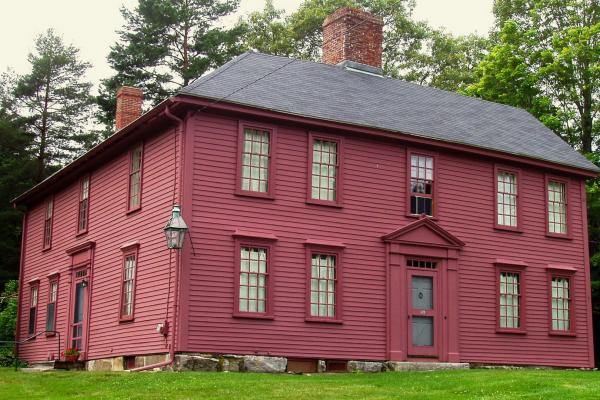
1332 Massachusetts Avenue
Lexington, MA 02420
Used by both sides during the Battle of Lexington and Concord, the Munroe Tavern, it was most famously used Hugh Percy during his relief march to aid the retreating British column from Concord.
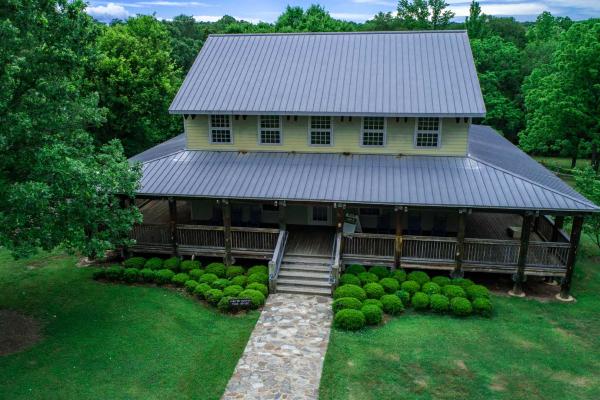
398 State Park Rd
Clinton, SC 29325
The site of the 1780 battle of Musgrove’s Mill where a small force of Patriot militia fought and defeated a larger force of Loyalist and Provincial soldiers in a short but pivotal battle.
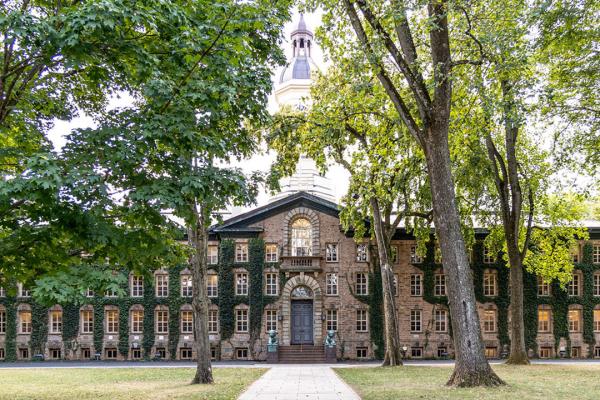
Rivers Wy
Princeton, NJ 08542
Nassau Hall, once the largest stone building in the colonies, housed the College of New Jersey, now known as Princeton. During the Battle of Princeton in 1777, British troops fortified the building as a last stand defense.

1045 East Jersey Street
Elizabeth, NJ 07201
The Nathaniel Bonnell House was built in 1682.
Historical Marker DatabaseThe Bonnell House is the oldest house in Elizabeth, New Jersey, and one of the oldest residences in the state. It stood on this site in 1682 and was likely built years earlier. The house represents the carpentry skills of Nathaniel Bonnell, a Huguenot originally from New Haven, Connecticut. He came to Elizabeth about 1664 and was one of the original settlers and a member of the incorporating organization, the Elizabeth Associates. Between 1670 and 1685, Bonnell and his wife Elizabeth (nee Whitehead) raised seven children here. The family worked several farms in the environs, one of which in Connecticut Farms (now Union, NJ) was left to his son and namesake, Nathaniel.
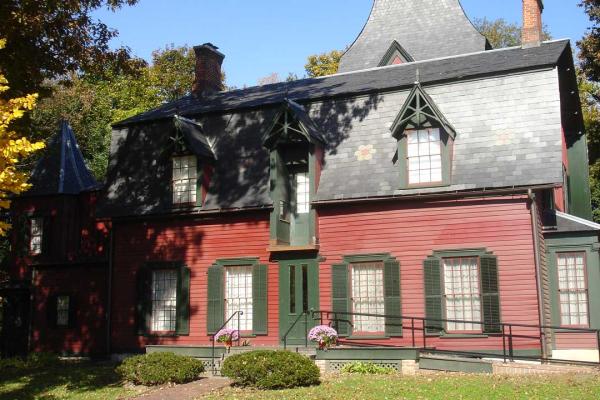
602 West Front Street
Plainfield, NJ 07060
Located in northern New Jersey, the Nathaniel Drake house offers a unique glimpse into life during the American Revolution. Once housing George Washington and his officers in 1777, it proves itself a vital landmark in the state.

Luce Avenue
Newport, RI 02841
U.S. Naval War College Museum
Visit NewportFounded in 1884 by Rear Admiral Stephen B. Luce, the Naval War College in Newport, Rhode Island, is the oldest institution dedicated to studying war, strategy, and statesmanship. Luce created it because the Navy lacked a place to study naval tactics, emerging technology, and the broader science of warfare systematically.

30 Washington Place
Morristown National Historic Park
Morristown, NJ 07960
New Jersey Brigade Area at Morristown National Historic Park
New Jersey State Historic AssetsWhen the New Jersey troops arrived in Jockey Hollow in mid-December, no suitable campsite was available. Instead, the troops moved a few miles south of Jockey Hollow and camped on a hillside near Ayer's iron forge. The soldiers built their log cabins and moved into them by Christmas Day. The Jersey troops camped here from December 1779 until April, when they moved into huts in Jockey Hollow that had been vacated by the Maryland Brigade. Today, interpretive signs mark the site of the New Jersey Brigade encampment. The park maintains a museum and library collection related to the encampment. A hiking trail leads there, accessible from the New Jersey Brigade parking area at the Cross Estate. The buildings in the New Jersey Brigade area, including the Cross Estate, are not open to the public.

374 Temple Hill Road
New Windsor, NY 12553
The New Windsor Cantonment Site preserves the final winter encampment of George Washington’s Continental Army, where nearly 7,500 soldiers awaited the war’s end in 1783.

2346 County Rd 60
Elmira, NY 14901
At the Battle of Newtown, American forces under John Sullivan crushed Loyalist and Haudenosaunee Confederacy resistance in a decisive campaign of destruction. The victory shattered organized opposition in the region, paving the way for the systematic devastation of Indigenous towns that reshaped the frontier during the war.

200 State Route 169
Little Falls, NY 13365
Home of Brigadier General Nicholas Herkimer, who died of wounds at the Battle of Oriskany, one of the bloodiest of the war.
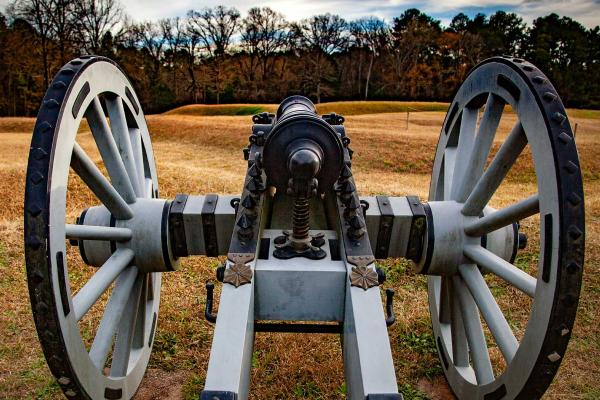
1103 Highway 248 S
Ninety Six, SC 29666
The site of the 1775 Battle of Williamson's Fort and a critical outpost for the British after they captured Charleston in 1780, the colonial town of Ninety Six was also the setting of a 28-day siege in 1781. Here, Nathanael Greene’s Patriots attacked the heart of Loyalist commander John Cruger’s defenses — the Star Fort.
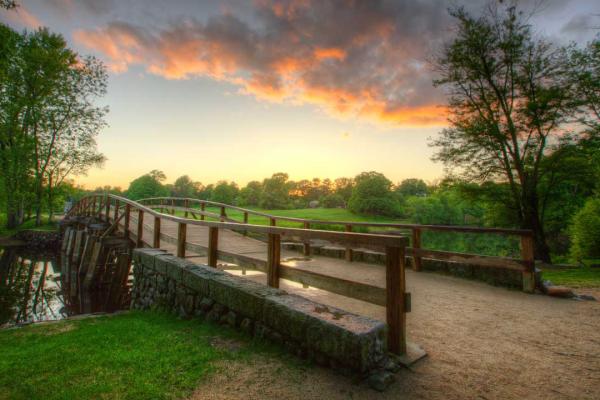
174 Liberty St
Concord, MA 01742
The site of the famous "Shot Heard Around the World," the Old North Bridge served as the flashpoint of the American Revolution. To this day, historians debate who fired the first shot, here, which led to the Battle of Lexington and Concord.
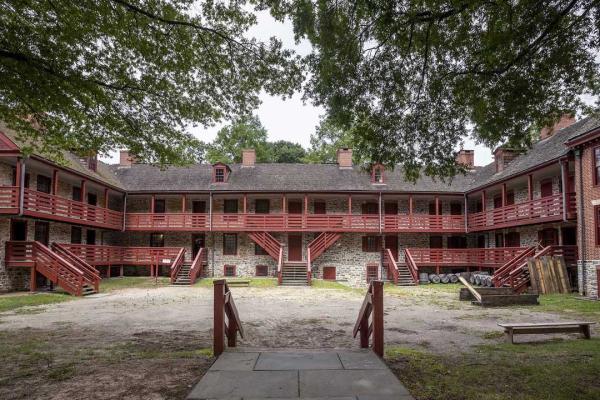
101 Barrack Street
Trenton, NJ 08608
The Old Barracks Museum is located in Trenton, New Jersey and stands as one of the last military structures dating back the French & Indian War and the American Revolution.
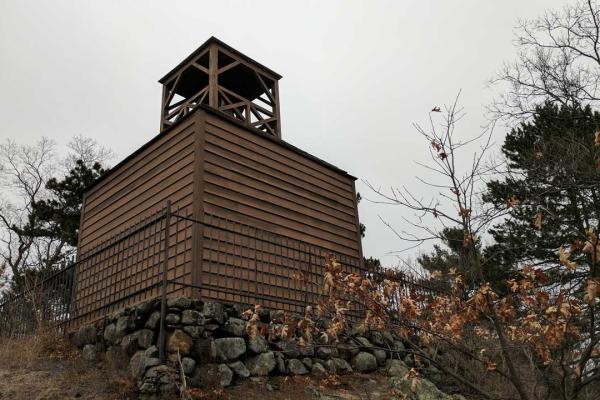
16 Clarke Street
Lexington, MA 02421
The sound of liberty rang from this bell in the early morning of April 19, 1775, to call forth the Lexington militia. Today, a reconstructed belfry stands as a reminder of the militia's bravery and determination at the Battle of Lexington and Concord.
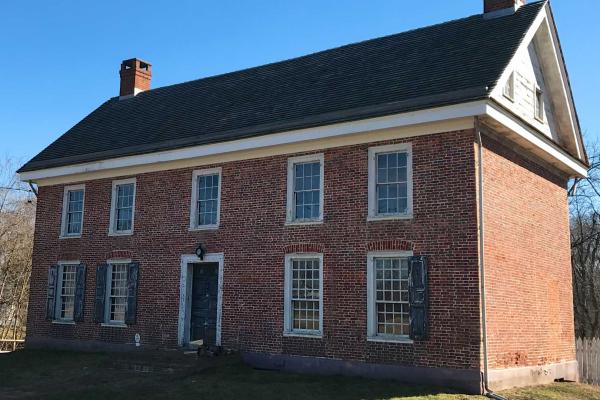
71 Somerset Street
Somerville, NJ 08876
This parsonage was constructed in the 1750s and housed the reverend of the Dutch congregation in what is now modern-day Somerville.
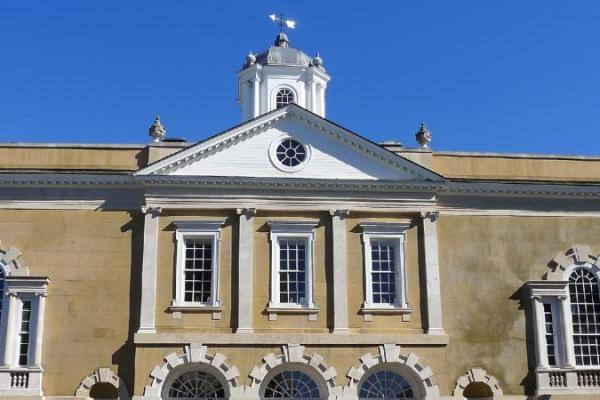
122 East Bay Street
Charleston, SC 29401
Completed in 1771, the Old Exchange Building is a Charleston landmark and the site of some of the most important events in South Carolina history. Over the last two and a half centuries, the building has been a commercial exchange, custom house, post office, city hall, military headquarters, and museum.

1 Scott Avenue
Youngstown, NY 14174
Site of a British command center during the Revolutionary War.
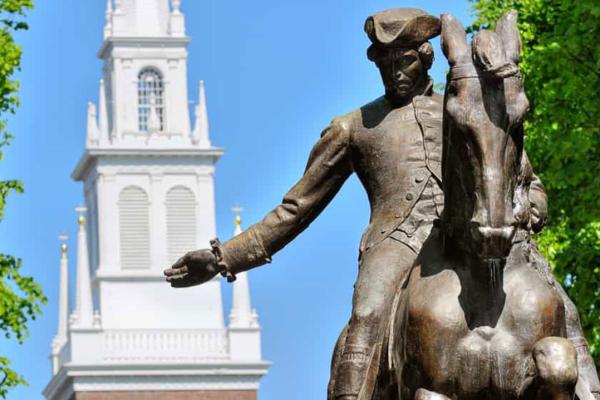
193 Salem St
Boston, MA 02113
The oldest standing church in Boston, it once signaled lookouts in Charlestown, which triggered Paul Revere's famous ride to alert militia of the advancing British Regulars across the Massachusetts countryside.
900 Stony Landing Rd.
Moncks Corner, SC 29461
Old Santee Canal Park hosts the Berkeley County Museum and Fort Fair Lawn, where in 1780, the British attacked the Patriot army stationed at Monck’s Corner.
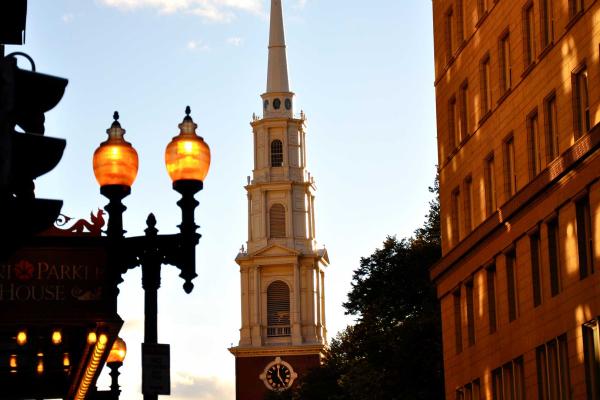
310 Washington Street
Boston, MA 02108
Frequented by many influential figures in Boston's revolutionary history, the Old South Meeting House served as a place of public discourse that contributed to the city's role in the American Revolution
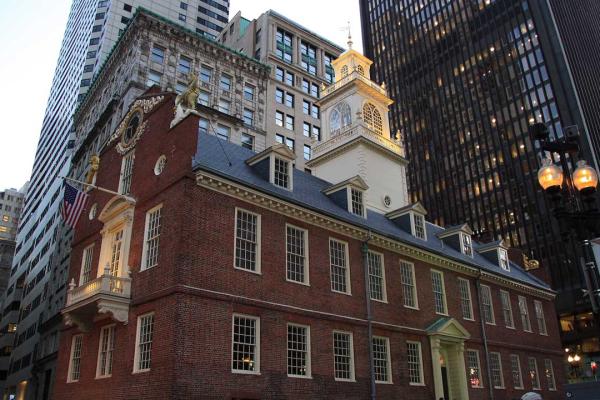
206 Washington Street
Boston, MA 02109
One of the oldest public buildings in the United States, the Old State House was the seat of government in Massachusetts leading up to the Revolution and after the consolidation of the States. Infamously, the Boston Massacre happened just beyond its steps.

150 Benefit Street
Providence, RI 02903
Old State House, Providence, Rhode Island
State of Rhode Island Historical Preservation & Heritage Commission
The Old State House has played a pivotal role in Rhode Island's political life since the colonial period. It is one of just six surviving colonial-era state houses in America, three of which are in Rhode Island. In this building, Rhode Island renounced allegiance to the British Crown on May 4, 1776, the first of the thirteen colonies to do so.
In 1781, General George Washington was honored with a dinner and ball here. Later, in 1790, he returned to the Old State House as President. During this visit, he and Thomas Jefferson attended a banquet celebrating Rhode Island’s ratification of the U.S. Constitution.
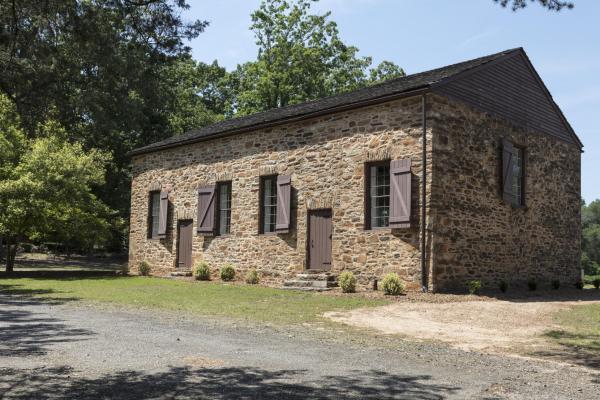
101 Stone Circle
Clemson, SC 29631
Nestled outside the traditional bounds of the South Carolina colony is the Presbyterian church where Andrew Pickens committed his time as an elder following the Revolution. In the adjacent cemetery lie the graves of several American soldiers who had fought by Pickens' side during the war.

145 Fort Road
Schoharie, NY 12157
The Old Stone Fort was originally built as a Reformed Dutch Church in 1772. During the American Revolutionary War, the church was enclosed by a log stockade in 1777 and attacked by the British in 1780.

336 3rd Street
Brooklyn, NY 11215
Reconstructed Dutch farmstead and site of the 1776 Battle of Brooklyn, with local history displays.

7801 NY-69
Oriskany, NY 13424
On August 6, 1777, British forces under the command of Sir John Johnson engaged American forces under Nicholas Herkimer in the Battle of Oriskany, resulting in one of the few battles of the war where all the participants were North American.
4001 Chesnee Hwy
Gaffney, SC 29341
The 330-mile Overmountain Victory National Historic Trail traces the 1780 Kings Mountain campaign through Virginia, Tennessee, and the Carolinas via a marked motor route and 87 miles of walkable trails.
Clarendon County, SC 29102
Patriot Francis Marion earns his famous nickname — "The Swamp Fox”— after a futile chase by British Commander Banastre Tarleton
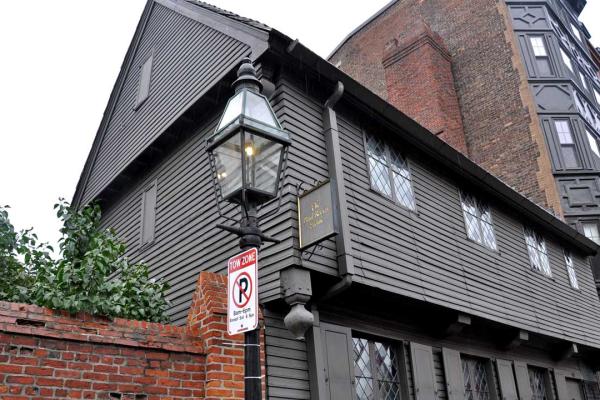
19th North Square
Boston, MA 02113
One of the oldest residential buildings in Boston, this structure was once the home of one-and-only Paul Revere, an avid member of the Sons of Liberty.
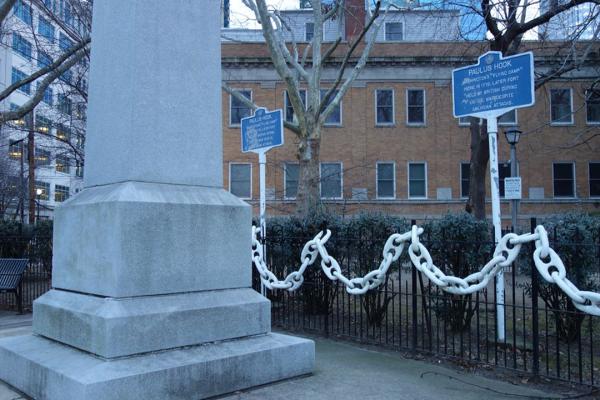
226 Washington Street
Jersey City, NJ 07302
A small victory for the Continental Army, the Battle of Paulus Hook won the reassurances of the Patriots and compelled many to continue the fight for independence.

1 Delaware Avenue
Cohoes, NY 12047
On August 17, 1777, American forces retreated south to this place as they prepared defenses to make a final stand against the British, who intended to capture Albany.

Pelham Bay Park
Orchard Beach Rd
New York, NY 10464
At the Battle of Pell’s Point, a small American force under John Glover held firm against a powerful British advance. Their stand proved pivotal in shaping the course of the New York campaign.
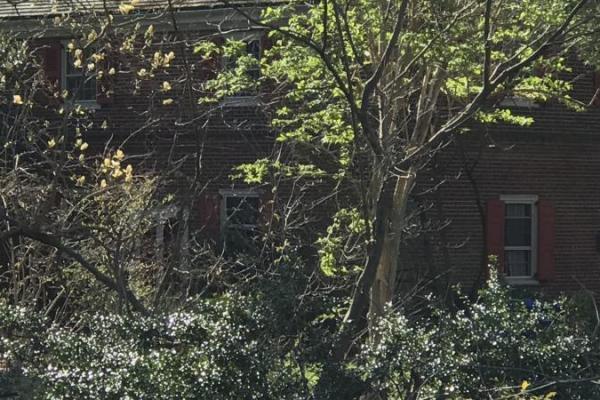
Petticoat Bridge Road
Columbus, NJ 08022
At this bridge, American forces under Colonel Samuel Griffin and foraging parties under Hessian Colonel Carl Ulrich von Donop clashed several times throughout December of 1776.

4 Broad Street
Schuylerville, NY 12871
This property is located in the "Old Saratoga" unit of Saratoga National Historical Park.

29 Warburton Ave.
Yonkers, NY 10701
Historic home of the Philipse family, staunch Loyalists during the Revolutionary War.
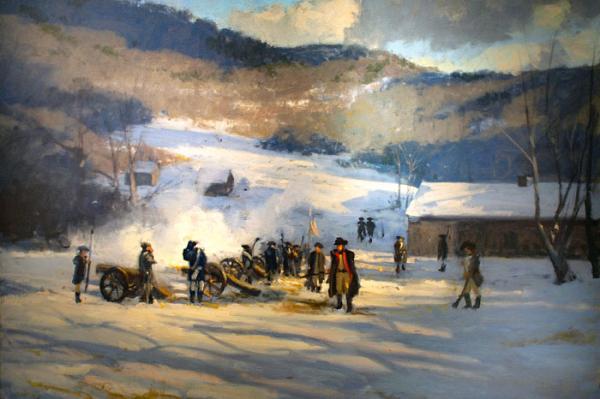
Stone Run Road
Bedminister, NJ 07921
Nestled in the sloping mountains of New Jersey, the birthplace of American military academies can be found. Initially a part of a winter encampment, it became the proving grounds for Patriot artillerists.
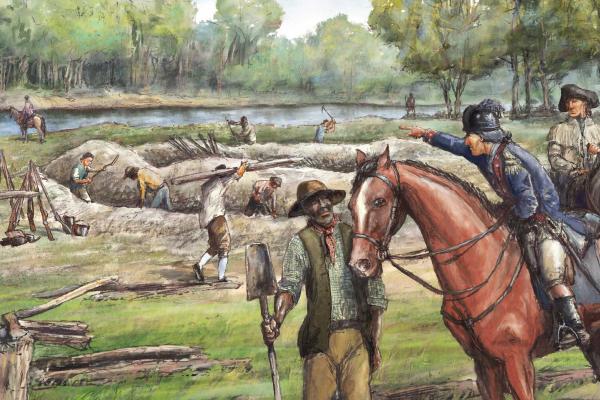
E Trinity Rd &, Kingsburg Hwy, SC
Johnsonville, SC 29555
Known as an extremely important ferry crossing in the Colonial Period, Marion fortified this ferry and frequently utilized it to quickly move his troops to lay ambushes

49 W. Broad Street
Bridgeton, NJ 08302
Potter's Tavern
Wikimedia/Smallbones
Colonial taverns were crucial hubs for the Revolution, serving as gathering places where travelers exchanged news from across the colonies and locals engaged in political discussions. In December 1775, local townspeople formed an association and submitted anonymous letters; the paper forcefully argued for complete separation from Great Britain under penalty of treason, and the newspaper The Plain Dealer, considered the first regular newspaper in New Jersey, was published here. On August 7th, 1776, the Declaration of Independence was read aloud right outside the tavern.

2009 West Main Road
Middletown, RI 02842
Prescott's Headquarters.
Historical Marker Database
American Lieutenant Colonel William Barton learned that British General Richard Prescott, commander of the occupying forces on Aquidneck Island (Newport, Rhode Island), was staying at a farmhouse away from the main British encampment. On the night of July 9, 1777, men familiar with the terrain slipped past sentries and approached the farmhouse (the Overing house), capturing Prescott, his aide‑de‑camp, and a guard. Prescott’s capture was a major morale boost for the Americans. It also provided a crucial bargaining chip: the British agreed to exchange Prescott for American Major General Charles Lee, who had been captured months earlier.

500 Mercer Rd
Princeton, NJ 08540
After crossing the Delaware, George Washington's ten-day campaign culminated in a decisive victory at the Battle of Princeton on January 3, 1777, proving his army could defeat the British. The battle saw Washington's forces overcome initial setbacks to rout the British and shift the momentum of the war

55 Stockton Street
Princeton, NJ 08540
Princeton Battle Monument
Lawrence SwiaderThis 50-foot Beaux-Arts limestone relief sculpture monument commemorates the January 3, 1777, Battle of Princeton, depicts Liberty inspiring General Washington as he leads his troops into battle, and the death of Washington's close friend, General Hugh Mercer. The seals of the United States and the original thirteen states appear on the sides of the Monument, and Andrew Fleming West composed the inscription on the back. The Princeton Battle Monument was completed in 1922 and dedicated the same year by President Warren G. Harding on June 9.

Old Trail Road
Burlington, NC 27215
Patriot forces under Andrew Pickens and "Light Horse Harry" successfully rout British forces in Alamance County following Cornwallis' failed attempt to catch Nathanael Greene during the "Race to the Dan"

402 Jeb Seagle Drive
Lincolnton, NC 28082
Located an hour away from Charlotte, the Ramsour's Mill battleground marks the site of the first Patriot victory in the south following the fall of Charleston.

30 West Main Street
Oyster Bay, NY 11771
Raynham Hall was the home of the Townsend family, one of the founding families of Oyster Bay, on Long Island, New York, and a member of George Washington's Culper Spy Ring.
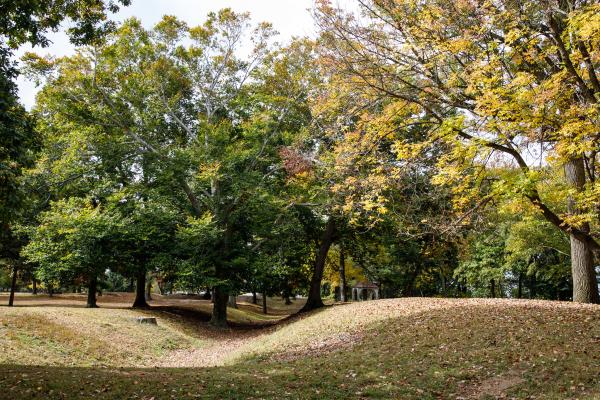
100 Hessian Ave
National Park, NJ 08063
Also known as the Battle of Fort Mercer, Hessian forces under Colonel Von Donop unsuccessfully stormed this fort on the 22 of October, 1777. Halted by combined arms of infantry and ships on the Delaware River, the Hessians suffered significant losses.

50 Bellevue Avenue
Newport, RI 02840
Redwood Library, Newport, RI
The Redwood Library and Athenaeum is America’s first purpose-built library and the oldest continuously operating library in its original location. As a result, it is the only remaining secular public cultural institution in this country with an unbroken link to the colonial period and the United States' founding. The original collection of 751 books—purchased in London—reflected the intellectual interests of educated people in the mid‑18th‑century. Subjects included religion, philosophy, law, agriculture, history, and medicine. Despite losses during the British occupation of Newport in the Revolutionary War, the library has restored 92% of its original titles through later acquisitions.

1304 Sloatsburg Road
Ringwood, NJ 07456
Ringwood Manor Iron Complex Waterwheel
Historical Marker Database
During the Revolutionary War, Ringwood Ironworks produced arms and equipment for the Continental Army. The complex's iron mines, furnaces, forges, and stamping mills supplied many of the American Revolutionary Army's needs. At the time, Robert Erskine supervised it. Erskine was born in Scotland in 1735 and immigrated to New Jersey in 1771, when he began managing Ringwood Ironworks. General George Washington visited Ringwood several times during the Revolutionary War, most notably for the Pompton Mutiny —also called the Federal Hill Rebellion—a brief but serious revolt by about 300 New Jersey Continental soldiers on January 20, 1781.
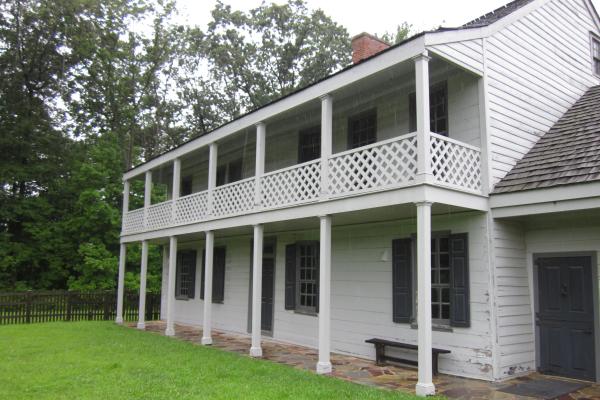
84 Laurel Avenue
Franklin Township, NJ 08528
In the final days of the Revolutionary War, Rockingham became General George Washington’s last wartime headquarters, where he penned his Farewell Orders to the Armies of the United States. As he prepared to step away from military command, news arrived that the Treaty of Paris had been signed, securing America’s independence.

11 Rogers Island Drive
Fort Edward, NY 12828
Visitor Center and Museum dedicated to the history of Rogers Island and Fort Edward.

1 Washington Street
Newport, RI 02840
Fort Hamilton is an 18th–19th-century coastal fortification that occupies the island beneath and around the Rose Island Lighthouse. It includes bombproof barracks, bastions, remnants of WWI and WWII naval use, and the lighthouse, built in 1869 atop an unfinished bastion. The fort’s surviving structures (barracks, magazines, earthworks) are scattered around the island and accessible by footpaths.
After the British captured Newport in December 1776, they built defensive positions on the island. When they withdrew in October 1779, the Americans lacked the resources to maintain these defenses. The French then occupied Newport from July 1780 to June 1781 and rebuilt many defenses, including a large battery on Rose Island armed with 40 cannons.
The Jamestown Newport Ferry runs seasonally (typically May–October). It departs from Perrotti Park in downtown Newport.

1 Washington Street
Newport, RI 02840
Fort Hamilton is an 18th–19th-century coastal fortification that occupies the island beneath and around the Rose Island Lighthouse. It includes bombproof barracks, bastions, remnants of WWI and WWII naval use, and the lighthouse, built in 1869 atop an unfinished bastion. The fort’s surviving structures (barracks, magazines, earthworks) are scattered around the island and accessible by footpaths.
After the British captured Newport in December 1776, they built defensive positions on the island. When they withdrew in October 1779, the Americans lacked the resources to maintain these defenses. The French then occupied Newport from July 1780 to June 1781 and rebuilt many defenses, including a large battery on Rose Island armed with 40 cannons.
The Jamestown Newport Ferry runs seasonally (typically May–October). It departs from Perrotti Park in downtown Newport.
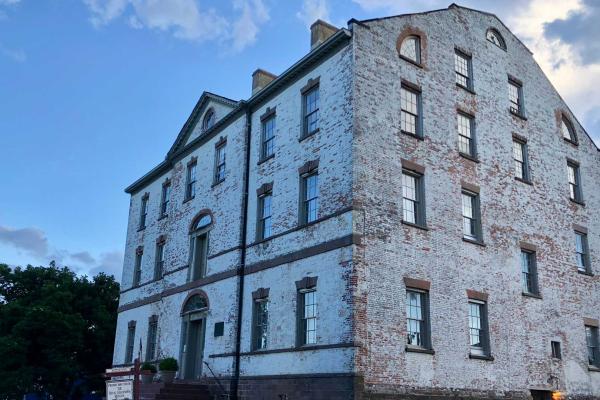
149 Kearny Ave
Perth Amboy, NJ 08861
The Royal Governor's Mansion of New Jersey is the only remaining proprietary governor's mansion of the original Thirteen Colonies still standing today. Built in the 1760s, it served as the residence gubernatorial residence of William Franklin, Benjamin Franklin's Loyalist son.

2500 Flat Rock Road
Camden, SC 29020
An ingenious Patriot deception provokes a prominent Loyalist to surrender his outpost

677 Montauk Highway
Bay Shore, NY 11706
The manor served as a local headquarters for British forces during the American Revolution.

61 Broad Street
Elizabeth, NJ 07201
St. John's Episcopal Church, Elizabeth, NJ
Forgotten Victory TrailJonathan Dayton, a soldier of the New Jersey Line and later a signer of the Constitution, is buried at Saint John’s. His father, Elias, commanded the 3rd New Jersey Regiment, placing the Dayton family directly within the military community that defended the region in 1780. The churchyard also recalls John DeHart, a delegate to the Continental Congress. Visiting Saint John’s alongside Caldwell’s Presbyterian church broadens the religious picture of Elizabethtown. Allegiance could divide neighbors and congregations, and an Anglican background did not determine every individual’s political choice. The present Gothic church dates to after the Revolution, while the burial ground preserves the older community’s connections.

897 S. Columbus Ave.
Mt. Vernon, NY 10550-5018
Historic church used as a military hospital after the Battle of Pell's Point.
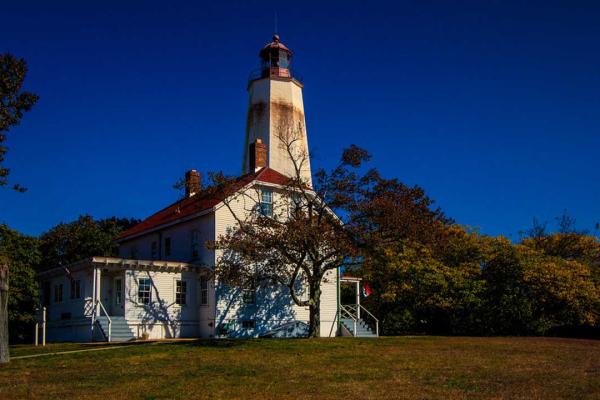
84 Mercer Road
Highlands, NJ 07732
A strategic location for the defense of New York's harbor, the Continentals failed to reinforce this peninsula, leading to the city's capture in August of 1776. A lighthouse dating to 1764 still operates there today, once serving as a Loyalist fortification.

251 State Park Rd.
Santee, SC 29142
Santee State Park offers biking and hiking trails and pontoon boat tours of the flooded cypress forest on Lake Marion, named after Revolutionary War hero Francis Marion, the “Swamp Fox”.

648 Route 32 Stillwater, NY 12170
Stillwater, NY 12170
The Battles of Saratoga marked a decisive turning point in the American Revolution, where Patriot forces achieved a stunning victory over a major British army. This triumph not only shattered British momentum but convinced France that the American cause was worth backing, transforming a colonial rebellion into an international war.
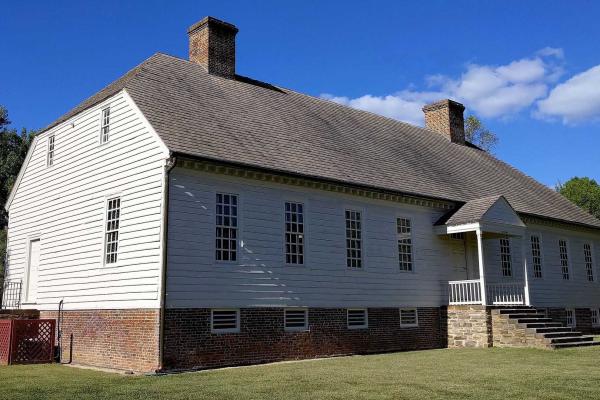
16120 Chiswell Lane
Beaverdam, VA 23015
Once owned and operated by Founding Father Patrick Henry, it was while living in this home that Patrick Henry coined the phrase "Give me liberty or give me death!"
East Front Street, S Broad Street
Trenton, NJ 08608
Also known as the Battle of Assunpink Creek, Washington thwarted Cornwallis yet again, just south of the town of Trenton where they had fought only days prior.

296 Fair Street
Kingston, NY 12401
Site of New York's First Constitutional Convention, where the first state Constitution was adopted on April 20, 1777.
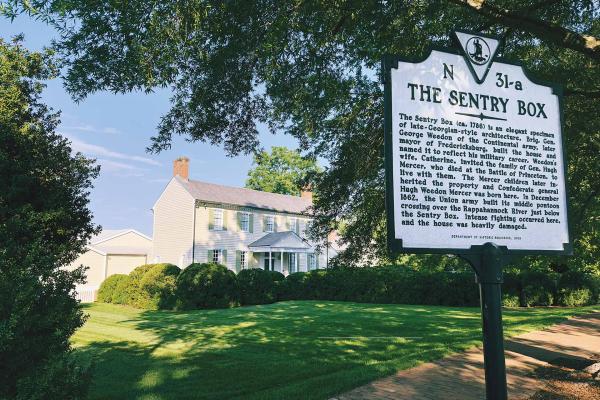
133 Caroline Street
Fredericksburg, VA 22401
Following the American Revolution, the Sentry Box served as the home for Hugh Mercer's family following his passing at the Battle of Princeton in 1777.
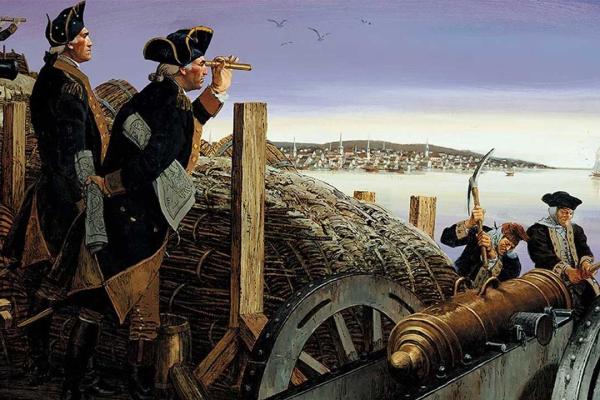
Boston, MA 02127
Ensuing the Battle of Lexington and Concord, Patriot forces advanced on Boston, determined to overthrow the British occupation. Fortifying Dorchester Heights, George Washington positioned artillery to force the evacuation of British forces in the city.
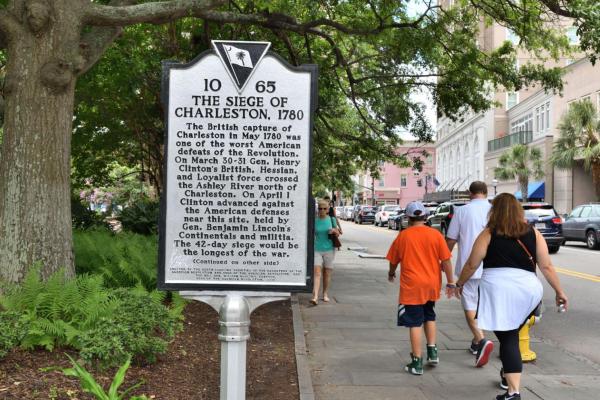
329 Meeting Street
Charleston, SC 29403
As part of their Southern Campaign, the British set their sights on taking the vital port of Charleston.

125 Main Street
East Greenwich Town Hall
East Greenwich, RI 02818
Site of the marker to the First Colonial Navy
Historical Marker Database
On June 12, 1775, the General Assembly for the state of Rhode Island met on this site and enacted a resolution to charter and arm two sloops for the protection of trade and appointed Abraham Whipple to be commander with the rank and power of commodore of both vessels, thus creating the First Colonial Navy of the Revolution. On June 15, 1775, the sloop Katy participated in the first naval battle of the Revolution off Jamestown, RI, and was renamed the Providence; this ship became the first vessel authorized for the Continental Navy, the first to land Marines in battle, and the first command of John Paul Jones.
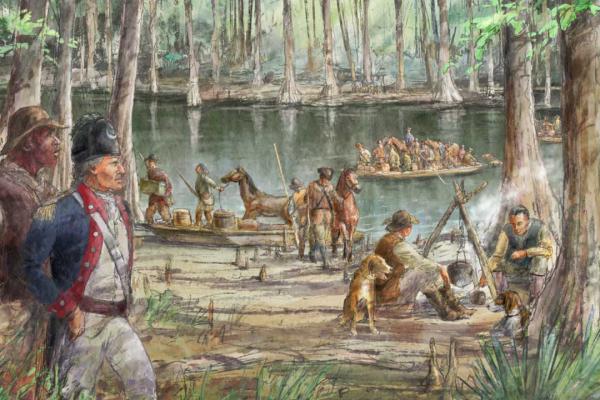
Dunham Bluff Road
Gresham, SC 29546
Located along the Great Pee Dee River, Snow's Island served as Francis Marion's favorite refuge for his militia in the swamps of South Carolina

7 River Road
High Bridge, NJ 08829
Solitude House, the superintendent of the Union Iron Works' home.
Historical Marker Database
The Germanic-style stone home, built in 1712, was part of a 10,000-acre parcel that later became part of the Union Iron Works. William Allen and Joseph Turner established the Union Iron Works to produce horseshoes, farm implements, and chimney firebacks; it produced 500 to 1,000 tons of iron per year. During the Revolutionary War, the ironworks became vital to the military effort because it produced items such as cannonballs and rifle barrels. Two Loyalists were imprisoned at Solitude House: John Penn, Pennsylvania's last royal governor, and his Chief Justice, Benjamin Chew. They remained here for seven months beginning in 1777. Revolutionary War figures who visited Solitude House include George and Martha Washington, General Lafayette, Colonel Charles Stewart, and Aaron Burr.
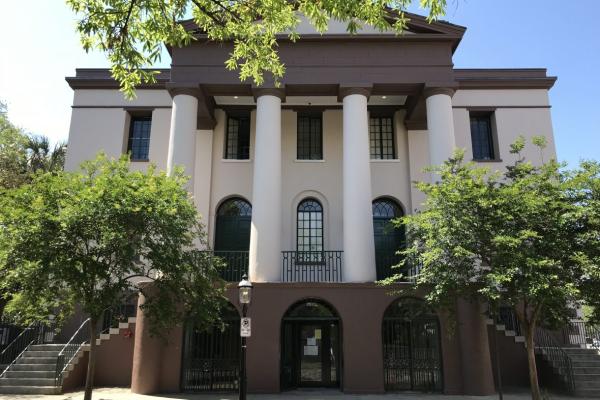
South Carolina Historical Society Museum
100 Meeting St.
Charleston, SC 29401
An architectural treasure in its own right, the South Carolina Historical Society Museum is housed in a National Historic Landmark building and features interactive exhibits on the people, places, and movements that shaped the state and nation.

37 Church Mall
Springfield, NJ 07081
Springfield Presbyterian Church
New Jersey Historic TrustThe meetinghouse at this site was burned during the Battle of Springfield on June 23, 1780. It is also the setting of the famous tradition in which James Caldwell supplied Isaac Watts hymnbooks as musket wadding and urged soldiers to give the enemy "Watts." The Presbyterian Church's cemetery, located across Church Mall from the church, contains the graves of at least thirty-one Revolutionary War soldiers. A plaque at the gate pays tribute to "the heroic service performed at the Battle of Springfield, during the war for American Independence by the soldiers whose remains are resting within this sacred tract."
A statue of a Revolutionary War militia soldier honors the 500 New Jersey militia who fought and ultimately repelled a force of 6,000 British troops during the battle.

1 Purchase Street
Rye, NY 10580
Historic inn and meeting place for Patriots and the Continental Army during the 1770s-1780s.
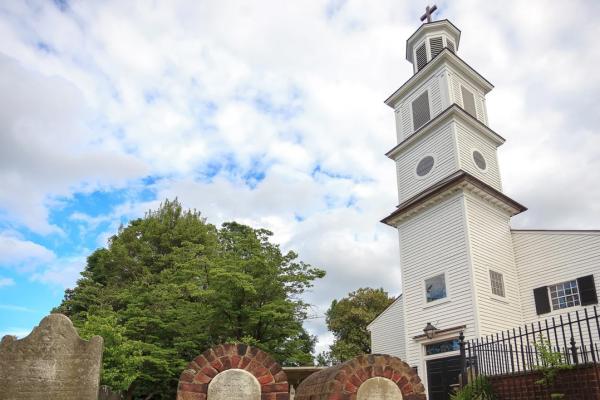
2401 East Broad Street
Richmond, VA 23223
Site of the Second Viriginia Convention and Patrick Henry's famous words, "Give me liberty or give me death!"
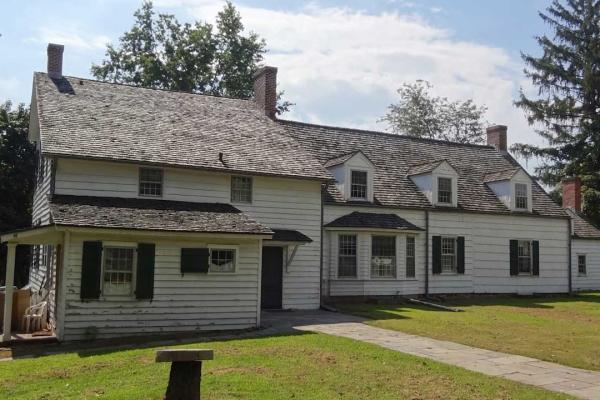
17 Von Steuben Lane
South Bound Brook, NJ 08880
Constructed in the early 1740s, this home acted as the headquarters of Baron Von Steuben during the Continental Army's cantonment in 1779. Today, it stands as one of the few remaining Dutch structures in central New Jersey.

366 Park Avenue
Scotch Plains, NJ 07076
The Swift Sure Stage Line went from Philadelphia to New York, stopping at the Stage House Inn.
Historical Marker Database
The old center section of the Stage House dates to about 1737. Its roadside marker recalls innkeeper Recompense Stanbery raising a troop of Jersey Blues at a Liberty Pole in front of the inn. Here, the public house became a recruiting ground, and the pole made political allegiance visible in the village. The tavern’s history reports that General Marquis de Lafayette spent time here.

9941 Starr Hill Road
Remsen, NY 13438
Historic home of Baron Von Steuben, Drillmaster of the American Revolution.

5407 Ephratah Rd
Fort Plain, NY 13339
At the Battle of Stone Arabia, Patriot militia under John Brown made a desperate stand against a swift raid led by Sir John Johnson. Though Brown was killed and the raiders escaped, the clash galvanized local resistance.
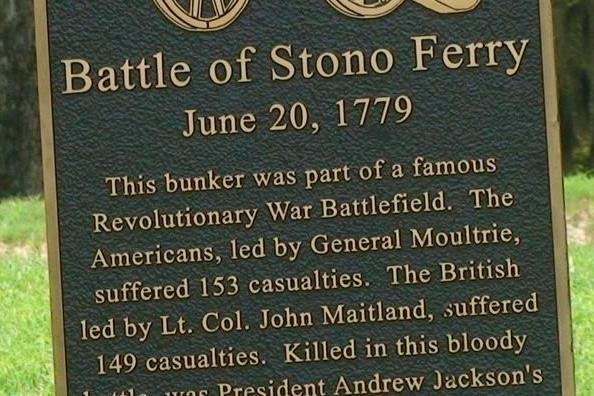
4812 Stono Links Dr
Hollywood, SC 29449
The Patriots launch a misguided attack on British troops retreating from an aborted raid on Charleston

100 Harbor Road
Stony Brook, NY 11790
The Revolutionary War arrived on Long Island in a way that felt very close to home, with British forces taking control directly after their victory at the Battle of Long Island in August 1776. They held onto the island for the entire duration of the war. During this time, the mill at Stony Brook was busy, grinding grains that helped feed the British soldiers.

44 Battlefield Rd
Stony Point, NY 10980
Now a state park in New York, Stony Point once served as British defensive position along the Hudson River during the New York campaign. Thanks to cunning actions of "Mad" Anthony Wayne, British forces were swiftly pushed from their defenses.
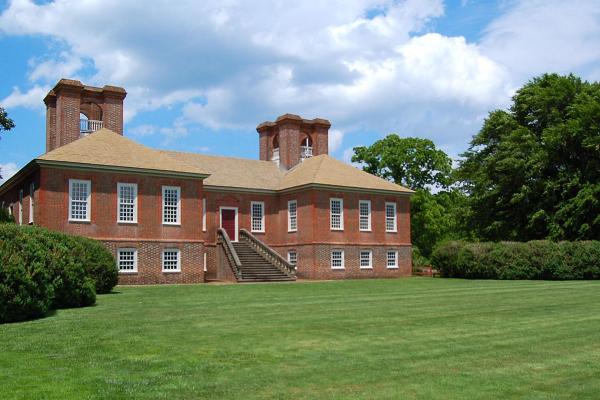
483 Great House Road
Montross, VA 22520
Stratford Hall was home to four generations of the Lee family including Revolutionary War veteran, Henry "Light Horse Harry" Lee, and the only brothers to sign the Declaration of Independence: Richard Henry Lee and Francis Lightfoot Lee. S

Main Street & Taylor Street
Milburn, NJ 07041
Informational kiosk in Taylor Park
Millburn Township, NJ
The Forgotten Victory Trail kiosk at Taylor Park introduces the Connecticut Farms and Springfield campaign and the nearby Millburn battle sites. From here, visitors can connect the Vauxhall crossing, the advance along Millburn Avenue, and the stand near the present town hall.
The Forgotten Victory Trail is a new, still‑developing Revolutionary War heritage trail in New Jersey that highlights the June 1780 British invasion and the battles of Connecticut Farms and Springfield—the last major British offensive in the northern theater. These battles halted the invasion—hence the term“Forgotten Victory.”
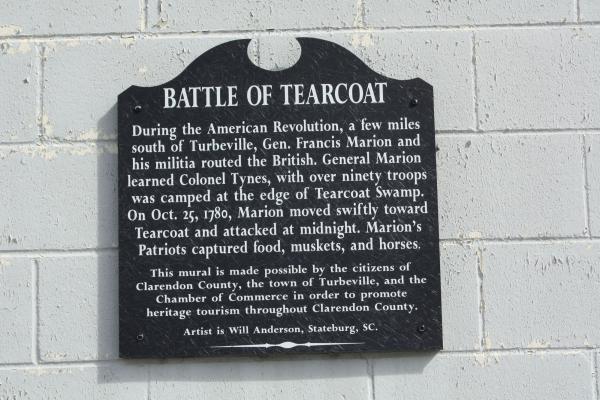
Turbeville, SC 29162
A surprise Patriot attack on Loyalist recruits is a blow to the British

9 Ten Broeck Place
Albany, NY 12210
Historic home of Revolutionary War Colonel Abraham Ten Broeck, and member of the New York Provincial Congress.
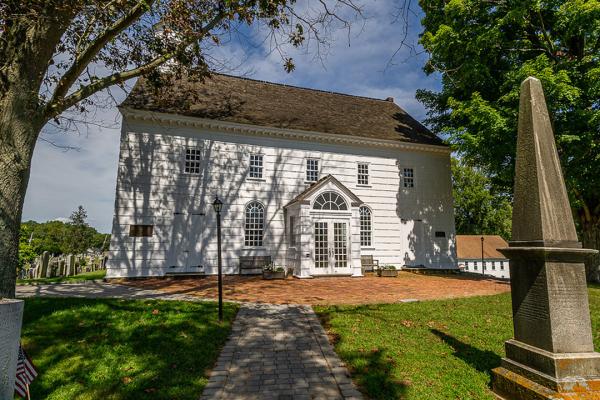
448 Tennent Rd.
Manalapan Township, NJ 07726
Located just behind the Continental artillery line on Perrine Ridge, this Presbyterian church now houses the remains of several patriots in its cemetery.

1210 Raritan Road
Scotch Plains, NJ 07076
Site of the Battle of Short Hills, June 25, 1777.
Historical Marker DatabaseThe Battle of Short Hills, fought on June 26, 1777, was a significant engagement in central New Jersey. In this battle, Lord Stirling commanded a Continental force of 2,200 men and skirmished with a much larger British column led by General William Howe and Lord Cornwallis. Although Stirling was ultimately forced to retreat, his resistance provided George Washington with crucial time to withdraw safely into the Watchung Mountains. This maneuver denied Howe the open-field engagement he sought. Although the British won a tactical victory, the Americans achieved strategic success by preserving their army and thwarting Howe's attempt to trap Washington.
The Battle of Short Hills Monument consists of a stone tower topped by a Revolutionary War cannon. Each side of the monument features a panel telling the story of the battle. The panels also include a map of the battle area, a picture of Lord Stirling on horseback, and wounded soldiers being evacuated in wagons after the battle.

500 25th Street
Brooklyn, NY 11232
Now one of the largest cemeteries in New York, this was once the location where Patriot forces attempted to thwart the British Invasion of New York.

335 N. Franklin Turnpike
Ho Ho Kus, NJ 07423
The Hermitage
Historical Marker Database
The Hermitage played a role in the Revolutionary War, standing at the center of a region torn between Patriot and Loyalist control. During the conflict, the home was managed by Theodosia Prevost, wife of British officer James Marcus Prevost, who remained away on military duty. Despite her Loyalist ties, Theodosia kept the property safe through diplomacy and resourcefulness as Bergen County became one of the war’s most contested corridors, with raids, skirmishes, and troop movements from both sides passing through the area. In July 1778, she invited General George Washington and his officers to stay at the Hermitage after the Battle of Monmouth; Washington accepted and stayed for four days. The house became a gathering point for notable figures including James Monroe, Alexander Hamilton, Lafayette, William Paterson, and Aaron Burr, who later married Theodosia at the Hermitage in 1782.

50 Taft Street
Coventry, RI 02816
The General Nathanael Greene Homestead
Historical Marker DatabaseHistoric home of the Revolutionary War hero and leader, Major General Nathanael Greene. The General Nathanael Greene Homestead—also known as Spell Hall—is one of Rhode Island’s most important Revolutionary‑era sites. It sits in Coventry, Rhode Island, on the banks of the Pawtuxet River, and preserves the home life of the Continental Army’s second-most brilliant strategist.
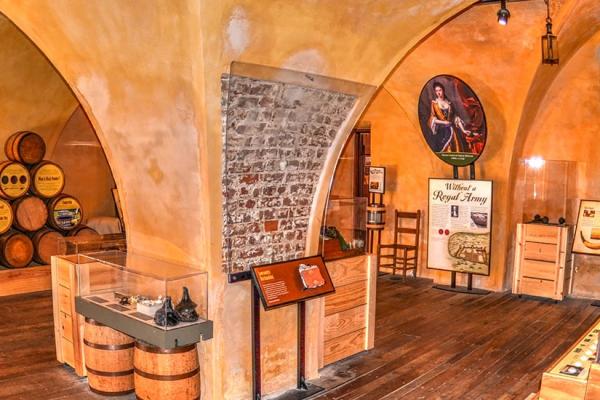
79 Cumberland Street
Charleston, SC 29401
Completed in 1713, The Powder Magazine is South Carolina's oldest government building.

500 Mercer Road
Princeton, NJ 08540
Located on the Princeton Battlefield, this home served as a field hospital in the wake of the battle. At this site, Patriot officer Hugh Mercer died while in care from fatal wounds sustained during the decisive engagement.

1776 Poplar Forest Parkway
Lynchburg, VA 24502
During the Revolutionary War in 1781, Virginia Governor Thomas Jefferson fled to Poplar Forest from Monticello to evade capture from British forces under Lieutenant Colonel Banastre Tarleton.

724 S. Main Street
Athens, PA 18810
Discover the stories of frontier settlers, Native peoples, and Revolutionary War soldiers at the Tioga Point Museum, located near the historic sites of Fort Sullivan and an early post-Revolutionary trading post. Through artifacts and exhibits spanning centuries of local history, the museum offers a fascinating glimpse into life along the Upper Susquehanna frontier.

85 Touro Street
Newport, RI 02840
Touro Synagogue
National Park ServiceConsecrated in 1763, Touro Synagogue was the only purpose‑built Jewish house of worship in the colonies that survived the Revolutionary era. By the 1770s, Newport was a major port city — and a target. When the British occupied Newport (1776–1779), the Jewish community fled. Fearing destruction or confiscation, they sent the synagogue’s deed and Torah scrolls to Congregation Shearith Israel in New York for safekeeping. The synagogue’s endurance during this period helped make it a powerful symbol of religious freedom in the new republic.
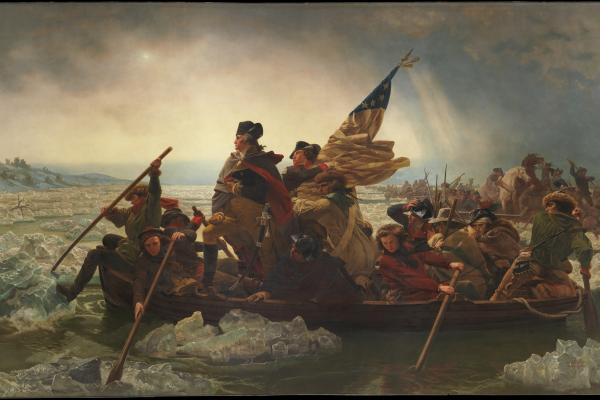
101 Barrack St
Trenton, NJ 08608
Renowned for Gen. George Washington's daring crossing of the Delaware River on a frigid Christmas night, Trenton marked the start of the Ten Crucial Days—a series of bold victories that reignited hope in the Revolutionary cause.

529 S Front Street
New Bern, NC 28562
Originally destroyed by a fire in 1798, this faithful reconstruction stands on the former site of the Palace and offers an 18th century interpretive experience.

1000 Wewanna Avenue
Union, NJ 07083
Forgotten Victory Trail kiosk in Veterans Memorial Honor Roll Park
Forgotten Victory TrailThe Forgotten Victory Trail kiosk brings the June 1780 campaign into a public space already dedicated to military remembrance. Near the church and the roads through old Connecticut Farms, it provides an orientation point for the battle, Hannah Caldwell’s death, and the resistance that continued toward Springfield. The story here includes Continental soldiers, local and county militia, Black servicemen, and civilians caught between advancing armies. Visitors can use the kiosk to connect the surrounding streets to the historic village, then continue to the church and Caldwell Parsonage. The park also gives the community a place to explain why these events remain part of Union’s identity.

3266 Bainbridge Ave.
Bronx, NY 10458
The Valentine–Varian House is a historic home located in the Norwood neighborhood of the Bronx. Site of skirmishes between British and American forces because of its commanding position over the Boston Post Road.

Van Cortlandt Park, Broadway at W. 246th St.
Bronx, NY 10471
Occupied by both sides during the American Revolution, this home has seen the likes of both George Washington and William Howe
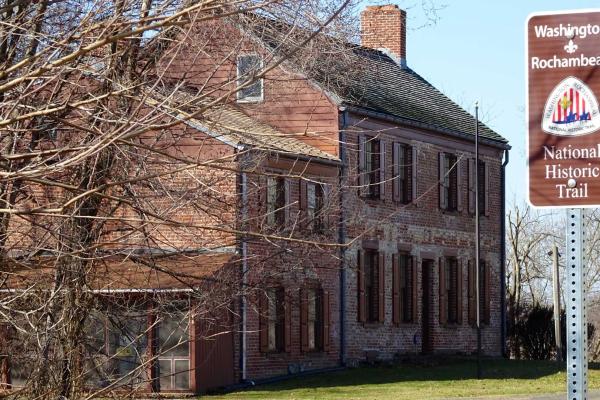
9 Van Veghten Drive
Bridgewater, NJ 08807
Utilized during the second Middlebrook encampment by the Continental Army, this home served as the headquarters for Nathanael Greene from 1778-1779.

504 Route 9
Fishkill, NY 12524
A colonial-era home built in 1732. The Continental Army used the house during the Revolutionary War as the Officers' Headquarters for the Fishkill Supply Depot.

6 Main Street
East Greenwich, RI 02818
Varnum Memorial Armory
Historical Marker Database
The Varnum Armory Museum is a medieval‑style armory built in 1913–1914 to serve as the headquarters of the Varnum Continentals and houses one of Rhode Island's most significant military history collections. Its story intertwines local militia tradition, National Guard service, and a remarkable museum collection spanning the 17th century through modern conflicts. During World War II, an aircraft spotting tower operated from the armory’s north tower as part of a coastal early‑warning network staffed by civilian volunteers.

Vauxhall Road and Milburn Avenue
Millburn, NJ 07041
Plaque near the Vauxhall Bridge on Vauxhall Road
Historical Marker DatabaseNew Jersey militia and Dragoons under Colonel “Light Horse” Harry Lee, Colonel Matthias Ogden, and Captain George Walker delayed the British and Hessian army under Knyphausen as it crossed the Rahway River at this site during the Battle of Springfield on June 23, 1780.

46 Clarke St
Newport, RI 02840
William Vernon House
Kenneth C. Zirkel
This house is named after William Vernon, who was the President of the Eastern Navy Board through the Revolutionary War and was also the founder and second president of the Redwood Library. Rochambeau used the house as a headquarters starting in July 1780. Washington and Lafayette also visited Rochambeau while he stayed at the house.
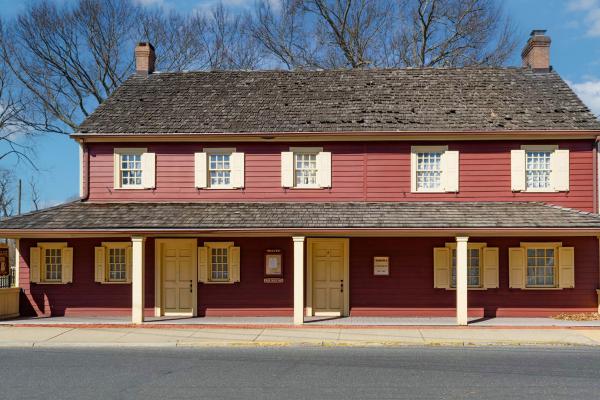
2 Water St.
Englishtown, NJ 07726
This tavern marked the turning point of Washington's advance against Henry Clinton's column. It was here that the order was given to Charles Lee to attack the next morning, June 28, 1778, thus commencing the Battle of Monmouth.

35 Grayrock Road
Annandale, NJ 08801
Christopher Vought House
New Jersey Historic TrustIn 1759, Christoffel Vought purchased 285 acres near the Union Iron Works and built this stone house. During the War for Independence, the Voughts remained loyal British Americans. On June 24, 1776, John Vought and Joseph Lee (from the nearby Union Iron Works) led dozens of men to join the New Jersey Volunteers, a Loyalist regiment fighting alongside British regulars, and attacked the home and tavern of Captain Thomas Jones. Vought and the other Loyalists beat Jones and "plundered and robbed the house." After arrest and imprisonment, the Vought family relocated to Nova Scotia.
The Vought House is a rare surviving example of an 18th‑century German‑American Loyalist farmstead, notable for its wattle‑and‑daub construction, geometric plaster ceilings, and its role in the Revolutionary War
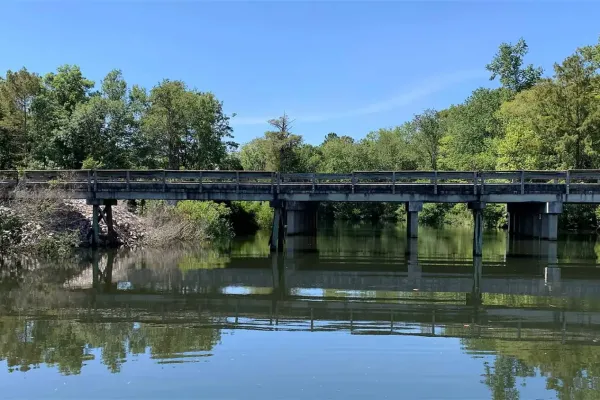
1432 SC-402
Moncks Corner, SC 29461
The Patriots Take Provisions and Prisoners in a Surprise Attack on a British Supply Depot.
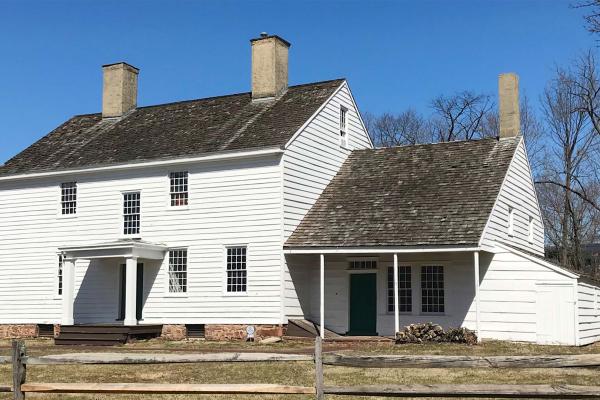
38 Washington Place
Somerville, NJ 08876
The home of a prominent Philadelphia merchant, this was the largest home built in New Jersey during the Revolution. During the Continental Army's encampment at Middleburg, it served as George Washington's Headquarters.

1200 Otts Shoals Rd.
Roebuck, SC 29376
Established in 1767 by the Patriot supporting Moore family. Local militia gathered at Walnut Grove prior to the Battle of Cowpens. Visitors may take guided tours of the house and grounds.

1112 River Road
Washington Crossing, PA 18977
Discover the site of General George Washington’s famous crossing of the Delaware River on Christmas Night in 1776. Washington Crossing State Park preserves this important moment in American history, where boats and ferries carried soldiers, horses, and artillery across the icy river for nearly ten hours. As they moved back and forth, a winter storm developed, bringing sleet, hail, and snow that made the crossing even more challenging. After reaching the New Jersey side at Johnson’s Ferry, the Continental Army marched nine miles to Trenton, where they secured a crucial victory against Hessian forces on the morning of December 26th.
Visitors to Washington Crossing State Park can explore this historic landscape and learn more about the events that unfolded here. The park offers walking trails, historic sites, and educational programs that bring the past to life. Whether you're interested in history or simply looking for a scenic place to visit, the park provides an opportunity to experience an important chapter of the American Revolution firsthand.
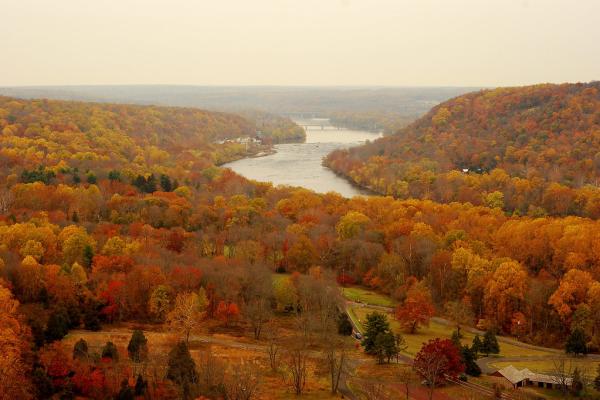
355 Washington Crossing-Pennington Road
Titusville, NJ 08560
The location of George Washington's famous crossing of the Delaware, the site is now a state park that offers historical interpretation and several recreational activities.

1112 River Road
Washington Crossing, PA 18977
Located on the Pennsylvania side of the Delaware River, this park commemorates Washington's planning of his famous crossing that re-ignited the spark of liberty.

84 Liberty Street
Newburgh, NY 12551
General Washington established his Newburgh headquarters at Jonathan and Tryntje Hasbrouck's fieldstone farmhouse from 1782 to 1783, issuing an order for a "cessation of hostilities" from the house.
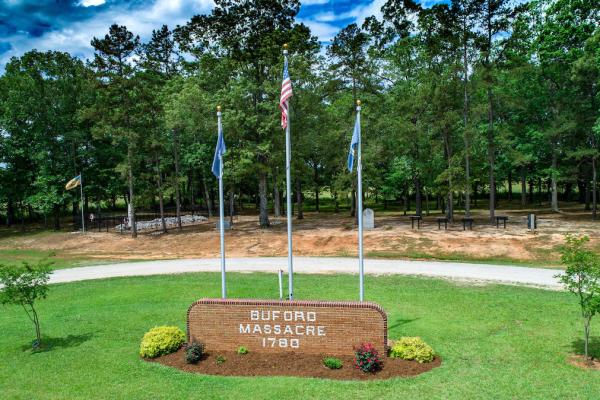
262 Rocky River Rd
Lancaster, SC 29720
On May 29, 1780, British commander Banastre Tarleton engaged and overwhelmed a Patriot force under the command of Abraham Buford in a dreadful defeat for the Patriots.

26 Marlborough St
Newport, RI 02840
White Horse Tavern, Newport, RI
Kenneth C. Zirkel
Established in 1673, the oldest tavern in the United States. Loyalists and British troops were quartered there during the British occupation of Newport in the American Revolution, around the time of the Battle of Rhode Island. It is rumored that Benjamin Franklin patronized the tavern when visiting his brother James, who operated a printing press in town.
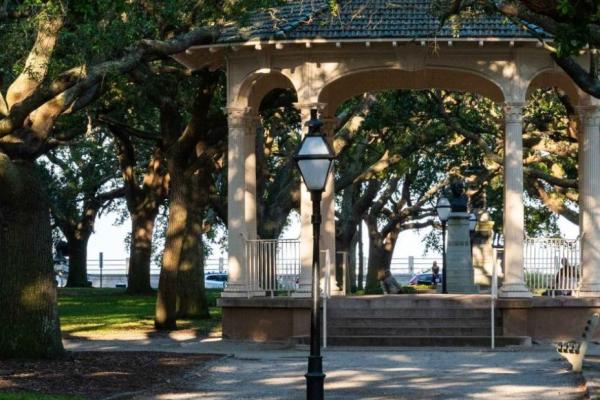
2 Murray Blvd.
Charleston, SC 29401
The White Point Garden offers incredible views that span across the Ashley and Cooper Rivers. Fort Sumter, Castle Pinckney, and the Sullivan Island Lighthouse can all be spotted in the distance. The Defenders of Fort Moultrie, a monument honoring South Carolinian soldiers during the Battle of Sullivan's Island is centrally located.

15 Market Street
Trenton, NJ 08611
William Trent House
New Jersey Historic TrustThe William Trent House is an excellent example of an early Georgian house, built in 1719 as the summer home of William Trent, a wealthy Philadelphia-based shipping merchant. The William Trent House was strategically significant in the Revolutionary War as it sat at the Falls of the Delaware, a key river crossing in Trenton. Hessian troops occupied it before Washington’s attack in December 1776, Continental artillery fired on it, and it later served as an encampment site for American and French forces marching to Yorktown in 1781.
In 1778, Colonel John Cox, a Patriot and deputy quartermaster general, bought the property. Under Cox, the estate—renamed Bloomsbury—became a staging ground for Continental and French forces. The site lies along the Washington-Rochambeau Revolutionary Route National Historic Trail.
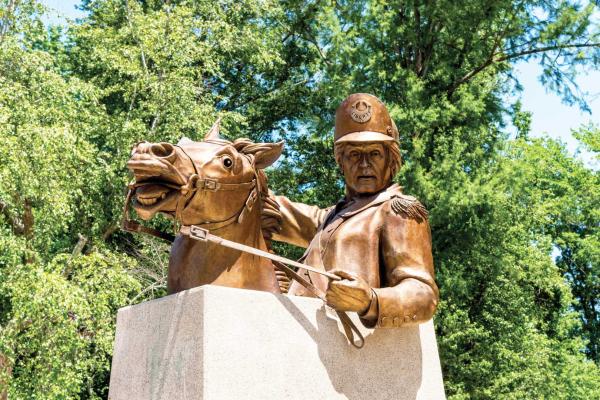
Odell Venters Landing
Johnsonville, SC 29555
Once a simple ferry site, it gained prominence after Francis Marion, the "Swamp Fox," mustered the Williamsburg militia into his ranks in August of 1780
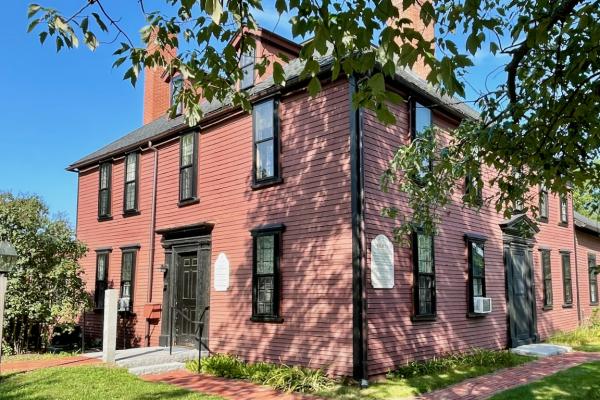
2 Lexington Rd
Concord, MA 01742
Known by several names over the past two centuries, it is now known as the Wright Tavern, named after its owner during the Battle of Lexington and Concord, Amos Wright.
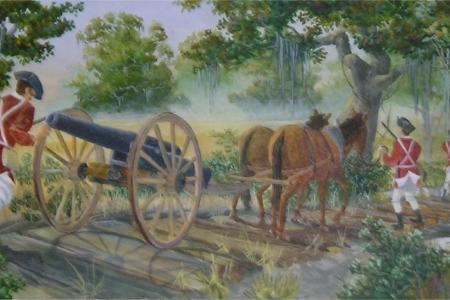
22 State Rd S-14-141
Manning, SC 29102
Now under the man-made Lake Marion, British Lieutenant Colonel John Watson and Patriot Brigadier General Francis Marion, the “Swamp Fox,” skirmished in Wyboo Swamp near Santee Road.
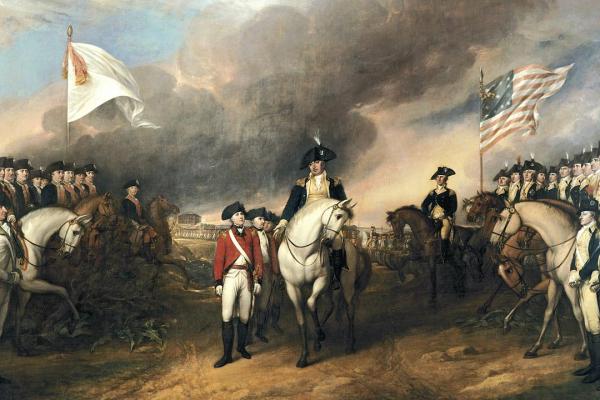
1000 Colonial Parkway
Yorktown, VA 23690
Yorktown was George Washington's decisive victory over General Lord Charles Cornwallis. Learn about the last major land battle of the American Revolutionary War.
Explore the many guided tours of The Liberty Trail
We invite you to visit the preserved locations along the Liberty Trail and to immerse
yourself in the extraordinary events that determined the fate of a nation.
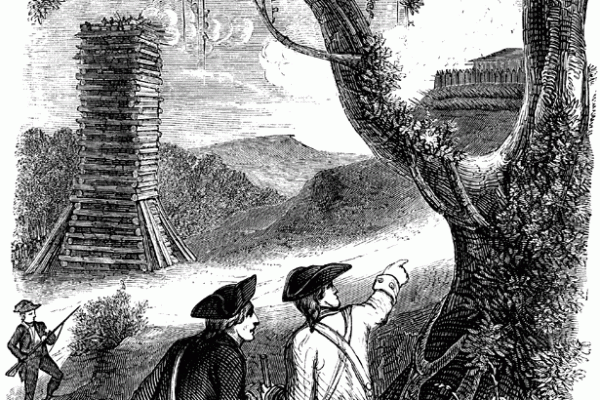
Hezekiah Maham, a South Carolina planter and military officer, gained fame during the American Revolution for his innovative siege tactics and leadership of "Maham's Legion." Post-war, he served in politics but became controversial for refusing to pay debts and aggressively confronting a deputy.
Anthony Wayne, dubbed "Mad Anthony," was a bold Revolutionary War general, key in victories like Stony Point and Fallen Timbers. His fiery reputation earned him his nickname. He died in 1796 in Presque Isle, Pennsylvania.
During the Revolutionary War, Sumter became a prominent commander in the South Carolina militia. When Lt. Col. Banastre Tarleton’s raiders burned his home, however, he organized a band of partisans to harass the British and their Tory allies. General Cornwallis called him one of his “great plagues.”
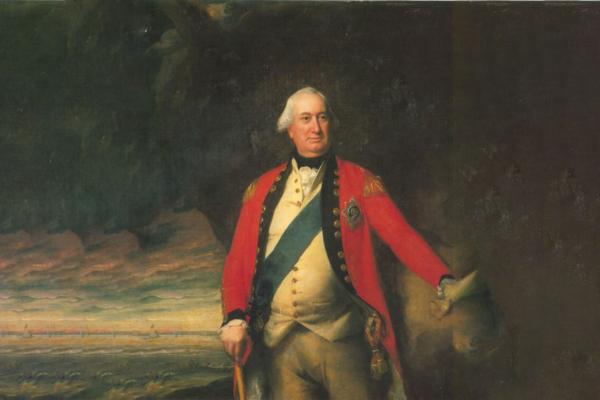
In 1779, after a stalemate in the north, Cornwallis went south as second in command to Sir Henry Clinton. Clinton captured Charleston in May 1780. Cornwallis pressed on to defeat General Horatio Gates at Camden, South Carolina, on August 16, 1780.